Introduction
The 20th century in Belgium was a period of profound artistic metamorphosis, where the boundaries between reality and the subconscious were perpetually challenged. While much of Europe was grappling with the tremors of modernism, Belgian painters were carving out a unique visual language that oscillated between the meticulous precision of the Old Masters and the radical distortions of the avant-garde. This era was defined by a tension between the tangible and the dreamlike, a characteristic that allowed Belgian art to move seamlessly from the luminous Impressionism of the Flemish landscape to the unsettling, poetic enigmas of Surrealism.
Culturally, these artists emerged from a landscape deeply rooted in tradition yet eager to dismantle it. They navigated the complexities of a rapidly changing society, using their canvases to explore themes of isolation, desire, and the uncanny. Whether through the vibrant, expressive brushwork of the Fauvist-influenced painters or the silent, architectural stillness of dreamscapes, their work captured the psychological depth of the modern human condition. This period was not merely a collection of movements, but a continuous dialogue between the seen world and the internal mind.
Today, the legacy of these masters remains vital, as their ability to blend the familiar with the unexpected continues to influence contemporary visual culture. Their works serve as essential touchstones for understanding how art can navigate the space between logic and madness. The following selection explores ten pivotal figures who defined this golden age, ranging from the masters of the surreal to the architects of light and form.
René Magritte
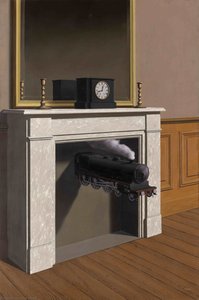 Time transfixed - René Magritte
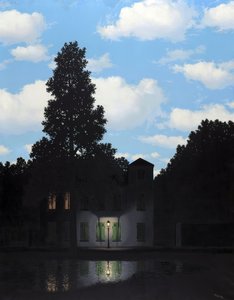
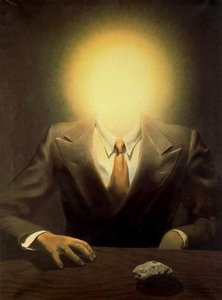
A central figure of the 20th century Belgian painters, René Magritte (1898–1967) transformed the landscape of modern art by challenging the very nature of representation. Born in Lessines, his early training at the Académie Royale des Beaux-Arts in Brussels provided the technical discipline that he would later subvert through the lens of Surrealism. His work is characterized by a profound sense of mystery and concealment, a psychological depth often linked to the personal loss of his mother during his adolescence. Unlike the distorted figures of some avant-garde movements, Magritte utilized a hyper-realistic, almost academic precision to render the impossible, creating a tension between the familiar and the bizarre.
His 1938 masterpiece, Time transfixed, serves as a quintessential example of his ability to disrupt domestic tranquility. By depicting a powerful steam locomotive bursting from a classical fireplace, he forces a confrontation between the mechanical progress of the era and the stability of the home. Through this masterful use of oil on canvas, Magritte remains a cornerstone of Belgian art history, moving beyond mere Impressionistic roots to become a philosopher of the visual plane.
James Ensor
 Flowers and blue vase - James Ensor
A pivotal figure in the evolution of modern art, James Ensor stands as a cornerstone of 20th century Belgian painters. Born in Ostend in 1860, his work bridged the gap between the late 19th-century traditions and the radical shifts of the 20th century. His unique perspective was shaped by a dual heritage and a childhood spent amidst the carnival masks and ornamental curiosities of his parents' souvenir shop. This early exposure to the grotesque and the theatrical became the foundation of his expressive language, leading him away from the somber realism of his early training at the Académie Royale des Beaux-Arts toward a pioneering form of Expressionism.
His representative work, Flowers and blue vase (1909), exemplifies this stylistic metamorphosis. Moving beyond the muted tones of his youth, this still life utilizes an aggressive, saturated palette to convey intense psychological depth. The composition features pink roses and heavy textures that rise from the canvas through thick impasto, creating a tactile, visceral experience. By juxtaposing vibrant life with shadowed, unsettling forms, Ensor transformed the traditional still life into a passionate exploration of color and emotion, cementing his legacy within the Belgian avant-garde.
Paul Delvaux
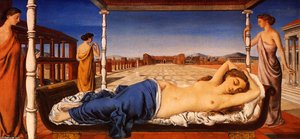
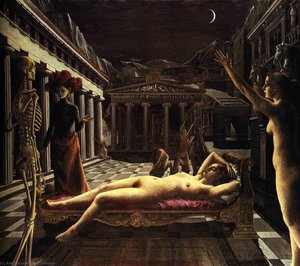 The Sleeping Venus - Paul Delvaux
A central figure in the 20th century Belgian painters movement, Paul Delvaux (1897–1994) crafted a visual language that bridged the gap between classical discipline and the subconscious. Born in Antheit, within the Belgian province of Liège, his early intellectual grounding in Greek and Latin, combined with a formal education at the Académie Royale des Beaux-Arts in Brussels, provided the academic rigor necessary to masterfully subvert traditional forms. His work is defined by a profound sense of mystery, often placing figures within theatrical, architectural settings that feel both timeless and unsettling.
His 1944 masterpiece, The Sleeping Venus, serves as a definitive example of his surrealist vision. In this work, Delvaux moves beyond mere mythological depiction to explore the tension between desire and mortality. The composition features a reclining nude set against a grand, colonnaded hall, creating a dreamscape where the logic of the waking world dissolves. Through smooth, refined oil techniques, he captures a melancholic atmosphere, utilizing a palette that emphasizes the quietude and isolation of his enigmatic subjects. This ability to transform classical motifs into profound psychological landscapes secures his legacy among the most significant Belgian artists of the modern era."
Theo van Rysselberghe
 Portrait of Auguste Perret - Theo van Rysselberghe
A central figure in the evolution of Belgian modernism, Theo van Rysselberghe acted as a vital bridge between the traditional realism of the 19th century and the vibrant Neo-Impressionism that defined the early 20th century. His artistic journey, which saw him move from the somber, meticulous training at the Academy of Ghent to the prestigious Académie Royale des Beaux-Arts in Brussels, was profoundly transformed by his travels to Morocco. These sojourns allowed him to exchange the muted tones of his youth for a luminous, broken brushwork capable of capturing intense sunlight and exotic atmospheres.
His contribution to the 20th-century Belgian landscape is perhaps most evident in his ability to blend structure with atmospheric light. In his Portrait of Auguste Perret, he demonstrates this mastery by juxtaposing the solid, dark presence of the sitter against a restless, shimmering background of teal and pale yellow strokes. This work exemplifies the sophisticated tension found in his later style, where the subject is held within a field of color rather than a defined room. By integrating the scientific precision of pointillism with a painterly, expressive texture, van Rysselberghe helped shape the visual language of Belgian art as it entered the modern era.
Frank Brangwyn
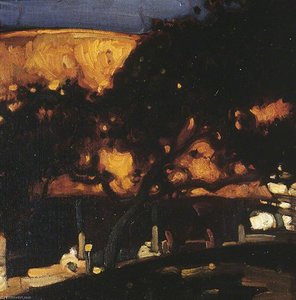 A Landscape Study - Frank Brangwyn
Born in Bruges, Belgium, in 1867, Sir Frank Brangwyn remains a vital figure in the narrative of 20th century Belgian painters due to his formative roots and the profound influence of his Belgian heritage on his artistic trajectory. His early years in Bruges, shaped by a father who was a successful designer in the region, instilled in him a deep reverence for craftsmanship that would later define his role in the Arts and Crafts movement. This foundation allowed him to transition from a self-directed student of the South Kensington Museum to a master of both muralism and fine art.
His work often oscillates between the grit of maritime labor and the ethereal beauty of light. In his 1907 work, A Landscape Study, we see a masterful command of atmosphere that bridges the gap between Impressionism and Post-Impressionism. The painting presents a nocturnal woodland vista where light and shadow perform a dramatic, almost theatrical dance. Through a sophisticated use of indigo and pale gold, Brangwyn captures a sense of spiritual awe, transforming a simple forest scene into a profound meditation on the sublime. His ability to orchestrate such intense, luminous textures marks him as a significant voice in the evolution of modern European art."
Emile Claus
 Sunset over Waterloo Bridge - Emile Claus
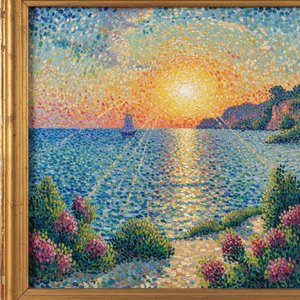
Emile Claus stands as a foundational figure among 20th century Belgian painters, having bridged the gap between late 19th-century realism and the vibrant, modern sensibilities that defined the early 1900s. His presence in this era is marked by his role as the pioneer of Luminism, a movement that moved beyond mere depiction to capture the ephemeral, radiant quality of light. A visitor can instantly recognize a Claus masterpiece by its luminous palette and the way his broken brushstrokes seem to vibrate with atmospheric warmth, particularly in his depictions of the Lys river and the Flemish countryside.
His technical mastery is exemplified in Sunset over Waterloo Bridge, where the artist utilizes light to transform the river into a mirror for the fading day. In this work, the stone arches of the bridge and the quiet presence of a solitary boat are defined not by hard lines, but by the shifting, golden hues of the setting sun. Trained at the Antwerp Academy of Fine Arts under Jacob Jacobs and Nicaise De Keyser, Claus transitioned from the structured realism of his youth toward a subjective, ethereal vision that remains a cornerstone of Belgian art history.
Alfred Martin
 Gli amanti (Il bosco) - Alfred Martin
Alfred Martin (1888–1950) represents a significant, though often overlooked, presence within the landscape of 20th century Belgian painters. His work is characterized by a profound engagement with the shifting aesthetics of the era, navigating the complex transition from traditionalism to the radical energies of modernism. As a figure deeply embedded in the Belgian artistic dialogue of the early 1900s, his contributions reflect the period's intense search for new visual languages amidst a rapidly changing Europe.
A central piece in his oeuvre is Gli amanti (Il bosco), created in 1932. This work exemplifies his ability to weave together organic forms and a sense of quiet, mystical tension. The composition explores the delicate intersection of humanity and the natural world, utilizing texture and light to evoke a secluded, arboreal sanctuary. Through his mastery of form, Martin captures a moment of stillness that feels both primitive and deeply sophisticated, marking him as a vital contributor to the diverse movements that defined Belgian art during the 20th century."
Léon Frédéric
 The Golden Age: The Evening - Léon Frédéric
Léon Frédéric stands as a profound figure among 20th century Belgian painters, bridging the gap between the meticulous traditions of the Flemish Renaissance and the evocative depths of Symbolism. His work, which remained influential well into the early 1900s, is defined by a unique synthesis of Christian mysticism and a keen awareness of social realism. Having studied under Jean-François Portaels and traveled extensively through Italy, Frédéric developed a linear, precise technique inspired by masters like Botticelli, which he applied to complex, multi-layered narratives of the human condition.
His representative work, The Golden Age: The Evening, exemplifies this mastery. Created around 1901, this oil on canvas serves as a vital component of a larger triptych cycle. The composition is dense and rhythmic, guiding the viewer through a structured progression of life. By organizing figures within a landscape to move beyond mere representation toward a symbolic arrangement, Frédéric captures the essence of existence. His ability to weave spiritual themes with the realities of labor and family life ensures his enduring legacy within the Belgian artistic canon of the 20th century.
Victor Gilsoul
 Interior, the studio of the painter Albert Roelofs in Scheveningen - Victor Gilsoul
A master of light and atmosphere, Victor Gilsoul remains a significant figure among 20th century Belgian painters. Born in Brussels in 1867, his career spanned the transition into the modern era, leaving a lasting impact on the luminist and impressionist traditions of his homeland. After showing immense promise at the Academy of Fine Arts in Antwerp, Gilsoul’s ability to capture the ephemeral qualities of nature earned him high honors, including a silver medal at the 1900 World Exhibition in Paris and a knighthood from King Leopold II.
His work is defined by a profound obsession with water, frequently returning to the rhythmic power of waves, rivers, and the dramatic tension of storms. Rather than relying solely on direct observation, Gilsoul composed his large-scale canvases through meticulous studies of nature, layering light and mood to achieve a deep, evocative sense of space. His 1914 work, Interior, the studio of the painter Albert Roelofs in Scheveningen, demonstrates his technical versatility. In this piece, he moves away from the open seascape to master the interplay of light and shadow within a domestic setting, using a doorway to guide the eye through a high-contrast, atmospheric interior that showcases his command of chiaroscuro.
Eugène Laermans
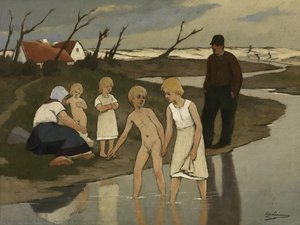 Bathing children - Eugène Laermans
Eugène Laermans stands as a profound figure among 20th century Belgian painters, a master whose visual language was shaped by a unique sensory experience. Having lost his hearing to meningitis in childhood, Laermans developed an extraordinary observational intensity, turning his focus toward the silent, heavy realities of the human condition. His work is instantly recognizable by its powerful social realism and a somber, evocative atmosphere that often captures the dignity of the laborer and the peasant. His compositions frequently utilize a dramatic interplay of light and shadow to emphasize the weight of existence, moving from the provocative aesthetics of the Decadent movement toward a deeply empathetic portrayal of the working class.
In his 1908 work, Bathing Children, we see a rare, luminous departure from his typical somber themes. While much of his oeuvre grapples with the hardships of toil, this piece utilizes a softer palette and fluid brushwork to depict a moment of pure, unburdened innocence. Through the rhythmic play of water and the gentle movement of youth, Laermans demonstrates his ability to masterfully balance naturalistic landscapes with profound emotional resonance, proving his versatility within the Belgian modern tradition."
Conclusion
The 20th century was a transformative era for Belgian art, a period where the boundaries between the subconscious, the surreal, and the luminous were constantly redefined. From the dreamlike, poetic enigmas of René Magritte and the haunting, silent landscapes of Paul Delvaux to the vibrant, expressive textures of James Ensor, these masters collectively shaped a visual language that remains profoundly influential. Whether through the Impressionist light of Emile Claus or the structured, modern sensibilities of the Fauvist-influenced painters, this group of artists captured the complexity of the human experience through diverse stylistic lenses.
For those looking to bring this rich heritage into their own living spaces, Mus3ums.com offers a way to connect with these historical legacies. Our full collection allows you to explore a wide array of masterpieces from this remarkable era. We invite you to transform your home or office by living with these iconic works through our museum-quality, hand-painted oil reproductions, each meticulously crafted by skilled artists to preserve the soul and texture of the original masterpieces.