Introduction
The 20th century was a period of profound transformation for Hungarian art, a century where the borders of Central Europe shifted and the visual language of the continent was rewritten. What unites these painters is a restless, avant-garde spirit that sought to bridge the gap between traditional academic mastery and the radical abstractions of the modern era. From the vibrant, expressive colors of the early century to the geometric precision of later movements, these artists navigated a landscape of intense cultural upheaval, often finding themselves at the crossroads of major European movements like Fauvism, Constructivism, and Surrealism.
This era produced a unique synthesis of styles, where the romanticism of the past met the industrial energy of the new age. Whether through the psychological depth of portraiture or the mathematical rigor of optical art, these creators did not merely follow trends; they pioneered them. Their work remains vital today because it captures the tension of a century defined by rapid change, offering a visual dialogue between the soul and the machine, the organic and the geometric.
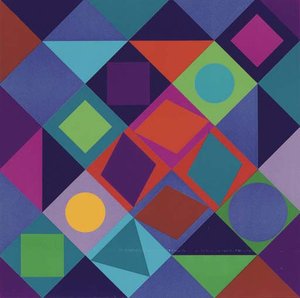
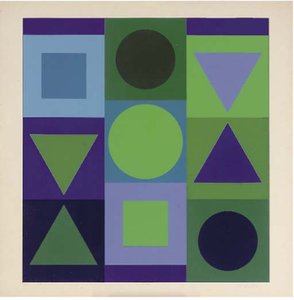
In the following sections, we trace this remarkable evolution through ten essential figures. We will examine the legacies of masters such as Victor Vasarely, whose work redefined spatial perception, and Amrita Sher-Gil, who infused her canvases with a profound, lyrical modernism, alongside other luminaries who shaped the aesthetic identity of a nation and the wider world.
Victor Vasarely
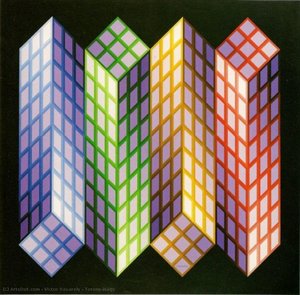
 Vega-wa-3 - Victor Vasarely
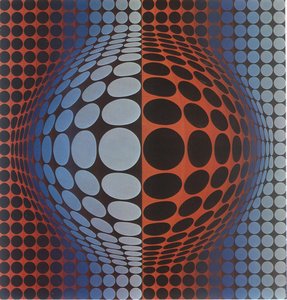
In the rhythmic, shimmering depths of Vega-Wa-3, one encounters the very essence of optical movement. Completed in 1968, this masterpiece serves as a profound testament to the power of geometric abstraction, where circles and lines appear to vibrate and shift, challenging the viewer's perception of space and depth. This ability to hack the retina through mathematical precision is the hallmark of a true pioneer.
Born Károly Vaszary in 1906 in Pécs, Hungary, the artist who would become known globally as Victor Vasarely represents a vital link in the lineage of 20th century Hungarian painters. His journey from medical studies at Eötvös Loránd University to the Podolini-Volkmann Academy and eventually to Sándor Bortnyik’s workshop allowed him to fuse scientific logic with the functionalist principles of the Bauhaus movement. This unique background enabled him to move beyond the cubistic and surrealistic experiments of his youth toward a structured, graphic language. By prioritizing the interaction of light, shadow, and form, Vasarely transformed the canvas into a dynamic field of energy, cementing his legacy as a central figure in the evolution of modern geometric abstraction.
László Moholy-Nagy
 Hilla Rebay - László Moholy-Nagy
A central figure in the landscape of 20th century Hungarian painters, László Moholy-Nagy redefined the boundaries between fine art and industrial design. Born in Hungary in 1895, his evolution from a student of the Fauvist Róbert Berény to a titan of the Bauhaus school epitomizes the radical shifts in European modernism during this era. His work moved beyond traditional canvas, embracing Constructivism and the integration of technology, light, and space into a new visual language.
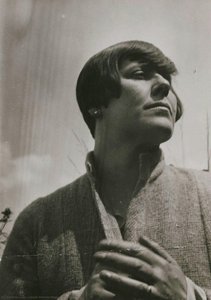
His mastery of the "New Vision" is profoundly captured in the 1924 work, Hilla Rebay. This silver gelatin print transcends simple portraiture to become an exploration of form and intellectual intensity. Through a sophisticated use of monochromatic tones and dynamic diagonal lines, Moholy-Nagy captures the subject in a moment of profound introspection. The composition, characterized by a striking asymmetry and a focus on light and shadow, reflects the artist's commitment to the avant-garde principles that defined the Hungarian contribution to the global modernist movement. By treating the camera as a tool for structural discovery rather than mere documentation, he solidified his legacy as a pioneer of the 20th century's most transformative artistic ideologies.
Amrita Sher-Gil
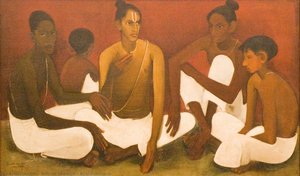 Brahmacharis - Amrita Sher-Gil
Born in Budapest in 1913, Amrita Sher-Gil represents a profound intersection of European modernism and Eastern tradition, making her a vital figure among 20th century Hungarian painters. Her lineage—the daughter of a Sikh aristocrat and a Hungarian Jewish opera singer—provided her with a dual identity that became the cornerstone of her artistic vision. After receiving formal training in Budapest, she moved to Paris in 1929 to study at the Académie de la Grande Chaumière and the École des Beaux-Arts, absorbing the stylistic influences of masters like Cézanne and Gauguin. However, it was her return to India in 1934 that catalyzed her most significant evolution, as she began to synthesize Parisian technique with the rhythmic grace of Mughal and Pahari traditions.
Her masterpiece, Brahmacharis (1941), stands as a testament to this stylistic fusion. In this work, Sher-Gil captures a sense of profound stillness, depicting figures bathed in an ethereal, diffused light. The painting transcends mere observation, utilizing a sophisticated color palette and a serene horizontal composition to elevate a moment of daily life into a spiritual, introspective study. Through this synthesis, she bridged two worlds, leaving an indelible mark on the dawn of modern Indian art.
Philip de László
 Andrew W. Mellon - Philip de László
A master of the high-society portrait, Philip de László represents the pinnacle of Anglo-Hungarian academic realism during the 20th century. Born in Budapest as Fülöp Laub, his journey from the National Academy of Art to the elite circles of London and Vienna allowed him to become the preferred chronicler of European royalty and the global aristocracy. His work is instantly recognizable by its sophisticated command of light and a psychological depth that captures the very essence of his sitters' social standing and character.
In his 1932 work, Portrait of Andrew W. Mellon, de László demonstrates his ability to render dignity through a masterful use of warm earth tones. The composition utilizes a profile view, isolating the subject against a muted, tan background to emphasize the weight of his intellect and status. Rather than relying on harsh outlines, the artist employs flowing, expressive brushstrokes to define the hair and features, allowing light to settle softly across the skin. This technique, combined with a palette of ochre, cream, and deep browns, creates a sense of quiet, reflective stillness that defines his most celebrated commissions.
József Rippl-Rónai
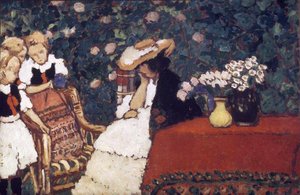 Woman with Three Girls - József Rippl-Rónai
In Woman with Three Girls, created around 1909, József Rippl-Rónai demonstrates the sophisticated compositional mastery that defined his contribution to the 20th century Hungarian painters movement. This oil on board work exemplifies his ability to compress figures and floral arrangements into a flattened, decorative plane, creating a dense and elegant domestic scene. The painting showcases his signature technique of using juxtaposed daubs of bright color to build form, a method that lends a vibrant, textured quality to the subjects.
A pivotal figure in Hungarian modernism, Rippl-Rónai’s career spanned the transition into the 20th century, bridging the gap between late 19th-century influences and modern abstraction. After studying at the Munich Academy of Fine Arts and the Académie Julian in Paris, he became a pioneer by blending Impressionism, Post-Impressionism, and Symbolism. His style evolved from atmospheric, darker tones toward a bright, fragmented application of color often described as "corn kernels." Whether capturing intimate portraits or lively gatherings, his work remains a testament to the radical stylistic shifts occurring within the Hungarian art scene during this transformative era.
Igor Grabar
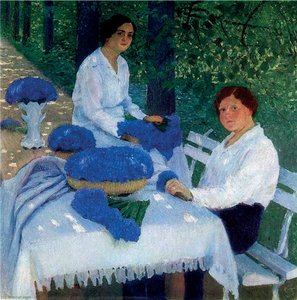 Group Portrait with Cornflowers - Igor Grabar
A central figure in the landscape of 20th century Hungarian painters, Igor Grabar bridged the gap between academic tradition and the vibrant innovations of Post-Impressionism. Born in Budapest in 1871, his artistic journey was shaped by the prestigious Academy of Arts in Saint Petersburg under Ilya Repin and the influential Munich studio of Anton Ažbe. His career was defined by a profound dualism: he was both a prolific creator and a vital guardian of art history, serving as the head of the State Tretyakov Gallery and a professor of art restoration.
Grabar’s mastery of light and texture is exemplified in his 1914 work, Group Portrait with Cornflowers. This composition captures a tranquil moment between two women seated at a table, where the delicate blue of the cornflowers in the foreground provides a striking chromatic counterpoint to the soft, outdoor setting. Through his divisionist approach to light and his ability to capture the essence of a scene, Grabar remains a cornerstone of the 20th century Hungarian artistic legacy, blending meticulous technical skill with a modern sensibility for color and atmosphere.
Joseph Kleitsch
 San Juan Capistrano - Joseph Kleitsch
Joseph Kleitsch represents a vital link between European academic rigor and the vibrant light of the New World. Born in Hungary in 1885, his artistic foundation was established in the prestigious studios of Budapest, Munich, and Paris. This deep-rooted European training allowed him to become a defining figure among 20th century Hungarian painters by translating the sophisticated color theories of the Old World into the unique aesthetic of California Impressionism. After migrating to the United States in 1912, Kleitsch found his creative sanctuary in Laguna Beach, where he became a pioneer of the local landscape movement.
His representative work, San Juan Capistrano (1924), serves as a testament to his mastery of atmosphere and light. In this oil on canvas, Kleitsch utilizes thick, textured brushstrokes to capture a serene garden pathway. The composition features a lush arrangement of flora in shades of red, pink, and yellow, interspersed with a dense green canopy. Rather than focusing on sharp, meticulous lines, the artist employs a soft-focus approach that prioritizes the rhythmic movement of light filtering through the foliage. The result is a tranquil, emotive scene that embodies the spontaneous, musical quality of his plein air technique.
Thomas Jorge Farkas
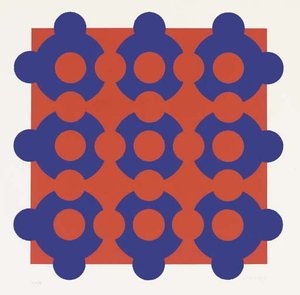
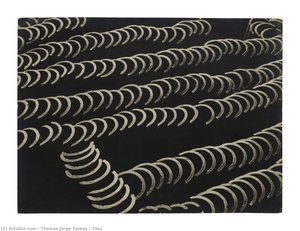 Tiles - Thomas Jorge Farkas
In the mesmerizing abstract composition titled Tiles, created in 1945, the viewer is invited into a world where geometry meets spontaneity. This work transcends simple pattern-making to become a profound exploration of rhythm and repetition, dominated by an array of circular motifs that march across the canvas in horizontal rows. Each circle possesses its own unique character, varying slightly in size and orientation, which breathes life into the composition and transforms a static design into a dynamic, pulsing arrangement.
Born in Hungary in 1924, Thomas Jorge Farkas represents the profound diaspora of Hungarian talent that shaped global modernism throughout the 20th century. While his later life was spent as a vital visual chronicler of Brazil, his origins in Budapest provided the foundational roots for this mid-century artist. His visual language often relies on the evocative interplay between light and shadow, utilizing a monochromatic palette to strip away distraction and focus on structural elegance. Whether capturing the architectural grandeur of burgeoning urban landscapes or the delicate, fleeting nuances of daily life, Farkas’s work maintains a journalistic integrity and a mastery of form that bridges the gap between calculated design and expressive freedom.
Desiderius Orban
 Landscape - Desiderius Orban
Desiderius Orban stands as a vital bridge between Central European tradition and the radical modernism that defined the 20th century. Born in Győr, Hungary, Orban’s journey began within the rigorous academic circles of Budapest under János Pentelei Molnár. However, his artistic evolution was truly ignited in Paris, where he absorbed the emotive power of Fauvism and the structural innovations of Cubism. This exposure allowed him to become a primary architect of Hungarian modernism, notably as a member of the influential "Eight" group, which sought to introduce avant-garde Western techniques to the Hungarian public.
His career is characterized by a restless, visionary movement, eventually leading him from the heart of Europe to the vibrant landscapes of Australia. His 1952 work, Landscape, serves as a profound testament to this later period. Executed in oil on canvas while living in Sydney, the piece demonstrates how his European sensibilities—influenced by the likes of Matisse and Van Gogh—adapted to a new environment. Through a controlled application of pigment and a sophisticated understanding of form, Orban’s work remains a cornerstone of the 20th century Hungarian painters, representing a seamless synthesis of international modernism and personal expression.
Aladar Korosfoi Kriesch
 Cassandra (tapestry) - Aladar Korosfoi Kriesch
A pivotal figure in the evolution of Hungarian modernism, Aladár Körösfői-Kriesch bridged the transition into the 20th century by redefining the nation's visual identity. As a co-founder of the Gödöllő Art Colony, he moved beyond mere painting to embrace a holistic, Secessionist vision that integrated fine art with decorative crafts. His work is essential to the history of 20th century Hungarian painters because he sought to synthesize ancient, medieval, and peasant traditions into a cohesive, modern mythos, effectively shaping the aesthetic language of his era.
His mastery of symbolism is most profoundly realized in the 1908 tapestry, Cassandra. In this work, he reimagines the tragic prophetess of Troy not as a classical figure, but as a heroine imbued with the solemnity of Hungarian folk ballads. Through her striking, long red hair and the ominous flight of birds, Kriesch transforms a Greek myth into a piece of profound, folkloric storytelling. His ability to elevate textile art to the level of high fine art—through his leadership at the Hungarian School of Design—ensured that the spirit of the Hungarian Secession would leave an indelible mark on the 20th-century cultural fabric.
Conclusion
The legacy of 20th century Hungarian painters is defined by a profound tension between tradition and the radical avant-garde. From the geometric precision of Victor Vasarely and the structural innovations of László Moholy-Nagy to the emotive, soulful portraiture of Amrita Sher-Gil, these artists did more than capture a moment; they reshaped the visual language of modernity. Whether through the vibrant color palettes of the Fauvist-influenced József Rippl-Rónai or the sophisticated abstraction of Desiderius Orban, this group represents a vital bridge between classical mastery and the experimental spirit of the new century.
For collectors and enthusiasts seeking to bring this rich heritage into their own spaces, Mus3ums.com offers a way to honor these masters. Our studio specializes in museum-quality, hand-painted oil reproductions that capture the authentic texture and depth of these historic works. We invite you to explore our full collection and find a piece of Hungarian art history to live with in your home through our bespoke, fine-art commissions.