
Introduction
The 20th century marked a profound metamorphosis for the Swedish visual identity, as artists transitioned from the romanticized landscapes of the North to the complex, fragmented realities of modernism. This era was defined by a tension between the deep-seated connection to the Nordic light and the radical, often spiritual, impulses that sought to deconstruct form and color. From the expressive, psychological depths of the early century to the playful, pop-inflected sculptures and canvases of the later decades, these creators navigated a world undergoing rapid industrialization and social change.
What unites this diverse group is a shared dialogue with the unique atmosphere of their homeland—the long shadows of the Swedish summer and the stark, crystalline clarity of winter—reimagined through the lenses of Expressionism, Surrealism, and Abstract Art. These painters did not merely document their surroundings; they translated the internal human experience into a visual language that challenged traditional boundaries. Their work remains vital today because it captures the very essence of the modern struggle: the balance between tradition and innovation, and the search for meaning in an increasingly complex world.
In the following sections, we trace this evolution through ten seminal figures, including the visionary abstraction of Hilma af Klint, the emotive power of Edvard Munch, and the transformative presence of Claes Oldenburg, offering a journey through the soul of Swedish art history.
Edvard Munch
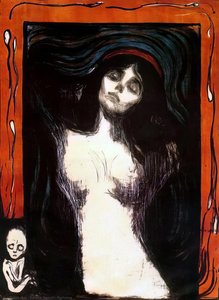
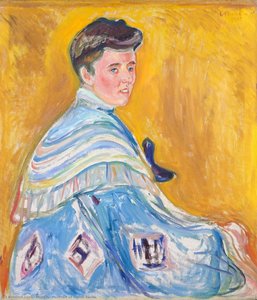
A visitor can recognize an Edvard Munch masterpiece at a glance through his profound ability to give physical form to invisible psychological tremors. His work is characterized by a dramatic, expressive use of color and fluid, rhythmic brushstrokes that prioritize emotional truth over strict realism. Whether depicting existential dread or intimate contemplation, his canvases often pulse with a sense of movement and internal tension, utilizing a palette that can shift from melancholic shadows to vibrant, unsettling hues.
As a seminal figure whose influence defined the era, Munch belongs to this group of 20th century Swedish painters due to his deep connection to the Nordic landscape and his active presence in the art world throughout the first half of the century. His life and identity were inextricably linked to the heavy, atmospheric qualities of the North, a theme that resonated through his entire career until his death in 1944.
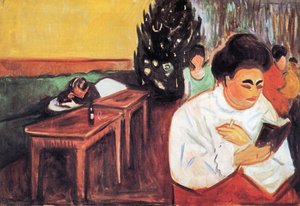
In his 1905 work, Christmas in the Brothel, Munch demonstrates this mastery of psychological depth. The painting utilizes bold colors and dynamic textures to transform an interior scene into a space of intense emotional resonance, showcasing the expressive style that made him a pioneer of Expressionism.
Anders Zorn
 Portrait Study of a Man - Anders Zorn
Anders Zorn stands as a monumental figure in the lineage of 20th century Swedish painters, bridging the gap between traditional mastery and the burgeoning modern sensibilities of the new era. Although his life began in the 19th century, his profound influence and continued artistic output defined the Swedish aesthetic well into the early 1900s. A master of light and life, Zorn’s work is characterized by a vibrant Impressionistic touch and an unparalleled ability to capture the human form with both dignity and raw authenticity.
His technical prowess is perhaps most striking in his 1901 work, Portrait Study of a Man. In this piece, Zorn utilizes a confident, alla prima approach, where thick, visible brushstrokes build a rugged texture that makes the heavy fabric of the subject's coat feel tangible. The painting employs a dramatic chiaroscuro, using light to carve three-dimensional volume out of deep, somber shadows. This interplay of light and motion creates a sense of introspection, capturing a fleeting moment of character through the unvarnished application of oil on canvas. From his early roots in the rural beauty of Dalarna to his international acclaim, Zorn’s legacy remains a cornerstone of Swedish art history."
Claes Oldenburg
 Giant Binoculars - Claes Oldenburg
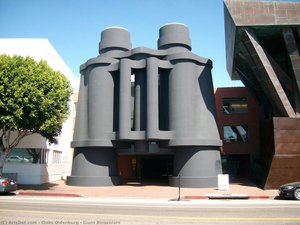
Born in Stockholm in 1929, Claes Oldenburg stands as a transformative figure among 20th century Swedish painters and sculptors who redefined the boundaries of visual expression. His journey from his Swedish roots to the vanguard of the New York Pop Art movement allowed him to subvert the mundane through a lens of playful absurdity. A pivotal moment in his career was his move to New York in 1956, where he transitioned from the radical energies of Surrealism and Dada toward a unique exploration of the textures of daily life. This shift led to his pioneering development of soft sculpture, where pliable materials gave an organic, vulnerable life to inanimate objects.
His mastery of scale is perfectly captured in his monumental work, Giant Binoculars. This piece exemplifies his ability to elevate the commonplace into the realm of high art, transforming a simple tool of observation into a colossal architectural presence. By monumentalizing the everyday, Oldenburg challenged the permanence of traditional sculpture, creating a dialogue between the urban landscape and the objects that populate it. His legacy remains a vital part of the 20th century Swedish artistic contribution, bridging the gap between domestic familiarity and public spectacle.
Clas Edvard Friström
 Pohutukawa - Clas Edvard Friström
Clas Edvard Friström represents a unique, migratory chapter of the Swedish artistic tradition, bridging the gap between the late 19th-century naturalism and the expressive sensibilities of the 20th century. Born in Karlskrona in 1864, his career unfolded across the globe, from the landscapes of Australia and New Zealand to the coastal vistas of California. This international journey allowed him to infuse his Swedish roots with a modern, global perspective, making him a vital figure in the evolution of Swedish art as it transitioned into the 1900s.
His work, particularly Pohutukawa (1905), exemplifies this stylistic shift. In this piece, Friström moves away from rigid photographic detail toward a more direct, structural language. The composition focuses on the essential tension of a New Zealand summer, using heavy impasto and gestural strokes to give the gnarled tree a physical, tactile presence. The palette is masterfully controlled, utilizing:
- Deep, greenish-black tones for the dense foliage
- Jewel-like red speckles to capture the blossoms
- Muted, sun-drenched tones for the coastal sand
- A pale, clear azure for the distant sea
Through this expressive approach, Friström captures the emotional weight and resilience of the natural world, marking him as a true visionary of his era.
Hanna Hirsch-Pauli
 Title in Swedish: Vänner - Hanna Hirsch-Pauli
In her 1907 masterpiece Vänner, Hanna Hirsch-Pauli captures a profound moment of intellectual and social connection. Set within a warm, twilight-drenched drawing room, the painting depicts a close-knit circle of the era's cultural elite, including the influential philosopher Ellen Key. Hirsch-Pauli herself is seen observing the scene, documenting the intimate bonds of friendship and the evolving social dynamics of the time.
A significant figure among 20th century Swedish painters, Hirsch-Pauli’s work serves as a vital bridge between the late 19th-century traditions and the modern sensibilities of the early 1900s. Her oeuvre is defined by evocative genre scenes and sophisticated portraits that often center on the lives of women. Through her studies at the August-Malström school, the Royal Academy, and in Paris, she developed a refined technique used to portray domesticity and the inner lives of her subjects with remarkable psychological depth.
Her art is deeply intertwined with feminist perspectives, often portraying women in spaces that reflect their intellectual and social agency. Whether capturing a quiet moment of domesticity or a lively gathering of thinkers, her palette and composition emphasize the warmth and complexity of human relationships during this transformative period in Swedish history."
Richard Bergh
 Julius Caspar, Merchant - Richard Bergh
A pivotal figure in the evolution of Swedish modernism, Richard Bergh (1858–1919) left an indelible mark on the 20th century Swedish painters' landscape. Though his training began under Edvard Perséus and continued at the Royal Swedish Academy of Fine Arts, his spirit was shaped by the Naturalism of Jean-Paul Laurens in Paris. As a leading voice of the Opponenterna, Bergh challenged the rigid traditions of the Academy, eventually coining the term stämningsmåleri, or "mood painting." This shift toward a subjective, evocative style helped define the aesthetic direction of Swedish art as it entered the new century.
His work often oscillates between profound psychological depth and a Romantic Nationalist sensibility. In the portrait Julius Caspar, Merchant (1904), Bergh demonstrates his mastery of capturing character and social dignity. The composition utilizes a somber, controlled palette, where the sitter is anchored by deep blues and a rich, textured green background. Through a careful interplay of light and shadow, Bergh transforms a simple study of a man into a timeless meditation on stability and presence, cementing his legacy as a master of both mood and form.
Helmer Osslund
 Title in Swedish: Hösten - Helmer Osslund
In his 1907 masterpiece Hösten (Autumn), Helmer Osslund captures a profound seasonal transition within the Swedish wilderness. The work presents a breathtaking expanse of water acting as a liquid canvas, reflecting majestic mountain ranges and the vibrant, changing foliage of the boreal forest. Through a masterful command of both realism and impressionism, Osslund utilizes textured brushstrokes to animate clusters of fiery oranges and deep reds against the cool, muted tones of the lake's surface.
As a defining figure of 20th century Swedish painters, Osslund’s legacy is inextricably linked to the ethereal beauty of the Arctic. While his formal training took place at the Academy of Fine Arts in Stockholm, his true calling lay in the untamed north. He sought a visual language capable of expressing the spiritual weight of Lappland, moving beyond academic conventions to capture the shimmering auroras and the vast silence of the Nordic landscape. His technical innovation was further marked by his unique works on greaseproof paper, which allowed him to translate the fleeting, atmospheric light of the northern wilderness into enduring art. His ability to evoke the very soul of the Arctic makes his oeuvre a cornerstone of Scandinavian modernism.
Eugene Jansson
 Title in Swedish: Självporträtt - Eugene Jansson
A central figure in the evolution of Swedish modernism, Eugene Jansson (1862–1915) left an indelible mark on the 20th century Swedish painters landscape through his profound emotional depth and atmospheric mastery. Often referred to as Blåmålaren—the Blue Painter—Jansson moved beyond mere documentation to translate internal states of longing and melancholy onto the canvas. His work serves as a vital bridge to early Expressionism, utilizing color to convey a sense of psychological presence rather than just physical reality.
His artistic journey began at the Tekniska Skolan under Edvard Perséus, and though financial constraints prevented him from following his peers to Paris, his unique vision flourished within the Swedish art scene. His style is characterized by a sensitivity to light and a mastery of nocturnal tones, particularly in his evocative views of Stockholm. In his 1910 work, Självporträtt, we see a fascinating transition in his oeuvre; the artist moves away from his signature deep nocturnal blues toward a more grounded, daylight reality. This piece captures a social gathering on a beach, where the light settles upon formal attire with a muted, atmospheric quality, demonstrating his ability to find stillness and tension within the human silhouette.
Fanny Brate
 Title in Swedish: Namnsdag - Fanny Brate
Fanny Brate (1861–1940) stands as a vital figure in the transition of Swedish art into the 20th century, bridging the gap between traditional realism and the luminous vitality of modernism. Her work, characterized by a profound sense of domestic tranquility, helped define the visual identity of the Swedish bourgeois home during this era. Having studied at the Royal Swedish Academy of Fine Arts and the Arts and Crafts School under August Malmström, her style was further transformed by the Impressionist influences she encountered while studying at the Académie Colarossi in Paris.
Her masterpiece, Namnsdag (1902), exemplifies her ability to elevate the ordinary into the sublime. Set within her family estate, Brategården, the painting captures a quiet moment of preparation for a name-day celebration. Through a masterful use of light, Brate depicts a room filled with Gustavian furniture and lush arrangements of meadow flowers and ivy. The composition creates a soft, organic dialogue between the structured interior and the wildness of nature, embodying the calm and intimate atmosphere that made her a premier chronicler of Swedish life at the dawn of the 1900s.
Hilma af Klint
 The Large Figure Paintings, nr 5 - Hilma af Klint
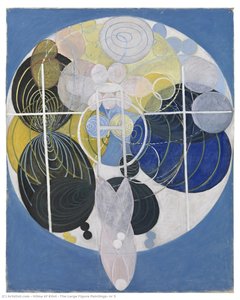
In 1907, Hilma af Klint produced The Large Figure Paintings, nr 5, a work that serves as a profound gateway into the unseen. This piece, featuring a striking interplay of radiant yellow and cool blue circular forms, exemplifies the artist's unique ability to translate spiritual dualities—such as the masculine and feminine—into a radical visual language. As a central figure among 20th century Swedish painters, af Klint’s work represents a seismic shift in the history of modernism, as her explorations into abstraction predated the movements of Kandinsky and Mondrian.
Born in Solna in 1862, af Klint was a highly accomplished artist, graduating with honors from the Royal Academy of Fine Arts in Stockholm. While her early training focused on portraiture and botanical illustration, her life changed following the death of her sister, Hermina, which led her toward spiritualism and the group known as De Fem. This esoteric journey transformed her practice from representational accuracy to a visionary, symbolic abstraction. Her canvases are not mere decorations but complex maps of the macrocosm and microcosm, utilizing geometry and vibrant color to navigate the realms of Theosophy and intuition.
Conclusion
The legacy of 20th century Swedish painters is defined by a profound tension between the intimate domesticity of the North and the radical abstractions of the modern era. From the haunting, psychological depths of Edvard Munch to the pioneering spiritual geometries of Hilma af Klint, these artists transformed the Swedish landscape and the human soul into a visual language that resonates across generations. Whether through the soft, light-drenched interiors of Fanny Brate or the bold, sculptural provocations of Claes Oldenburg, this group of masters expanded the boundaries of what art could represent, moving from the tangible beauty of the natural world into the limitless realms of the subconscious.
For those looking to bring this rich heritage into their own living spaces, Mus3ums.com offers a way to connect with these masters through our bespoke services. We specialize in creating museum-quality, hand-painted oil reproductions that capture the unique texture and emotional weight of these iconic works. You can explore our full collection to find the perfect piece and invite the timeless spirit of Swedish art into your home through our meticulous, artisan-led process.