
The Age of Enlightenment: The Rational Foundations of Neoclassicism
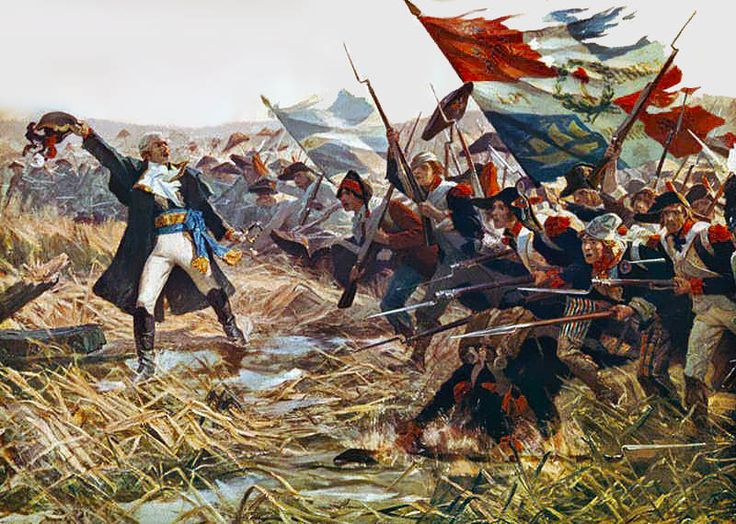 French Revolutionary Army
The French Revolutionary Army (French: Armée révolutionnaire française) was the French land force that fought the French Revolutionary Wars from 1792 to 1802. In the beginning, the French armies were characterised by their revolutionary fervour, thei...
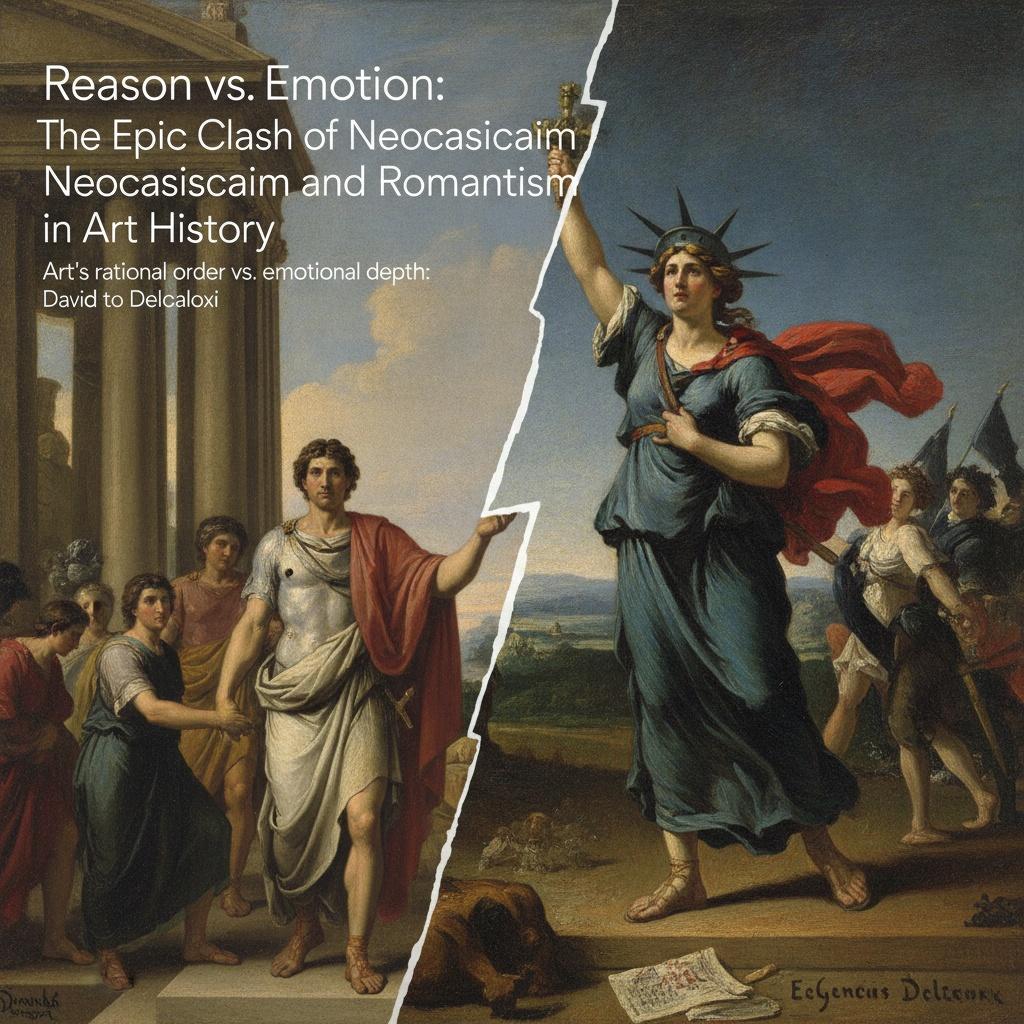
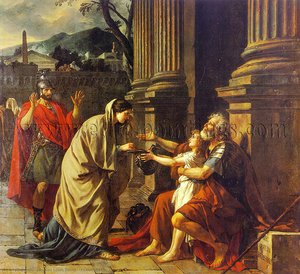
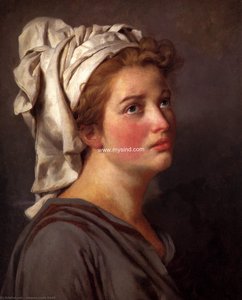
To understand the seismic shift that occurred in the late 18th century, one must first contemplate the profound stillness of the Enlightenment. This was an era defined by the triumph of human reason, a period where the intellect sought to categorize, illuminate, and bring order to the perceived chaos of the natural world. In the realm of visual arts, this philosophical rigor manifested as Neoclassicism, a movement that looked backward to the disciplined grandeur of Greco-Roman antiquity to find a language for contemporary virtue. The aesthetic was one of clarity, restraint, and an almost mathematical precision in composition.
Neoclassical painters sought to strip away the frivolous ornamentation of the preceding Rococo period, replacing it even with a sense of moral gravity. Every line was intended to be purposeful; every form, anatomically perfect. The subject matter often revolved around themes of civic duty, heroism, and self-sacrifice, mirroring the political upheavals of the French Revolution. Through the use of smooth, almost invisible brushwork and a controlled palette, these artists created windows into a world where logic reigned supreme, and beauty was found in the harmonious balance of structure and truth.
The Romantic Rebellion: Embracing Subjectivity and the Sublime
 Romanticism
Romanticism (also known as the Romantic movement or Romantic era) was an artistic and intellectual movement that originated in Europe towards the end of the 18th century. The purpose of the movement was to advocate for the importance of subjectivity,...
As the smoke cleared from the battlefields of the Napoleonic Wars and the gears of the Industrial Revolution began to grind, a new, more turbulent spirit emerged. If Neoclassicism was the steady breath of reason, Romanticism was the sudden, gasping intake of air during a storm. This movement arose not as a mere stylistic change, but as a profound psychological rebellion against the perceived coldness of scientific reductionism and societal conformity. The Romantics turned their gaze inward, prioritizing the individual's subjective experience, the power of imagination, and the untamable force of nature.
The Romanticist sought the sublime—that overwhelming sensation of awe and terror experienced when confronting the infinite or the uncontrollable. Where the Neoclassicist saw a landscape as a territory to be mapped and understood, the Romantic saw it as a living, breathing entity capable of reflecting human despair or ecstasy. This era celebrated the irrational, the supernatural, and the exotic, finding beauty in the shadows, the ruins of the Middle Ages, and the tempestuous seas. It was an era that argued, quite passionately, that truth is not merely found in what can be measured, and that the heart possesses a wisdom that the mind cannot grasp.
Masters of Order: The Rigorous Precision of Jacques-Louis David
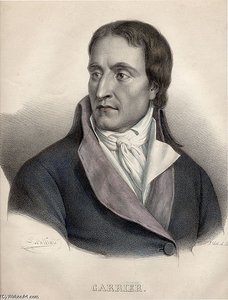 Portrait Of Jean-baptiste Carrier, French Revolutionary
Admire 'Portrait of Jean-Baptiste Carrier,' a striking 18th/19th century French Revolutionary portrait by François Seraphin Delpech. Hand-painted reproduction available.
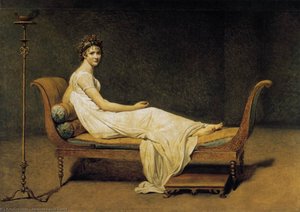
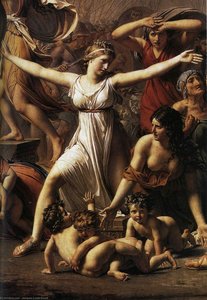
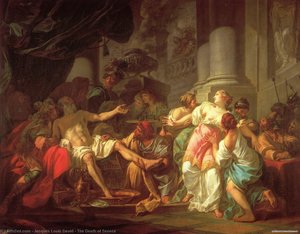
No figure embodies the Neoclassical ideal more completely than Jacques-Louis David. As the preeminent master of his age, David’s atelier became the crucible for a new era of French painting. His work is characterized by an uncompromising commitment to linear clarity and moralizing narratives. In his hands, the canvas became a stage for historical epic, where figures were rendered with a sculptural solidity that seemed to defy the fluidity of paint itself.
To observe a David masterpiece is to witness the triumph of the intellect over the medium. His compositions are often structured around a central, heroic focus, utilizing sharp lighting to define musculature and drapery with surgical accuracy. There is no room for ambiguity in his work; the moral lesson is as clear as the light illuminating his subjects. Through his influence, the art of the era became a tool for political and social instruction, instilling values of patriotism and stoicism that would resonate through the halls of history.
The Revolutionary Brush: Delacroix and the Power of Emotion
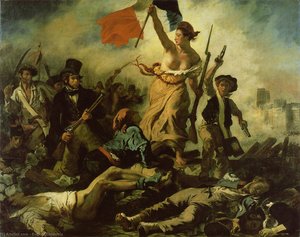 Liberty Leading the People, Louv
A Revolution Embodied: Delacroix’s Liberty Leading the People Eugène Delacroix’s 1830 masterpiece, Liberty Leading the People , is far more than a historical depiction; it's an enduring and visceral allegory of freedom. Measuring an imposing 260 x 32...
In stark contrast to the disciplined lines of David stands the visceral, energetic presence of Eugène Delacroix. If David was the architect of order, Delacroix was the poet of chaos. A pivotal figure in the Romantic movement, Delacroix broke away from the rigid academic constraints of his predecessors to embrace a more painterly approach. His brushwork was not hidden; it was expressive, visible, and imbued with a sense of urgent motion.
Delacroix’s mastery lay in his revolutionary use of color and light to evoke profound emotional responses. In works such as Liberty Leading the People, he does not merely depict a historical event; he plunges the viewer into the very heat of the struggle. The palette is vibrant, the textures are rich, and the atmosphere is thick with the smoke of revolution. By prioritizing color over line and emotion over intellect, Delacroix paved the way for a modern understanding of art as an experiential, rather than purely observational, medium.
Bridging the Divide: The Transitional Artistry of Anne-Louis Girodet
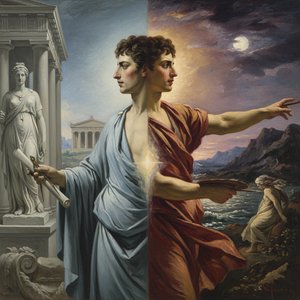 Anne-Louis Girodet: Bridging Neoclassicism & Romanticism with Emotional Truth
Early Life & David’s Atelier: The Foundation of a Unique Style Anne-Louis Girodet de Roussy-Trioson Discover Anne-Louis Girodet (1767-1824), a French painter bridging Neoclassicism & Romanticism. Explore his dramatic portraits, literary scenes & subt...
The transition from Neoclassicism to Romanticism was not an instantaneous rupture but a nuanced evolution, and few artists illustrate this bridge more elegantly than Anne-Louis Girodet. A student of David, Girodet possessed the technical foundation of the Neoclassical tradition—the precise anatomy and clear draftsmanship learned in the great master's atelier. However, within his work, one can detect a burgeoning rebellion, a subtle infusion of emotional intensity and psychological complexity.
Girodet’s paintings often retain a classical grace, yet they are haunted by an underlying sense of drama and even eroticism that hints at the Romantic future. He began to explore themes of loss, longing, and the mysterious, moving away from David's overt political didacticism toward a more introspective, literary sensibility. In his hands, the rigid structures of the past were softened by the shadows of human emotion, creating a singular style that stands as a testament to the fluid boundaries of art history.
A Lasting Legacy: How the Clash Defined Modern Artistic Expression
The epic clash between Reason and Emotion left an indelible mark on the trajectory of Western art. This tension—between the structured and the spontaneous, the objective and the subjective—became the very engine of artistic innovation for centuries to come. The dialogue between these two opposing forces prevented art from stagnating into either pure academicism or unbridled abstraction, fostering a period of unparalleled creativity.
Today, we see the echoes of this struggle in every corner of the modern aesthetic. We find it in the precision of contemporary realism and in the expressive textures of neo-expressionism. The legacy of Neoclassicism lives on in our appreciation for form and permanence, while Romanticism continues to inspire our reverence for the individual spirit and the majesty of the natural world. This historical duality remains a fundamental pillar of our visual language, reminding us that true beauty often resides in the delicate balance between the mind's clarity and the heart's passion.
At Mus3ums.com, we celebrate this profound history by bringing the masters into the modern home. Whether you are drawn to the disciplined elegance of a Neoclassical portrait or the emotive power of a Romantic landscape, our master artists specialize in creating exquisite, hand-painted oil reproductions that capture the true soul of these eras. From custom commissions that transform your personal memories into historical masterpieces to large-scale murals for sophisticated interiors, Mus3ums offers an unparalleled service for the discerning collector. Discover the intersection of heritage and craftsmanship with our professional art consultations and bespoke framing services.