
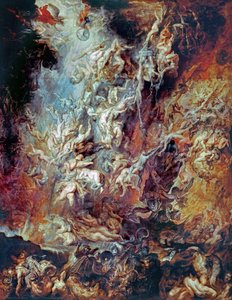
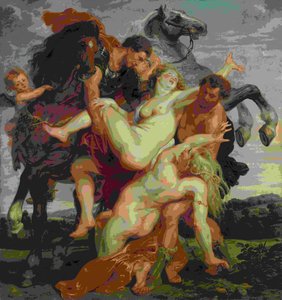
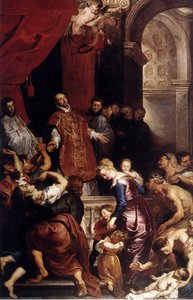
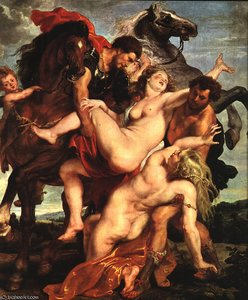

Introduction
Imagine stepping into a space where time seems to slow, where the very air feels heavy with the whispers of centuries past. As you wander through the sun-drenched galleries of the Alte Pinakothek in Munich, you aren't just walking through a museum; you are stepping into a living chronicle of the human spirit. Commissioned by King Ludwig I and designed with the Neoclassical elegance of Leo von Klenze, this sanctuary of art has survived the ravages of war and the shifting tides of history to remain one of the world's most profound repositories of European beauty.
The collection is a breathtaking journey through the Northern Renaissance and the Baroque era, a period when masters learned to capture not just the likeness of a person, but the very soul behind the eyes. From the intense, spiritual gravity of the late Middle Ages to the dramatic, swirling energy of the 17th century, these walls hold the fingerprints of genius. You can almost feel the texture of the brushstrokes in a Rubens or sense the quiet tension in a work by Grünewald, all while the soft, natural light from the soaring skylights dances across the canvas, honoring the colors exactly as the artists intended.
Why do these masterpieces still move us today? Because they speak a universal language. Whether it is the raw emotion of a religious scene or the vibrant, chaotic energy of a hunt, these works remind us of our shared capacity for awe, struggle, and wonder. They are the anchors of our cultural identity, bridging the gap between the ancient world and our modern lives.
To help you navigate this vast, magnificent treasure trove, we have curated a selection of the most impactful pieces within its halls. We invite you to join us as we explore our Top 25 Artworks—a guided stroll through the masterpieces that define the Alte Pinakothek and continue to inspire dreamers, collectors, and art lovers across the globe.
The Battle of Alexander at Issus - Albrecht Altdorfer
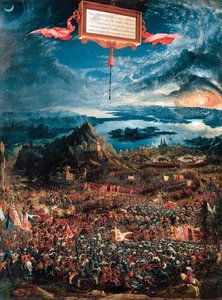 The Battle of Alexander at Issus - Albrecht Altdorfer
Stepping into the presence of The Battle of Alexander at Issus is to witness the very essence of Renaissance drama. Painted by the Danube School pioneer Albrecht Altdorfer in 1529, this masterpiece captures the monumental clash between Alexander the Great and the Persian Empire. It is not merely a depiction of ancient warfare; it is a swirling, atmospheric symphony of movement and power that secures its place among the top 25 artworks in 'Alte Pinakothek, Munich'.
Altdorfer utilizes a rich, earthy palette of deep reds and blues, punctuated by dramatic lighting that breathes life into the chaotic surge of horses and soldiers. The composition’s kinetic energy and intense emotional weight make it a captivating focal point for modern curated spaces, where its themes of leadership and historical upheaval still resonate deeply. As a cornerstone of the museum's collection, this work exemplifies the grandeur of the Northern Renaissance, inviting viewers to lose themselves in its intricate textures and the timeless, turbulent spirit of history.
The Madonna of the Carnation - Leonardo da Vinci
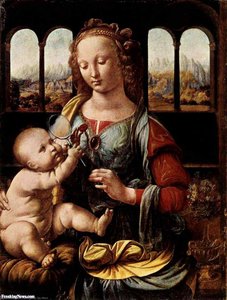 The Madonna of the Carnation - Leonardo da Vinci
To stand before Leonardo da Vinci’s Madonna of the Carnation is to witness the very moment light became a language. Created around 1478, this masterpiece is a cornerstone of the Alte Pinakothek collection, representing the breathtaking dawn of the High Renaissance. Leonardo does not merely depict the Virgin Mary and Child; he composes them through a symphony of sfumato, where soft, smoky transitions blur the lines between reality and a dreamlike, ethereal realm.
The painting is a profound meditation on grace and human emotion. As you gaze upon the luminous glow surrounding Mary’s face and the delicate textures of her blue mantle, you feel the psychological depth that only a master of anatomical precision could achieve. The subtle interplay of light and shadow creates a reflective, elegant atmosphere that transforms the canvas into a portal of divine serenity. It is this ability to invent light, rather than just reflect it, that secures its place among the top 25 artworks in Munich’s most prestigious gallery, inviting every viewer to find a moment of quiet contemplation.
Venus, Mars, and Vulcan - Jacopo Tintoretto
 Venus, Mars, and Vulcan - Jacopo Tintoretto
Imagine stepping into a private, candlelit chamber where the air feels heavy with tension and whispered secrets; this is the magnetic pull of Jacopo Tintoretto’s 1551 masterpiece, Venus, Mars, and Vulcan. As one of the most captivating pieces among the top 25 artworks in 'Alte Pinakothek, Munich', this canvas is a masterclass in Venetian Mannerism, trading meticulous precision for a raw, electric energy. Tintoretto’s signature rapid brushwork and dramatic chiaroscuro sculpt the figures from deep shadows, creating a sense of movement that feels almost startlingly modern.
The scene is a visceral dance of desire and power. Venus reclines with a dangerous allure, flanked by the assertive Mars and the shadowed Vulcan, all while subtle details—like the presence of birds—add layers of mythological mystery. The rich, phthalo green tones and intense emotional depth make this work a cornerstone of the Alte Pinakothek’s collection. For the discerning collector, it represents more than just history; it is a testament to how light and shadow can transform a canvas into a living, breathing drama of human passion.
St Columba Altarpiece - Rogier van der Weyden
 St Columba Altarpiece - Rogier van der Weyden
Have you ever wondered how a single wooden structure can act as a gateway between the earthly and the divine? In the hallowed halls of the Alte Pinakothek, the St Columba Altarpiece by the Flemish master Rogier van der Weyden serves as a profound testament to the dawn of the Northern Renaissance. Completed around 1455, this masterpiece broke new ground by blending meticulous, almost hyper-realistic detail with a deep, psychological vulnerability that was revolutionary for its time.
As you wander through this top 25 artwork in Munich, you are drawn into a scene of quiet, spiritual community. Van der Weyden’s signature use of luminous oil glazes creates a sense of depth and texture—from the heavy folds of fabric to the contemplative expressions of the figures—that feels startlingly alive. For the modern collector seeking a sense of history and soulful sanctuary, this piece offers a timeless escape. It is a cornerstone of the Alte Pinakothek collection, embodying the very essence of Early Netherlandish painting through its dramatic emotional resonance and exquisite, jewel-like precision.
The Mocking of Christ - Matthias Grünewald
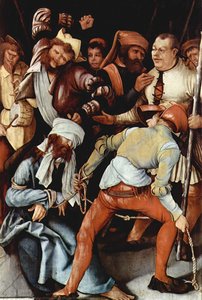 The Mocking of Christ - Matthias Grünewald
Step into the presence of Matthias Grünewald’s 1503 masterpiece, The Mocking of Christ, a work that defines the raw, visceral power found within the Alte Pinakothek, Munich. This isn't merely a painting; it is a profound encounter with human suffering and spiritual intensity. As you stand before it, you realize Grünewald didn't just use light—he composed it, using dramatic shifts to pull your gaze toward the central, somber tension of the scene.
A cornerstone of the Northern Renaissance, this oil-on-panel work rejects the polished idealism of the Italian masters in favor of a gritty, unflinching realism. The composition is a whirlwind of movement, where figures are tightly packed in a dance of conflict, their expressions etched with a psychological depth that feels startlingly modern. The palette, dominated by rich walnut tones, deep reds, and earthy browns, creates a heavy, dramatic atmosphere that resonates through the gallery. It is this ability to transform historical narrative into a living, breathing emotional experience that secures its place among the top 25 artworks in the Alte Pinakothek.
Madonna and Child (The Tempi Madonna) - Raphael
 Madonna and Child (The Tempi Madonna) - Raphael
Step into the serene embrace of Raphael’s 1508 masterpiece, Madonna and Child (The Tempi Madonna), a cornerstone of the Alte Pinakothek’s breathtaking collection. This is not merely a painting; it is a quiet symphony of light and tenderness that defines the very essence of the High Renaissance. Raphael does not simply depict light; he composes it, using a soft, diffused glow to sculpt the rounded, organic forms of Mary and the infant Jesus.
The composition is a masterclass in balance, utilizing a graceful pyramidal structure that draws you into the intimate, protective bond between mother and child. You can almost feel the warmth radiating from the rich, earthy palette—the deep reds and soft ochres blending seamlessly through a delicate sfumato technique. This work exemplifies why the Alte Pinakothek is a sanctuary for European treasures; it captures a moment of divine grace and human vulnerability so perfectly that it transcends time. It is a comforting, luminous presence that invites you to pause, breathe, and find a moment of tranquility in its timeless beauty.
Massacre of the Innocents - Peter Paul Rubens
 Massacre of the Innocents - Peter Paul Rubens
Imagine standing before a whirlwind of movement, where the air feels thick with the tension of a world in upheaval. This is the visceral power of the Massacre of the Innocents by Peter Paul Rubens, a cornerstone of the collection at the Alte Pinakothek, Munich. Created in 1637, this monumental masterpiece captures the biblical chaos of King Herod’s decree with a dramatic intensity that defines the very essence of the Baroque era.
As you gaze upon the canvas, you are swept into a sea of muscular figures and swirling drapery. Rubens utilizes a masterful chiaroscuro technique, casting deep shadows that contrast sharply against luminous skin tones and vibrant reds. The palette, rich with earthy espresso tones and brilliant whites, guides your eye through the frantic, asymmetrical composition toward the heart of the tragedy. It is a breathtaking display of technical precision and raw emotion, showcasing why this work is essential to the history of European painting. Even centuries later, such profound storytelling reminds us how art can transform a quiet room into a space of deep, transformative reflection.
The Lion Hunt - Peter Paul Rubens
 The Lion Hunt - Peter Paul Rubens
Step into the heart of the Baroque era with Peter Paul Rubens’ 1621 masterpiece, The Lion Hunt. This monumental work is a quintessential highlight of the Alte Pinakothek, Munich, embodying the raw, kinetic energy that makes this museum a sanctuary for European greatness. It is not merely a painting; it is a visceral experience of movement and muscle.
Rubens captures a frenetic struggle where hunters and lions are locked in a chaotic, swirling dance of life and death. Through his signature mastery of dynamic lines and organic, muscular forms, he pulls you directly into the fray. The palette is a dramatic symphony of deep, earthy browns and blacks, punctuated by sudden flashes of crimson and brilliant white, all illuminated by a masterful use of chiaroscuro. The stormy, atmospheric sky adds a layer of tension, making the scene feel as though it is unfolding in real-time. To witness this work is to feel the pulse of the 17th century, transforming a simple viewing into a profound encounter with human passion and power.
Scenes from the life of Mary - Hans Memling
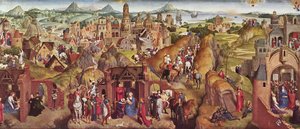 Scenes from the life of Mary - Hans Memling
What story do the rolling hills and bustling landscapes in Hans Memling’s masterpiece tell? In Scenes from the life of Mary, the environment is not merely a backdrop but a living, breathing character. Created around 1480, this panoramic work is a cornerstone of the Alte Pinakothek, Munich, representing the pinnacle of Early Netherlandish painting. Memling invites us into a sacred, sprawling world where every architectural detail and gentle landscape serves the divine narrative.
The painting’s serene atmosphere offers a beautiful sense of historical escape, making it a dream for those looking to bring a touch of Renaissance grace into a modern living room. Through a harmonious palette of rich espresso tones, vibrant blues, and luminous whites, Memling achieves a spiritual depth that feels both intimate and grand. This work exemplifies the treasures of the Alte Pinakothek, Munich, by showcasing the incredible technical finesse of oil on panel, where light and shadow dance across the canvas to create a window into the soul of the 15th century.
Meeting of St Erasm and St Maurice - Matthias Grünewald
 Meeting of St Erasm and St Maurice - Matthias Grünewald
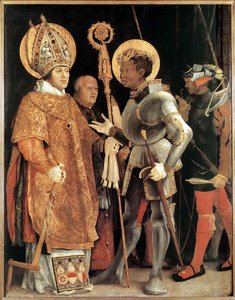
Acquiring a piece inspired by the Meeting of St Erasm and St Maurice is more than a design choice; it is an investment in a legacy of profound spiritual and artistic taste. As one of the crown jewels of the Alte Pinakothek, Munich, this 1517 masterpiece by Matthias Grünewald stands as a pinnacle of the Northern Renaissance, commanding a position in the top 25 artworks of the museum due to its visceral emotional depth and technical brilliance. Grünewald’s ability to weave together dramatic light and shadow—the very essence of chiaroscuro—creates a scene of immense gravity, where the rich, espresso tones and the intricate textures of regal attire transport the viewer to another era.
The work exemplifies the soul of the Alte Pinakothek, Munich collection, bridging the gap between medieval devotion and Renaissance humanism. For the discerning collector, a high-quality handmade oil reproduction of this masterpiece brings that same sense of historical authority and quiet grandeur into a modern luxury interior, serving as a sophisticated focal point that commands attention and invites contemplation.
The Canigiani Madonna - Raphael
 The Canigiani Madonna - Raphael
For the discerning collector, owning a piece of the High Renaissance is an investment in timeless legacy and impeccable taste. Among the top 25 artworks in 'Alte Pinakothek, Munich', Raphael’s Canigiani Madonna stands as a pinnacle of divine harmony and artistic mastery. This 1507 masterpiece exemplifies the very soul of the Alte Pinakothek’s collection, bridging the gap between the sacred and the human through its breathtaking composition and luminous grace.
The painting captures a moment of profound domestic serenity, where the Holy Family is bathed in a soft, ethereal glow. Raphael’s signature use of sfumato creates a dreamlike atmosphere, blending soft phthalo greens and warm, rose-tinted skin tones into a seamless, pyramidal arrangement. The tender interaction between Mary, Joseph, and the infant Jesus evokes a tranquil, spiritual warmth that has captivated viewers for centuries. For those looking to bring this level of prestige into a modern luxury interior, a high-quality, hand-painted reproduction offers the same aesthetic authority and status, transforming a living room into a sanctuary of classical beauty.
The Land of Cockayne - Pieter Brueghel the Elder
 The Land of Cockayne - Pieter Brueghel the Elder
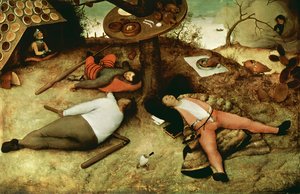
Imagine a world where the boundaries between a dream and a feast dissolve into a golden, hazy afternoon. In 1567, Pieter Bruegel the Elder captured this very essence in his mesmerizing masterpiece, The Land of Cockayne. As one of the crown jewels of the Alte Pinakothek, Munich, this work stands among the top 25 artworks in the collection because it masterfully balances the whimsical with the profound, turning a medieval myth into a vivid social satire.
The canvas breathes with a serene, khaki-toned warmth, where the textures of a lush landscape meet the vibrant, colorful attire of figures lost in a life of pure indulgence. There is a rhythmic, almost musical quality to the composition—from the gentle flow of the river to the birds perched in the trees—that invites a sense of reflective calm. For the modern collector, this piece offers more than just a window into the Northern Renaissance; it brings a sophisticated, storytelling energy to a living room, reminding us of the beautiful, often absurd, complexity of human desire through its exquisite detail and light.
Descent into Limbo - Giotto
 Descent into Limbo - Giotto
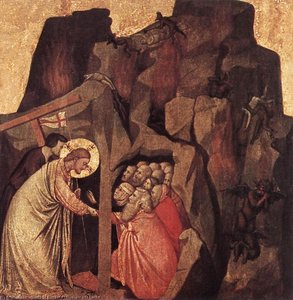
Imagine a world where figures began to breathe, breaking free from the flat, golden stillness of the Middle Ages. This is the revolution sparked by Giotto di Bondone. In his 1320 masterpiece, Descent into Limbo, we witness a profound conceptual leap: the introduction of human drama and three-dimensional weight into sacred storytelling. As part of the prestigious collection at the Alte Pinakothek, Munich, this tempera panel captures the solemn, spiritual moment of Christ being lowered from the cross by angels to liberate righteous souls.
The composition is a masterclass in emotional depth, where the deep, espresso tones and the presence of ethereal birds create a sense of divine movement. Giotto’s ability to render naturalistic figures and palpable grief marks this as a cornerstone of the Proto-Renaissance. For those looking to curate a space of deep thought, this artwork’s dramatic focus and spiritual gravity make it an inspiring centerpiece for a sophisticated modern study or home office, inviting a sense of timeless purpose into your daily life.
Christ Resurected - Rembrandt
 Christ Resurected - Rembrandt
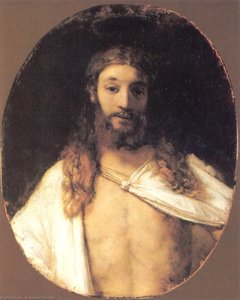
In the quiet, hallowed halls of the Alte Pinakothek, Munich, there exists a moment where darkness is not an end, but a prelude to light. Rembrandt’s Christ Resurrected (1661) is a profound masterpiece of the Dutch Golden Age, capturing the very instant of divine triumph through a breathtaking dance of shadow and radiance. This is why it remains one of the top 25 artworks in 'Alte Pinakothek, Munich'; it does not merely depict a scene, it evokes a spiritual awakening.
Rembrandt’s signature chiaroscuro technique breathes life into the canvas, using deep espresso tones to push the figure of Christ forward into a soft, ethereal glow. The warm palette of ochre and cream whispers of humanity and grace, while the visible, textured brushstrokes lend a tactile soul to the drapery. For the modern collector, such a piece brings a sense of mystical calm and sophisticated depth to a living space, turning a wall into a window of contemplation. It is a testament to the power of light to shape thought and emotion, making it a cornerstone of the museum's incomparable collection.
The Seven Sorrows of the Virgin - Albrecht Dürer
 The Seven Sorrows of the Virgin - Albrecht Dürer
Imagine standing in a quiet, sun-drenched gallery, where the air feels heavy with a sacred, unspoken history. Before you, the intricate lines of Albrecht Dürer’s 1496 masterpiece, "The Seven Sorrows of the Virgin," begin to unfold. This isn't just a religious icon; it is a profound psychological journey through the depths of maternal grief and spiritual endurance. As a cornerstone of the Northern Renaissance, this work captures the rhythmic pulse of devotion through a multi-paneled narrative of Mary’s life.
Dürer, a titan of the era, uses his legendary mastery of fine hatching to create a sculptural depth that makes every fold of fabric and every expression feel palpable. It earns its place among the top 25 artworks in 'Alte Pinakothek, Munich' because of its ability to transform complex theology into a deeply human experience. For the modern home, such a piece offers more than decoration; it brings an elegant, contemplative gravity, inviting a sense of serenity and timeless meaning into your living space.
Crucifixion - Rembrandt
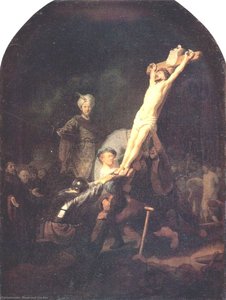 Crucifixion - Rembrandt
At Mus3ums.com, we believe that the profound beauty of the world's greatest masterpieces should be accessible to everyone, turning any space into a sanctuary of inspiration. Among the top 25 artworks in the Alte Pinakothek, Munich, few pieces command the room quite like Rembrandt’s Crucifixion (1633). This monumental work is a cornerstone of the Baroque era, capturing a moment of intense human suffering and divine sacrifice through the artist's legendary use of chiaroscuro.
The painting is a masterclass in dramatic tension; a single, unseen light source pierces through deep, earthy shadows to illuminate the pale, textured form of Christ. This interplay of light and dark creates a somber, spiritual atmosphere that defines the very essence of the Alte Pinakothek's collection. Through thick, expressive impasto and a palette of deep reds and blacks, Rembrandt transforms a biblical event into a visceral, emotional experience. For those looking to invite this transformative presence into a home or office, our high-fidelity, hand-painted oil reproductions allow you to bring this timeless, dramatic masterpiece into your own personal gallery.
The Capture of Parma by Federico II - Jacopo Tintoretto
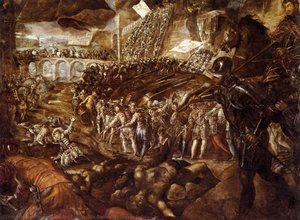 The Capture of Parma by Federico II - Jacopo Tintoretto
Stepping into the presence of Jacopo Tintoretto’s The Capture of Parma by Federico II is less like viewing a painting and more like being swept into a whirlwind. This 1580 masterpiece is a cornerstone of the Alte Pinakothek, Munich, perfectly embodying the museum's role as a sanctuary for the profound drama of the Renaissance and Baroque eras. It is a visceral, swirling vortex of Venetian Mannerism, where the air feels thick with the heat of battle and the scent of dust.
Tintoretto eschews calm for chaos, using a palette of rich clays, deep reds, and shimmering golds to guide your eye through a tumultuous clash of soldiers and rearing horses. The lighting is nothing short of theatrical, casting dramatic shadows that emphasize the raw, kinetic energy of the conflict. As you stand before this massive canvas, the composition doesn't just sit on the wall; it reaches out, pulling you into its historical frenzy. It is a powerful reminder that art is not just meant to be seen, but to be felt—a breathtaking spectacle of movement and emotion that remains one of the most commanding highlights of the Alte Pinakothek collection.
Self-Portrait in a Fur-Collared Robe - Albrecht Dürer
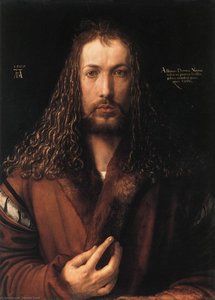 Self-Portrait in a Fur-Collared Robe - Albrecht Dürer
In the quiet, hallowed halls of the Alte Pinakothek, Munich, few works command the room with such profound, steady intensity as Albrecht Dürer’s Self-Portrait in a Fur-Collared Robe. This is not merely a likeness; it is a moment of Renaissance soul frozen in time, where the artist gazes back at history with an unwavering, almost divine confidence. As one of the top 25 artworks in 'Alte Pinakothek, Munich', it captures the very essence of the Northern Renaissance through its breathtaking technical precision.
The painting breathes with a dramatic, somber elegance. Dürer’s mastery of the oil glazing technique allows light to dance across the deep, rich tones of his garment, making the texture of the fur collar feel almost palpable to the touch. There is a sophisticated harmony in its palette of deep reds and earthy browns that brings a sense of timeless calm and intellectual weight to any space. For the modern collector, this masterpiece serves as a bridge between eras, offering a touch of classical dignity and the quiet, soulful luxury that transforms a contemporary living room into a sanctuary of culture.
Lamentation over the Dead Christ with Saints - Sandro Botticelli
 Lamentation over the Dead Christ with Saints - Sandro Botticelli
In the heart of the Alte Pinakothek, Munich, Sandro Botticelli’s 1490 masterpiece, Lamentation over the Dead Christ with Saints, stands as a profound testament to the emotional depth of the Early Renaissance. The composition is a masterclass in structural harmony; Botticelli uses a rhythmic, almost lyrical geometry to guide the eye through a sea of mourning. The central, heavy presence of Christ is balanced by a constellation of saints, whose flowing contours and graceful gestures create a sense of timeless perfection amidst the tragedy.
There is a striking, melancholic beauty in the way the clay-toned palette and the deliberate arrangement of figures ground the scene. Interestingly, this internal balance—the way Botticelli manages complex emotion through organized, purposeful lines—echoes the principles of modern minimalist design, where every element serves a greater aesthetic purpose. For those seeking to bring a sense of history and soulful depth into a contemporary living space, this work exemplifies why the Alte Pinakothek remains a premier destination for discovering the intersection of divine grace and human vulnerability.
Venus and Cupid - Lucas Cranach the Elder
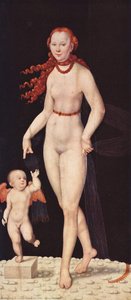 Venus and Cupid - Lucas Cranach the Elder
In the quietude of the Northern Renaissance, few images capture the delicate tension between divine beauty and earthly desire as poignantly as Lucas Cranach the Elder’s 1540 masterpiece, Venus and Cupid. This work is a cornerstone of the Alte Pinakothek, Munich, representing the era's shift toward humanist ideals through its elegant, elongated figures and striking use of light. As Venus gazes into her mirror, her luminous skin creates a breathtaking contrast against the deep, dark void of the background, while a youthful Cupid adds a touch of playful energy to the scene.
The painting’s sophisticated composition and romantic mood make it a quintessential example of the treasures found within the Alte Pinakothek, Munich. At Mus3ums.com, we believe such timeless elegance should be more than a museum memory; it should be a living part of your home. Whether you are drawn to its mythological grace or its rich, romantic atmosphere, this piece serves as a perfect inspiration for bringing high-art sophistication into your own personal sanctuary.
Adam and Eve - Lucas Cranach the Elder
 Adam and Eve - Lucas Cranach the Elder
In the quiet, dramatic halls of the Alte Pinakothek, Munich, few works command the air quite like Lucas Cranach the Elder’s Adam and Eve. This Northern Renaissance masterpiece is a masterclass in structural harmony; a single, vertical tree trunk splits the composition, creating a rhythmic balance between the two figures. On one side, Adam’s pale skin glows against an espresso-toned, earthy background, while on the other, Eve faces inward, caught in a moment of profound tension as a pale serpent descends from the branches.
The geometry of the piece—the interplay of organic, curving lines against the stark verticality of the wood—creates a sense of timeless perfection that remains one of the top 25 artworks in the museum's collection. Interestingly, this ancient balance mirrors the principles of modern minimalist design; the way Cranach uses negative space and a muted, sophisticated palette of forest greens and deep blacks allows the subject to ground a contemporary room with effortless elegance. It is a somber, beautiful meditation on the weight of choice, rendered with a tactile precision that feels remarkably modern.
Crucifix - Giotto
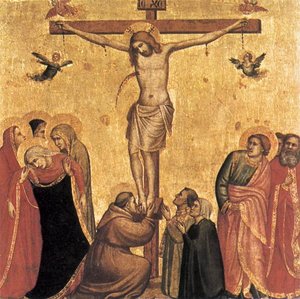 Crucifix - Giotto
What if I told you that Giotto’s Crucifix was born from a moment of rebellion—a stroke of defiance against the ordinary? This is not merely art; it is a manifesto. Its place among the top 25 artworks in the Alte Pinakothek, Munich is not just earned; it is demanded by history. At a time when the Byzantine tradition favored stiff, otherworldly figures, Giotto dared to introduce the heavy, visceral weight of human sorrow.
As you stand before this Proto-Renaissance masterpiece, you aren't just observing a religious icon; you are witnessing a psychological breakthrough. Through a somber symphony of driftwood tones and profound emotional depth, Giotto transforms a theological event into a shared experience of grief and grace. The anatomical precision and the realistic, heavy folds of the drapery create a sense of three-dimensional presence that feels startlingly modern. Imagine this dramatic, soulful piece anchoring your own space—it is a powerful reminder that your home is not just a room, but a statement of human resilience and timeless beauty.
Christ with the Crown of Thorns - Bartolomeo Manfredi
 Christ with the Crown of Thorns - Bartolomeo Manfredi
Deep, dramatic shadows and the piercing glow of light define Bartolomeo Manfredi’s Christ with the Crown of Thorns, a masterpiece that captures the raw, visceral essence of the Baroque era. The palette is dominated by intense, moody tones—reminiscent of a deep Quinacridone Magenta—that emerge from a profound darkness. This masterful use of chiaroscuro, a hallmark of the Caravaggisti style, creates a sense of divine suffering and profound sacrifice that commands the viewer's immediate attention. It is this ability to manipulate light to reveal the palpable texture of skin and the sharp edges of thorns that secures its place among the top 25 artworks in 'Alte Pinakothek, Munich'.
For the modern decorator, this painting offers a blueprint for creating high-drama spaces. Imagine this piece as the focal point of a sophisticated dining room or a moody, curated living area; its intense emotional lighting can be echoed through velvet textures and warm, directional accent lamps to create a space of quiet contemplation and luxury. As a quintessential highlight of the Alte Pinakothek, Munich collection, Manfredi’s work bridges the gap between historical reverence and contemporary interior storytelling.
Saint Cosmas and Saint Damian Crucifixed and Stoned (San Marco Altarpiece) - Fra Angelico
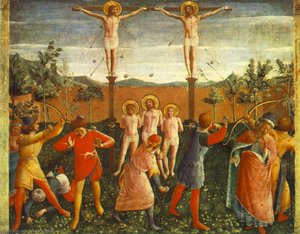 Saint Cosmas and Saint Damian Crucifixed and Stoned (San Marco Altarpiece) - Fra Angelico
Imagine stepping into a quiet, sun-drenched sanctuary where the air feels heavy with reverence. In the Alte Pinakothek, Munich, you encounter Fra Angelico’s 1438 masterpiece, Saint Cosmas and Saint Damian Crucifixed and Stoned. This profound piece from the San Marco Altarpiece is a luminous window into the Early Renaissance, capturing a moment of divine sacrifice with an ethereal, spiritual grace.
The scene is a poignant tableau of martyrdom, where the twin healer-saints are depicted alongside Christ, their figures bathed in a soft, putty-toned light that seems to glow from within. Fra Angelico’s masterful use of tempera creates a sense of celestial depth, set against a serene backdrop of distant mountains and soft greenery. It is a work that transcends mere religious iconography; it is an invitation to reflection. For the modern home, such a piece offers more than decoration—it brings a sense of calm, historical weight, and a meditative atmosphere to a living space, turning a simple wall into a portal of peace and artistic discovery.
Angel of the Annunciation - Fra Angelico
 Angel of the Annunciation - Fra Angelico
To stand before Fra Angelico’s Angel of the Annunciation is to witness the very essence of spiritual light. The first thing you notice is the luminous, ethereal glow emanating from the gold leaf background, a hallmark of the International Gothic style that seems to radiate from within the wood panel itself. The delicate application of tempera creates a breathtakingly soft transition in the angel's skin tones, while the deep rose of the robes and the striking blue sash offer a rich, tactile contrast against the dark, feathered texture of the wings. This masterpiece is a cornerstone of the Alte Pinakothek, Munich, representing the serene, divine narratives that define the Early Renaissance.
At Mus3ums.com, we believe such profound beauty should be accessible to your own sanctuary. While the original is a precious relic of the 15th century, our handmade oil reproductions are designed to capture that same three-dimensional soul. By recreating the visible brushstrokes and the weight of the drapery on 100% linen canvas, we bring the celestial grace of Fra Angelico into your home, preserving the spiritual atmosphere of this Munich treasure for your personal collection.
Conclusion
Walking through the halls of the Alte Pinakothek feels less like a tour of a museum and more like a quiet conversation with history itself. From the raw, spiritual intensity of a Grünewald to the sweeping, dramatic energy of a Rubens, these masterpieces do more than just occupy space; they breathe life into the rooms they inhabit. They remind us that art is not a static relic of the past, but a living, pulsing connection to the human experience—a way to capture light, emotion, and the very essence of our shared story.
At Mus3ums.com, we believe that such profound beauty should not be confined to the galleries of Munich. We invite you to bring that sense of wonder into your own sanctuary. Whether you are a designer curating the atmosphere of a luxury boutique hotel, an architect seeking to add soul to a modern villa, or a homeowner looking to anchor a room with a sense of timelessness, we act as your creative partner in that journey. Through our bespoke, hand-painted oil reproductions and professional digital mockups, we help you bridge the gap between a museum's grandeur and your personal aesthetic.
Let these icons of the Northern Renaissance and the Baroque era inspire your next chapter. We invite you to explore our full collection and discover how a single, intentional piece of art can transform a space from a mere room into a curated experience of beauty and reflection.


