Introduction
Step into a world where the boundaries between dreams and reality dissolve, where the familiar landscapes of the human soul are populated by creatures plucked from the deepest recesses of the imagination. To encounter the works of Hieronymus Bosch is to enter a magnificent, albeit unsettling, theater of the mind. For centuries, this Netherlandish master has captivated viewers not merely with his technical prowess, but with an ability to visualize the invisible—the fears, the temptations, and the profound moral complexities of the human condition.
Born in the vibrant town of ’s-Hertogenbosch around 1450, Bosch lived during a transformative era in the Netherlands. His world was one steeped in late medieval religious fervor, where folklore and spiritual anxiety danced closely together. While his training likely followed the meticulous traditions of his family workshop, his vision quickly transcended the conventional. He moved beyond the serene landscapes of his contemporaries to create allegorical universes filled with hybrid beings, grotesque demons, and intricate, symbolic architectures that seem to pulse with a life of their and their own.
Why, in an age of digital hyper-realism, do we still find ourselves mesmerized by these centuries-old panels? Perhaps it is because Bosch understood something fundamental about the human psyche: our fascination with the strange, the surreal, and the chaotic. His paintings serve as a mirror to our own internal struggles, using bizarre imagery to explore timeless themes of sin, judgment, and the fragility of earthly joy. Each brushstroke on his oak panels invites us to decode a secret language of symbols, making every viewing a new act of discovery.
In the following curation, we invite you to wander through a selection of his most profound achievements. From sprawling, panoramic epic tales of heaven and hell to intimate, enigmatic portraits of strange creatures, this list of 25 masterpieces will guide you through the labyrinthine brilliance of Bosch’s legacy. Prepare to be challenged, enchanted, and perhaps a little bit haunted as we explore the enduring magic of art history's greatest visionary.
The Garden of Earthly Delights - Hieronymus Bosch
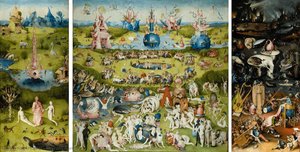 The Garden of Earthly Delights - Hieronymus Bosch
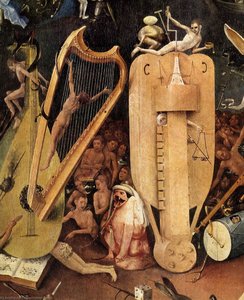
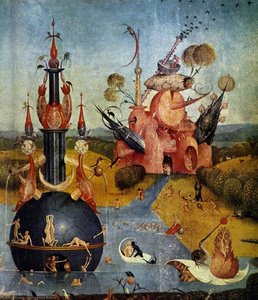
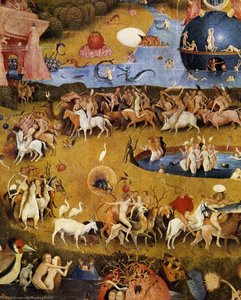
To step before The Garden of Earthly Delights by Hieronymus Bosch is to surrender to a fever dream where the boundaries of reality and nightmare dissolve. As one of the most essential entries in our collection of the top 25 artworks of Hieronymus Bosch, this triptych remains an unparalleled masterpiece of symbolic storytelling. The journey begins in the soft, primordial light of Eden, moves through a sun-drenched central world teeming with oversized fruits and translucent figures, and finally descends into the chilling, nocturnal shadows of a musical Hell.
Bosch’s technique is breathtaking; his use of thin, luminous oil glazes creates a tactile depth that makes every grotesque demon and delicate strawberry feel startlingly present. The palette shifts from the serene greens of paradise to the fiery, chaotic oranges of damnation, pulling the viewer into a profound meditation on human desire and fragility. Even centuries later, this work possesses a magnetic, unsettling energy, proving that art which dares to explore our deepest shadows can forever transform the emotional landscape of a room.
The Haywain Triptych - Hieronymus Bosch
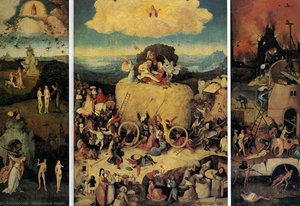 The Haywain Triptych - Hieronymus Bosch
To gaze upon The Haywain Triptych by Hieronymus Bosch is to witness a whirlwind of human passion and divine warning frozen in a state of eternal, chaotic motion. This masterpiece stands as a cornerstone of the top 25 artworks of Hieronymus Bosch because it captures the very essence of the Northern Renaissance: a breathtaking tension between meticulous, delicate detail and a sprawling, surreal narrative of temptation.
As your eyes wander across the panels, you encounter a sensory feast where rich, earthy ochres and deep, fiery reds whisper tales of earthly desire, while the intricate textures of the crowded landscapes breathe life into Bosch’s legendary symbolism. The central panel, teeming with a frantic energy of figures chasing the hay of worldly pleasure, offers a profound study in movement and light. In a modern home, a high-quality reproduction of this triptych serves as more than just decor; it acts as a sophisticated conversation piece, bringing a sense of historical depth and intellectual intrigue to any curated space, inviting viewers to lose themselves in its magnificent, dreamlike complexity.
The Last Judgement (detail) - Hieronymus Bosch
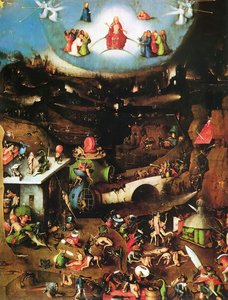 The Last Judgement (detail) - Hieronymus Bosch
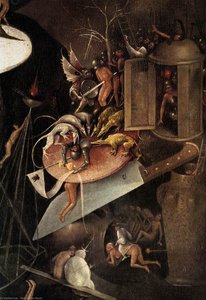
There is a gaze in The Last Judgement (detail) by Hieronymus Bosch that follows you—not with judgment, but with a profound, unsettling understanding . This isn’t merely a window into a nightmare; it is a mirror reflecting the chaotic duality of the human soul. As you lean in, the rich, earthy browns and deep blacks of the infernal lower realm pull you into a world of grotesque creatures and symbolic suffering, while sudden flashes of brilliant red and gold ignite moments of intense drama.
In this breathtaking detail, Bosch masterfully contrasts a serene, divine light with a claustrophobic landscape of sin and temptation. The texture of the oil paint brings every hybrid beast and instrument of torment to life, creating a sensory experience that feels both ancient and surreal. To hang such a piece in your home is to invite a conversation with history; it doesn't just watch you, it reminds you that you are part of a much larger, more mysterious story. It is a masterpiece of the Northern Renaissance that makes the invisible complexities of morality visible.
Triptych of Temptation of St Anthony - Hieronymus Bosch
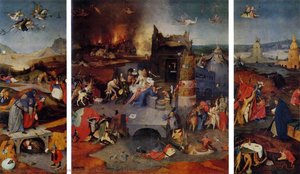 Triptych of Temptation of St Anthony - Hieronymus Bosch
Owning a piece inspired by the Triptych of the Temptation of St. Anthony by Hieronymus Bosch is more than an acquisition; it is an investment in a profound artistic legacy and a testament to a collector's discerning taste. As one of the most significant works within the top 25 artworks of Hieronymus Bosch, this masterpiece stands as a pinnacle of Northern Renaissance storytelling. Its market value and historical influence are anchored by its unparalleled ability to blend religious devotion with a surreal, nightmarish imagination that prefigured Surrealism by centuries.
To gaze upon this triptych is to enter a world of sensory overload: earthy ochres and deep, fiery reds collide amidst a chaotic landscape of grotesque hybrids and sinuous, jagged forms. The central panel captures Saint Anthony in quiet prayer, even as the surrounding panels erupt with the vibrant, unsettling textures of vice and temptation. For the modern connoisseur, a high-quality oil reproduction of this work brings an unmatched aesthetic authority to a luxury interior. It serves as a powerful conversation piece, injecting a sense of historical depth, mystery, and intellectual status into any sophisticated home gallery.
Christ Carrying the Cross (10) - Hieronymus Bosch
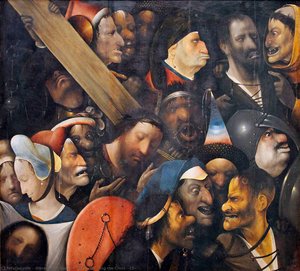 Christ Carrying the Cross (10) - Hieronymus Bosch
In Christ Carrying the Cross (10) , Hieronymus Bosch invites us into a crowded, somber world where the divine meets the deeply human. This masterpiece from 1515 captures a moment of profound spiritual weight, standing as a cornerstone in our collection of the top 25 artworks by Bosch due to its breathtaking narrative density. As you gaze upon the oil on panel, the dark, moody palette is punctuated by sudden splashes of red and blue, drawing your eye through a sea of expressive faces—some noble, others grotesque.
The painting serves as a powerful meditation on suffering and resilience; Christ’s quiet resignation amidst a chaotic crowd reflects the eternal struggle between virtue and vice. For the modern collector, this piece offers more than historical intrigue; it brings a sense of dramatic depth and intellectual mystery to a room. Whether displayed in a contemporary study or a classic gallery wall, its intricate symbolism and Renaissance mastery spark a timeless conversation about the complexities of the human soul, making it an unforgettable anchor for any curated home collection.
Ecce Homo - Hieronymus Bosch
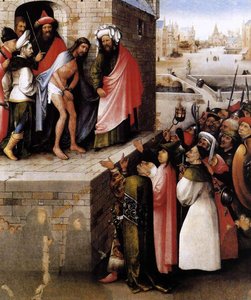 Ecce Homo - Hieronymus Bosch
In Ecce Homo , Hieronymus Bosch invites us into a visceral moment of late medieval tension, where the boundaries between religious devotion and human frailty blur. Painted around 1475, this work stands as a cornerstone in our collection of the top 25 artworks of Hieronymus Bosch because it captures the artist's early mastery of psychological realism. Rather than a serene icon, we encounter a fragmented, almost hallucinatory scene of profound sorrow and bewildered horror.
The composition is thick with symbolic weight: the scattered swords hint at betrayal, while the presence of animals—like a dog licking Christ’s feet—adds layers of moral complexity. Bosch uses these elements to explore the fragility of humanity amidst chaos. For the modern collector, this piece offers more than historical depth; it provides a powerful focal point for a room that values storytelling and emotional resonance. Whether displayed as a large-scale museum-quality reproduction or a thoughtful accent, Ecce Homo serves as a timeless conversation piece, reminding us of our shared capacity for empathy and the enduring power of light and shadow in art.
Death and the Miser (Part) - Hieronymus Bosch
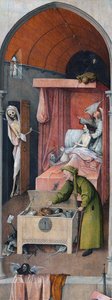 Death and the Miser (Part) - Hieronymus Bosch
Imagine standing in a quiet, candlelit chamber, where the air feels heavy with the weight of eternity. In Death and the Miser (Part) , Hieronymus Bosch captures a chilling moment of spiritual crisis. While many view his work as mere nightmare, this piece is a masterclass in the memento mori tradition—a profound meditation on the soul's final struggle. The scene is thick with tension: a skeletal Death emerges from the shadows, while a demon tempts the dying man with a heavy sack of gold, contrasting sharply with the soft, divine light of an angel nearby.
Bosch’s technical genius lies in his ability to weave intricate, symbolic textures—from the cold glint of armor to the rich, dark drapery—into a cohesive narrative of temptation and redemption. The dramatic interplay of light and shadow creates a sense of deep, psychological depth that is truly captivating. Bringing such a powerful, thought-provoking masterpiece into your own space can transform a modern home office or study into a sanctuary of reflection, inspiring a sophisticated atmosphere of focus and intellectual curiosity.
Mankind Beset by Devils (reverse of Rebel Angels panel) - Hieronymus Bosch
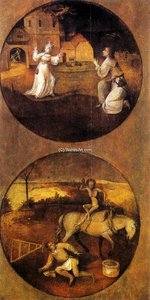 Mankind Beset by Devils (reverse of Rebel Angels panel) - Hieronymus Bosch
Stepping into the world of Mankind Beset by Devils is like entering a fever dream where the boundaries between reality and nightmare dissolve. As one of the most haunting entries in our collection of the top 25 artworks of Hieronymus Bosch , this intimate panel serves as a psychological mirror, reflecting the eternal struggle between human virtue and creeping temptation. The scene captures two women locked in a mysterious exchange, surrounded by a claustrophobic landscape where a solitary horse and scattered figures hint at a world spiraling into moral decay.
Bosch’s mastery lies in his ability to use a palette of bruised purples, sickly greens, and deep, visceral reds to evoke a sense of profound unease. In today's era of surreal digital imagery, Bosch’s visual language feels remarkably modern; his ability to blend the grotesque with the beautiful resonates deeply with our contemporary fascination with the uncanny. For the modern collector, this piece is more than just a historical relic—it is a captivating conversation starter that brings a sense of profound, dark mystery and intellectual depth to any curated space.
Paradise, Terrestrial Paradise - Hieronymus Bosch
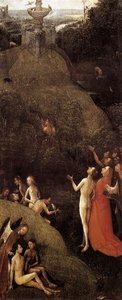 Paradise, Terrestrial Paradise - Hieronymus Bosch
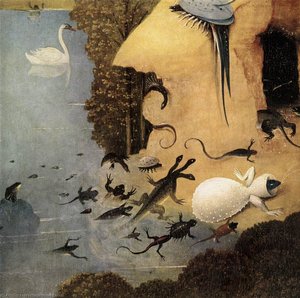
Stepping into Paradise, Terrestrial Paradise by Hieronymus Bosch feels like wandering into a vivid, feverish dream where the boundaries between the divine and the earthly dissolve. There is a profound, haunting beauty in how Bosch captures that fragile moment of innocence before the fall—a lush, rolling landscape teeming with life, yet vibrating with an underlying sense of cosmic tension. It is a masterpiece of psychological depth, blending the serene glow of the Fountain of Life with a meticulously detailed world of symbolic creatures and biblical figures.
This work earns its place among the top 25 artworks of Hieronymus Bosch because it defies simple interpretation, offering a sensory journey through myth and morality that remains as startling today as it was in the 15th century. At Mus3ums.com, we believe such profound storytelling belongs in your personal sanctuary. Our hand-painted oil reproductions are crafted to preserve this very magic, capturing every intricate brushstroke and the luminous, atmospheric light of Bosch’s original vision. Bring the captivating mystery of the Dutch Renaissance into your home with a piece that invites endless discovery.
Christ Mocked (The Crowning with Thorns) - Hieronymus Bosch
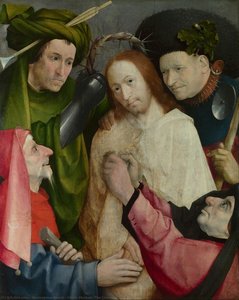 Christ Mocked (The Crowning with Thorns) - Hieronymus Bosch
Stepping into the presence of Christ Mocked (The Crowning with Thorns) is less like viewing a painting and more like witnessing a profound psychological descent. Created around 1510, this masterpiece by Hieronymus Bosch transcends traditional religious narrative to become an immersive study of human cruelty. The scene is claustrophobic and visceral; we find ourselves caught in a tight circle of tormentors whose faces are contorted with sadistic glee. Bosch uses a striking palette—notably the unsettling green costumes that symbolize envy and malice—to heighten the tension of the moment.
As you observe the instruments of pain, from the heavy hammer to the sharp knife, you feel the weight of the allegory. Yet, amidst this frenzied chaos, Christ remains a pillar of quiet dignity, his serene gaze offering a haunting contrast to the surrounding violence. Owning such a piece isn’t merely a purchase; it is an inheritance of Bosch’s most powerful symbolism. Bringing this legacy into your home allows you to connect with a lineage of taste, where every brushstroke serves as a window into the complex depths of the human soul.
The Vagabond (The Prodigal Son) - Hieronymus Bosch
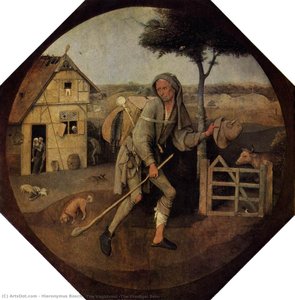 The Vagabond (The Prodigal Son) - Hieronymus Bosch
There is a gaze in The Vagabond (The Prodigal Son) by Hieronymus Bosch that follows you—not with judgment, but with understanding . As you wander through this masterwork, you aren't just observing a biblical parable; you are stepping into a visceral journey of repentance and renewal. The scene unfolds in a hazy, twilight landscape where the weathered face of the traveler meets your eyes, acting less like a portrait and more like a mirror for our own life transitions.
Bosch uses luminous oil glazes to bring a soft, atmospheric light to the pastoral setting, where sheep and cows graze peacefully alongside a loyal dog. Yet, beneath this tranquil rural life lies an underlying tension, a reminder of the soul's wandering. This piece stands in our top 25 because of its profound ability to make the invisible visible—transforming a story of spiritual return into a breathtaking visual spectacle. Imagine this evocative masterpiece in your home; it doesn't just watch you, it reminds you : you are seen, and every journey has a way back home.
Palazzo ducale, venice - hell - Hieronymus Bosch
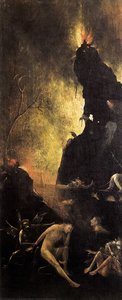 Palazzo ducale, venice - hell - Hieronymus Bosch
In Palazzo ducale, venice - hell by Hieronymus Bosch, the artist achieves a startling structural tension that anchors his most chaotic visions. While the subject matter is famously turbulent, the composition relies on a sophisticated arrangement of vertical descents and sharp, angular silhouettes that guide the eye through a swirling vortex of torment. This rhythmic use of line—where figures seem to plummet through a dark, atmospheric void—creates a sense of balanced dread, making it a standout among the top 25 artworks of Hieronymus Bosch .
The stark, monochrome interplay of light and shadow provides a skeletal framework that feels surprisingly modern. Much like the principles of modern minimalist design , where negative space and high contrast define the mood, Bosch uses the absence of color to emphasize form and movement. This stripped-back approach allows the viewer to focus on the raw, emotional geometry of the scene, proving that even within a nightmarish landscape, there is an enduring, structural harmony that continues to captivate contemporary collectors and art lovers alike.
St John the Evangelist on Patmos - Hieronymus Bosch
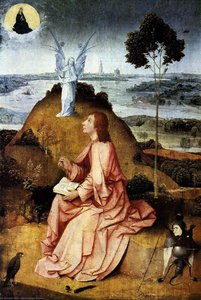 St John the Evangelist on Patmos - Hieronymus Bosch
Stepping into the presence of St John the Evangelist on Patmos is like peering through a window into a fever dream of faith. In this breathtaking piece, Bosch invites us to witness a moment of profound spiritual weight. We find St. John seated upon a rugged, rocky outcrop, his head bowed in heavy contemplation as he grapples with the divine revelations of the Book of Apocalypse. The atmosphere is thick with a sense of holy tension, where the tranquil beauty of the Netherlandish landscape meets the unsettling energy of the supernatural.
The light plays beautifully across the scene, casting an ethereal glow on the angels flanking the saint, while the delicate movement of a bird overhead adds a pulse of life to the stillness. Through masterful use of oil on panel, Bosch achieves a luminous depth that makes every texture—from the weathered stone to the soft plumage—feel tangible. Owning such a masterpiece is more than just decorating; it is an inheritance of history. Bringing this vision into your home allows you to carry forward a lineage of taste, where the enigmatic shadows of the Dutch Renaissance become a soulful part of your everyday sanctuary.
Christ's Descent into Hell - Hieronymus Bosch
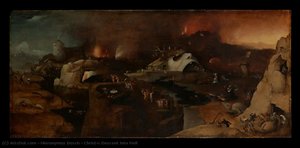 Christ's Descent into Hell - Hieronymus Bosch
What story does the fiery, chaotic landscape of Christ's Descent into Hell by Hieronymus Bosch tell us about the human psyche? Emerging from a period of intense religious fervor and societal anxiety in the late Middle Ages, this masterpiece stands as one of the most profound entries in our collection of the top 25 artworks of Hieronymus Bosch. It breaks ground by transforming a theological concept—the Harrowing of Hell—into a visceral, nightmarish odyssey filled with grotesque demons and jagged, angular forms.
As you gaze upon the deep reds, ochres, and suffocating shadows, you aren't just viewing a biblical scene; you are experiencing a masterclass in symbolic storytelling. While the subject is unsettling, there is a captivating drama in its composition that invites deep contemplation. In modern interior design, bringing such a powerful piece into your home offers more than just decor; it provides a window into history and a sophisticated way to anchor a room with intense emotional depth and a sense of profound, historical mystery.
Crucifixion with a Donor - Hieronymus Bosch
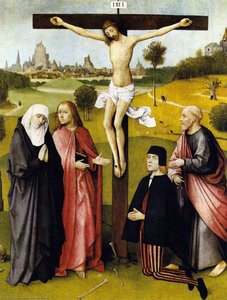 Crucifixion with a Donor - Hieronymus Bosch
To encounter Crucifixion with a Donor is to step into the quiet, reverent beginnings of Hieronymus Bosch’s legendary career. This exquisite oil on panel, dating from around 1480, possesses a rare, meditative aura that feels like discovering a hidden jewel in a private collection. Unlike his later, more chaotic visions, this work showcases a masterful command of the Early Netherlandish style, characterized by luminous glazes and a profound, solemn stillness.
The composition draws you into an intimate circle of faith; the central tragedy of the cross is balanced by the presence of a richly dressed donor, whose regal attire provides a striking contrast to the muted, earthy tones of the landscape. For the modern collector, this piece offers more than just historical significance—it brings a sense of timeless spiritual depth and refined grace to a room. Its meticulous details, from the delicate folds of fabric to the symbolic presence of a soaring bird, invite endless discovery, making it a cornerstone of any curated collection of Bosch’s most influential masterpieces.
The Cure of Folly (Extraction of the Stone of Madness) - Hieronymus Bosch
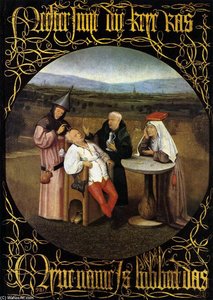 The Cure of Folly (Extraction of the Stone of Madness) - Hieronymus Bosch
Imagine standing in a quiet corner of the 15th century, witnessing a surgeon attempt to physically extract madness from a human skull. In The Cure of Folly , Hieronymus Bosch captures this unsettling medieval superstition with a precision that feels almost modern. While many view his work as mere nightmare imagery, this piece showcases his technical genius in blending Northern Renaissance realism with biting social satire. The scene is thick with symbolic tension: the surgeon’s blade, the presence of monks and nuns, and even a subtle floral reference to the folly of the tulip all converge to critique the intellectual pretension of his era.
The painting’s mastery lies in its ability to hold the viewer's gaze through layers of grotesque detail and profound moral inquiry. This level of intricate storytelling and conceptual depth makes it a standout among the top 25 artworks of Hieronymus Bosch . Bringing such a complex, thought-provoking masterpiece into your personal space—perhaps as a high-quality oil reproduction in a study—can foster an atmosphere of deep contemplation and intellectual curiosity, turning a modern home office into a sanctuary for sophisticated reflection.
Adoration of the Magi (central panel) - Hieronymus Bosch
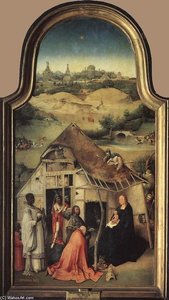 Adoration of the Magi (central panel) - Hieronymus Bosch
In the Adoration of the Magi (central panel) by Hieronymus Bosch, one is immediately struck by the profound, quiet tension held within the gaze of the Virgin Mary as she cradles the Christ child. While the scene ostensibly depicts a sacred moment of devotion, there is an underlying psychological depth that makes this piece a cornerstone of the top 25 artworks of Hieronymus Bosch . Bosch masterfully weaves together the serene and the surreal, surrounding the holy figures with a landscape teeming with unexpected details and symbolic creatures that mirror our own human anxieties and spiritual yearnings.
The rich, saturated oils and meticulous textures create a window into a world where the divine meets the earthly in a breathtakingly complex dance. For those looking to curate a meaningful home, displaying such a powerful work can transform a personal sanctuary into a space for profound reflection. It invites a sense of wonder and quiet contemplation, acting as a visual anchor that encourages guests and residents alike to pause and lose themselves in its labyrinthine beauty.
The Arrest of Christ, Jheronimus Bosch (manner of), c. 1530 - c. 1550 - Hieronymus Bosch
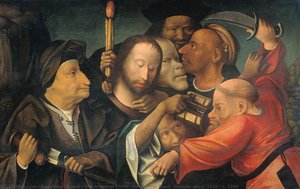 The Arrest of Christ, Jheronimus Bosch (manner of), c. 1530 - c. 1550 - Hieronymus Bosch
When you look closely at The Arrest of Christ (in the manner of Hieronymus Bosch) , the first thing that captures your soul is the dramatic interplay of light and shadow. The harsh, flickering glow of a torch cuts through the darkness, illuminating the visceral textures of the scene—from the metallic glint of a soldier's dagger to the heavy, agitated folds of St. Peter’s vibrant red robe. This piece is a masterclass in tension, where every brushstroke contributes to a sense of claustrophobic chaos and spiritual weight.
The way the light catches the grotesque, distorted features of Judas and the desperate struggle of Malchus creates a three-dimensional energy that is truly haunting. At Mus3ums.com, we believe this tactile depth should never be lost in translation. Our handmade oil reproductions are meticulously crafted to preserve these thick, expressive impasto textures and the profound emotional atmosphere. We bring the nightmarish beauty of Bosch’s world into your home, ensuring that the physical soul of the masterpiece—the visible brushwork and rich tonal range—remains a centerpiece of your personal collection.
Head of a Woman (fragment) - Hieronymus Bosch
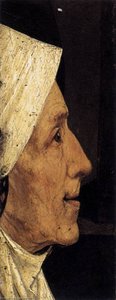 Head of a Woman (fragment) - Hieronymus Bosch
In the vast, often chaotic landscapes of Bosch’s imagination, finding Head of a Woman (fragment) is like discovering a quiet, whispered secret in the middle of a storm. This tiny, monochrome fragment—measuring just 13 x 5 cm—offers a rare moment of stillness amidst his more famous nightmarish visions. As you lean in, the stark black and white palette strips away the distractions of color, forcing an intimate encounter with the subject’s gaze. The light catches the delicate contours of her face and the heavy texture of her white veil, creating a profound sense of psychological depth.
While Bosch is celebrated for his surreal monsters, this piece showcases his mastery of human emotion and subtle realism. The veil acts as both a symbol of modesty and a barrier, hinting at the hidden inner turmoils common in the late fifteenth-century Netherlands. To possess such a fragment is to hold a piece of history’s most enigmatic soul; it transforms your space from a mere room into a contemplative gallery where the shadows of the Renaissance can truly breathe.
St Jerome in Prayer - Hieronymus Bosch
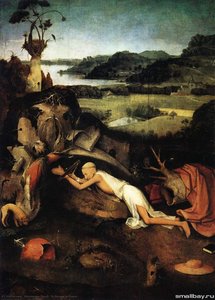 St Jerome in Prayer - Hieronymus Bosch
In St Jerome in Prayer , the dramatic interplay of chiaroscuro serves as the emotional heartbeat of the composition. Bosch masterfully employs a stark, unsettling light that pierces through deep, earthy shadows, illuminating Saint Jerome’s distressed features and the visceral textures of the surrounding wildlife. This command of illumination does more than just sculpt form; it creates a psychological landscape where light represents divine presence struggling against the encroaching darkness of sin and temptation. It is this haunting tension between brilliance and gloom that secures its place among the top 25 artworks of Hieronymus Bosch .
For the modern collector, bringing a faithful reproduction of this masterpiece into a home offers an unparalleled sense of drama. The way the light catches the visible brushstrokes on a high-quality oil canvas adds a sophisticated, tactile depth to any room. Whether placed in a quiet study or a grand hallway, the painting’s moody palette of forest greens and muted ochres provides a luxurious, soulful focal point that invites endless discovery and conversation.
The Seven Deadly Sins and the Four Last Things - Hieronymus Bosch
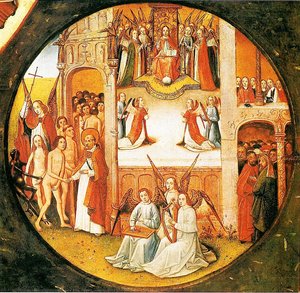 The Seven Deadly Sins and the Four Last Things - Hieronymus Bosch
There is a gaze within The Seven Deadly Sins and the Four Last Things by Hieronymus Bosch that follows you—not with judgment, but with a profound, haunting understanding . This masterpiece is far more than a religious illustration; it is a mirror held up to the human soul. As you wander through its intricate, circular landscape, you encounter a vibrant yet unsettling encyclopedia of vice and virtue, where every grotesque creature and symbolic figure whispers of our shared vulnerabilities.
Bosch masterfully weaves together the heavy shadows of Gluttony and Lust with the luminous, terrifying promise of Judgment and Heaven. The meticulous textures of his oil technique bring a tangible reality to these nightmarish visions, making the spiritual struggle feel physically present. Now, imagine that gaze in your own space. Not watching you, but reminding you : you are seen. You are part of this grand, complex story of existence. Bringing one of the top 25 artworks of Hieronymus Bosch into your home allows you to live alongside a profound meditation on the eternal dance between temptation and redemption.
Noah's Ark on Mount Ararat (obverse) - Hieronymus Bosch
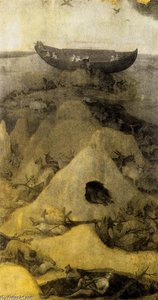 Noah's Ark on Mount Ararat (obverse) - Hieronymus Bosch
Owning a piece inspired by "Noah's Ark on Mount Ararat (obverse)" by Hieronymus Bosch is an investment in a profound artistic legacy and a testament to truly discerning taste. As one of the most significant works within the top 25 artworks of Hieronymus Bosch, this masterpiece captures the trembling anxieties of the late Middle Ages through a lens of surrealist brilliance. The composition is a masterclass in Netherlandish detail; as you gaze upon the Ark ascending the sacred peak, you encounter a world teeming with unsettling energy, where birds dart through luminous skies and horses stand sentinel near the vessel.
The painting’s enduring market value and historical influence stem from its ability to transform biblical narrative into a complex psychological landscape. For the modern collector, bringing a high-quality oil reproduction of this work into a luxury interior offers unparalleled aesthetic authority. Whether placed in a grand study or a contemporary living space, the deep tonal ranges and intricate symbolism provide a sophisticated conversation starter, lending a sense of historical depth and intellectual prestige to any curated home.
St Agnes with the Donor (right wing, detail) - Hieronymus Bosch
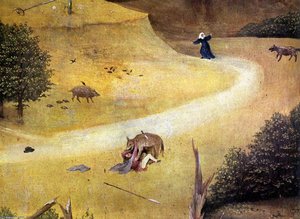 St Agnes with the Donor (right wing, detail) - Hieronymus Bosch
In the hauntingly beautiful detail of St Agnes with the Donor , Hieronymus Bosch invites us into a world where the line between spiritual purity and earthly peril is breathtakingly thin. As one of the most captivating pieces among the top 25 artworks of Hieronymus Bosch , this fragment captures a profound tension: the serene presence of St. Agnes and her lambs set against a landscape fraught with symbolic danger. Bosch’s meticulous oil technique brings a visceral texture to the scene, from the soft wool of the lambs to the menacing shadows of the wilderness.
For the modern collector, this work resonates deeply with our contemporary fascination with surrealism and psychological depth. It is more than a religious relic; it is a masterclass in storytelling through symbolism. The way Bosch weaves together tranquil nature with an underlying sense of unease makes this piece a perfect conversation starter for any curated space, offering a window into the complex, dreamlike psyche that defines his legendary status in art history.
Death of whore - Hieronymus Bosch
 Death of whore - Hieronymus Bosch
To step before one of Hieronymus Bosch’s most unsettling visions is to enter a fever dream where the boundaries between morality and nightmare dissolve. In Death of Whore by Hieronymus Bosch , we encounter a chilling masterpiece that captures the profound spiritual anxieties of the late medieval era. This work earns its place among the top 25 artworks of Hieronymus Bosch through its unparalleled ability to manifest the unseen terrors of the human psyche.
The scene is a chaotic tableau of shadows and sin; a muted, somber palette illuminates the corpse sprawled upon a bed, surrounded by grotesque, hybrid demons that embody lust and corruption. Bosch’s meticulous brushwork brings every terrifying detail to life, from the sharp, anatomical precision of demonic faces to the oppressive gloom of the atmosphere. The painting functions as a precursor to surrealism, exploring unconscious fears long before the modern era. Today, bringing such a powerful piece into a collection allows a space to hold deep emotional weight, serving as a profound conversation piece that reminds us of art's enduring power to confront the darkest corners of our imagination.
Saint Christopher - Hieronymus Bosch
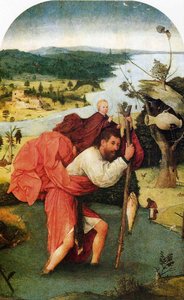 Saint Christopher - Hieronymus Bosch
In Saint Christopher , the lines aren’t merely drawn; they are choreographed . This isn't just a religious scene; it is a dance of devotion and dread frozen in time. As you gaze upon the giant Saint Christopher wading through the river with the Christ Child upon his shoulders, you feel the weight of both divine innocence and earthly struggle. Bosch masterfully weaves a tapestry of unsettling beauty, where the gentle ripple of the water meets the sharp, piercing presence of three circling birds—symbols of mortality, temptation, and grace.
The composition achieves a rare magic: making profound chaos feel like harmony. One moment you are lost in the meticulous realism of the textures, and the next, you are confronted by the haunting shadows of late medieval anxiety. It makes one wonder: what if your living room could hold that same balance? Bringing a piece of this surrealist legacy into your home allows your walls to breathe rhythm , inviting a sense of deep, storied mystery into your modern sanctuary.
Conclusion
To wander through the worlds of Hieronymus Bosch is to embark on a journey through the very depths of the human psyche, where the boundaries between dream and reality, virtue and vice, dissolve into a tapestry of infinite wonder. These twenty-five masterpieces are far more than mere relics of the late Middle Ages; they are living, breathing echoes of our shared imagination that continue to stir the soul and challenge our perceptions centuries after the final brushstroke was laid upon oak. They remind us that even in the most unsettling shadows, there is a profound beauty to be found in the complexity of existence.
At Mus3ums.com , we believe that such extraordinary visions should not be confined to the quiet halls of distant museums, but should instead find a place within the sanctuaries of our own homes. We strive to bridge the gap between the historic and the tangible, ensuring that the intricate textures and surreal energies of Bosch’s genius can be reborn in your space. Every one of our hand-painted reproductions is a labor of devotion, meticulously crafted by skilled artists who honor the original's soul, capturing every whimsical creature and symbolic detail with the same passion that fueled the master himself.
Whether you are drawn to the chaotic splendor of his landscapes or the quiet intensity of his allegories, we invite you to bring this timeless magic into your daily life. We invite you to explore our full collection and discover how a piece of art history can become a meaningful centerpiece for your modern world, transforming a simple room into a space of profound inspiration and endless discovery.