





Introduction
Imagine stepping into a space where time seems to fold in on itself—where the quiet, neoclassical grandeur of marble halls meets the sharp, modern pulse of light and geometry. This is the magic of the National Gallery of Art in Washington, D.C. It is more than just a museum; it is a sanctuary for the human spirit, a place where the whispers of the Renaissance meet the bold strokes of modernism, all under the watchful eyes of history's greatest masters.
Born from the visionary generosity of Andrew W. Mellon in 1937, the Gallery was created with a beautiful, democratic purpose: to bring the world's most profound beauty directly to the people. From its very first treasures—including legendary gifts from the Hermitage Museum—this institution has grown into a breathtaking tapestry of human creativity. Whether you find yourself wandering through the serene, arched galleries of the West Building or exploring the luminous, avant-garde energy of I.M. Pei’s East Building, you are walking through a living timeline of our shared cultural soul.
Why do these masterpieces still move us today? Perhaps it is because a painting like a Raphael or a Van Eyck doesn't just show us a scene; it captures a moment of divine light or human emotion that feels as fresh today as it did centuries ago. These works serve as anchors in a fast-moving world, reminding us of the enduring power of color, texture, and the artist's hand.
As we prepare to embark on this visual journey, we have curated a selection of the most transformative pieces within these walls. From the delicate precision of the Middle Ages to the expressive revolutions of the modern era, these are the works that define the National Gallery. Let us guide you through our top 25 artworks—a collection designed to inspire your own sense of wonder and perhaps, even, your own personal connection to the art that shapes our world.
Portrait of Ginevra de' Benci - Leonardo da Vinci
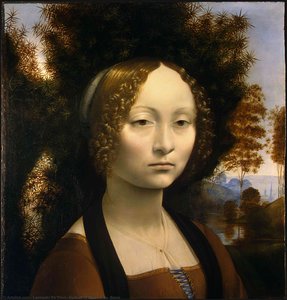 Portrait of Ginevra de' Benci - Leonardo da Vinci
Imagine stepping into a quiet, sun-drenched hall where time seems to slow. Before you, a sense of profound serenity emerges from the shadows—a soft, ethereal glow that feels less like paint and more like a captured breath. This is the magic of Leonardo da Vinci’s Portrait of Ginevra de' Benci, a cornerstone of the National Gallery of Art, Washington. As the only work by this High Renaissance master on public view in the Americas, it is a true jewel of the collection.
Leonardo moves beyond mere likeness, using his revolutionary sfumato technique to blur the edges of reality, imbuing Ginevra with a soulful, reflective depth. Her introspective gaze and the delicate, dark foliage surrounding her create an intimate, espresso-toned atmosphere that speaks of Renaissance elegance and intellectual grace. This masterpiece belongs among the top 25 artworks in the National Gallery of Art because it captures the very essence of human mystery. Much like the quiet corners of a well-curated home, this portrait invites us to pause, find stillness, and connect with the timeless beauty of the human spirit.
The Walk. Lady with a Parasol - Claude Monet
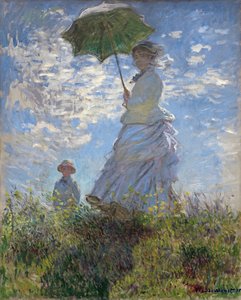 The Walk. Lady with a Parasol - Claude Monet
Imagine standing before a canvas where the very air seems to shimmer. In Claude Monet's The Walk. Lady with a Parasol (1875), the light is not merely a subject; it is the protagonist. Monet masterfully captures the fleeting, golden glow of a setting sun, using a vibrant palette of celadon greens and soft blues to dance across the meadow. This ethereal illumination, which transitions from brilliant whites to warm, atmospheric hues, is precisely why this masterpiece is a cornerstone of the National Gallery of Art, Washington collection. It exemplifies the Impressionist obsession with the transient beauty of the natural world.
The way the light catches the billowing fabric of the woman's dress and the delicate texture of the wildflowers creates a sense of movement that feels almost alive. For the modern collector, a high-quality reproduction of this piece—with its visible, tactile brushstrokes—can transform a living room into a sanctuary of tranquility. It brings a sophisticated, airy luxury to your walls, inviting the serene spirit of a summer afternoon into your home.
The Feast of the Gods - Titian
 The Feast of the Gods - Titian
Imagine a scene so vibrant it feels as though the air itself is humming with laughter and the scent of spilled wine. In 1529, the Venetian master Titian captured this very essence in The Feast of the Gods, a masterpiece that stands as a cornerstone of the collection at the National Gallery of Art, Washington. This isn't just a painting; it is a sensory explosion of the High Renaissance, where the boundaries between the divine and the mortal dissolve amidst a lush, espresso-toned forest.
Titian’s technical genius lies in his ability to use light and color to create a sense of movement; his loose, painterly brushstrokes make the golden light dance across the banquet table, illuminating the joyful faces of gods and mortals alike. It is a work of profound romanticism and ethereal beauty, showcasing the very best of what the National Gallery of Art, Washington offers to its visitors. Much like the focused ambition required to compose such a complex mythological drama, bringing a piece of this Venetian splendor into your own study or dining room can transform a space into a sanctuary of sophisticated, timeless energy.
Napoleon in his Study - Jacques-Louis David
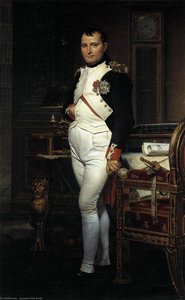 Napoleon in his Study - Jacques-Louis David
Step into a moment of quiet intensity with Jacques-Louis David’s 1812 masterpiece, Napoleon in his Study at the Tuileries. Moving away from the chaos of the battlefield, this portrait captures the Emperor in a rare, reflective state, surrounded by the symbols of governance and intellect. The composition is a triumph of Neoclassical precision; Napoleon stands with a poised, commanding presence, his hand resting near a clock that serves as a poignant reminder of the relentless passage of time and the weight of leadership. The room, rendered in sophisticated shades of gray and accented by scholarly books and scattered papers, breathes an air of elegant responsibility.
As one of the most significant pieces among the top 25 artworks in the National Gallery of Art, Washington, this painting exemplifies the museum's commitment to showcasing the evolution of Western history through profound visual storytelling. At Mus3ums.com, we believe such iconic moments of human history should do more than live behind museum glass. Whether through a meticulous handmade oil reproduction or a high-quality giclée print, you can bring this sense of historical grandeur and contemplative calm into your own living room or private study, transforming your personal space into a sanctuary of refined taste.
Portrait of a Lady - Rogier van der Weyden
 Portrait of a Lady - Rogier van der Weyden
In the quiet halls of the National Gallery of Art, Washington, few works command attention with such poised, introspective grace as Rogier van der Weyden’s Portrait of a Lady. This masterpiece of Early Netherlandish painting is a masterclass in structural harmony; the composition is built upon a sophisticated geometry of lines—from the sharp, elegant fold of her white headdress to the soft, rhythmic curves of her neckline and arms. This careful balance creates a sense of timeless perfection that has captivated viewers for centuries.
The subject, likely a noblewoman of the Burgundian court, gazes downward with a reflective, almost melancholic air, her features rendered with the luminous, meticulous detail characteristic of Van der Weyden’s oil-on-panel technique. Interestingly, the painting’s restrained palette and emphasis on essential form find a surprising resonance with modern minimalist design. Its ability to ground a space with quiet dignity makes it a standout among the top 25 artworks in the National Gallery of Art, Washington, offering a sophisticated anchor for any contemporary collection seeking both historical depth and an elegant, calm aesthetic.
Woman holding a balance ngw - Johannes Vermeer
 Woman holding a balance ngw - Johannes Vermeer
To encounter Johannes Vermeer’s Woman Holding a Balance is to step into a realm of profound, luminous stillness. As one of the most coveted treasures within the National Gallery of Art, Washington, this masterpiece transcends mere genre painting; it is a meditative study of equilibrium and the quiet grace of the Dutch Golden Age. Vermeer, the master of light, captures a fleeting moment of domestic reflection, where the soft northern light spills across a dark, elegant interior, illuminating the delicate scales held by a woman in a striking black dress.
The composition is a symphony of subtle symbolism—the presence of a book and a clock hinting at the passage of time and the weight of judgment. This work earns its place among the top 25 artworks in the National Gallery of Art, Washington, through its unparalleled ability to turn a private, domestic moment into a universal allegory of balance. For the modern collector, its serene mood and sophisticated palette of deep blacks and soft pearls offer a timeless aesthetic that brings a sense of calm, intellectual luxury to any refined living space.
Watson and the Shark - John Singleton Copley
 Watson and the Shark - John Singleton Copley
Imagine standing before a canvas that breathes with the raw, salt-sprayed energy of the ocean. John Singleton Copley's Watson and the Shark is a breathtaking masterclass in tension, a cornerstone of the National Gallery of Art, Washington, that captures a harrowing moment of survival. Through a dramatic interplay of deep phthalo greens and churning whites, Copley depicts the terrifying struggle of a young man caught between a desperate rescue and the predatory force of a shark. This isn't just a maritime scene; it is a profound exploration of human resilience against the overwhelming power of nature.
The painting’s inclusion in the top 25 artworks of the National Gallery of Art, Washington, is no surprise; its dynamic, swirling composition and masterful use of light redefine the very essence of 18th-century drama. At Mus3ums.com, we believe such powerful narratives should do more than sit behind museum glass. Whether through a museum-quality print or a custom handmade oil reproduction, you can bring this sense of epic movement and historical depth into your own sanctuary, transforming a living room or office into a space of profound storytelling and refined character.
Symphony in White No1 The White Girl - James McNeill Whistler
 Symphony in White No1 The White Girl - James McNeill Whistler
What if I told you that Symphony in White No1 The White Girl was born from a moment of rebellion—a stroke of defiance against the ordinary? This is not merely a portrait; it is a manifesto of Aestheticism. As one of the most luminous treasures within the National Gallery of Art, Washington, Whistler’s masterpiece demands your attention, proving that art can exist simply to be beautiful.
Imagine the ethereal glow of this composition in your own home. Whistler moves away from traditional storytelling to focus on a musical arrangement of color. The palette is a sophisticated study in putty and cream, where a woman in a flowing white gown emerges from a soft, monochromatic dream. The subtle interplay of light and shadow, paired with the serene presence of two loyal dogs, creates a sense of domestic tranquility that feels both timeless and modern. For those looking to curate a space of refined elegance, this work is a masterclass in tonal harmony. It reminds us that your space is not just a room—it is a statement of grace.
Venus in Front of the Mirror - Titian
 Venus in Front of the Mirror - Titian
In the hallowed halls of the National Gallery of Art, Washington, few works command the room with such elegant poise as Titian’s 1554 masterpiece, Venus in Front of the Mirror. This Venetian treasure is a profound exploration of the High Renaissance, where the pursuit of divine beauty meets the human reality of self-reflection. Titian, a master of color and light, uses rich, warm tones and sumptuous crimson drapery to create a scene that feels both intimate and mythological.
The painting captures the goddess Venus in a moment of serene contemplation, flanked by cherubs who attend to her beauty. It is this perfect balance of mythological narrative and technical virtuosity—seen in the luminous skin tones and the play of light on gold—that secures its place among the top 25 artworks in the National Gallery of Art. For the modern collector, this piece offers more than just decoration; it provides a timeless conversation about perception and grace, making it a soulful centerpiece for any curated living space seeking a touch of classical sophistication.
Death and the Miser - Hieronymus Bosch
 Death and the Miser - Hieronymus Bosch
Step into the hauntingly beautiful world of the Northern Renaissance with Hieronymus Bosch’s Death and the Miser. This striking panel is a masterclass in memento mori, serving as a chilling yet captivating meditation on the tension between earthly greed and spiritual salvation. As one of the most profound works in the National Gallery of Art, Washington, it stands out for its ability to provoke deep reflection through its intense, somber emotionality.
The composition is a dramatic dance of light and shadow. Bosch utilizes a palette of muted earth tones—deep ochres and browns—interrupted by sudden, piercing flashes of gold and red that draw the eye to the symbols of mortality. The scene is claustrophobic and visceral, capturing a sense of impending judgment that feels as relevant today as it did in 1490. For the modern collector, this piece offers a sophisticated, moody ambiance; its dark, dramatic energy makes it a powerful conversation starter for a curated living room or a study. It is more than a painting; it is a profound exploration of the human condition that remains a cornerstone of the museum's storied collection.
The Sacrament of the Last Supper - Salvador Dalí
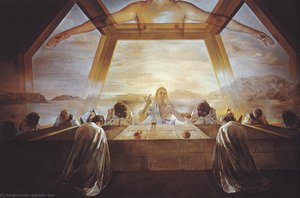 The Sacrament of the Last Supper - Salvador Dalí
In the quiet halls of the National Gallery of Art, Washington, few works command the room with such mystical intensity as Salvador Dalí’s 1955 masterpiece, The Sacrament of the Last Supper. This isn't just a depiction of a biblical event; it is a surrealist dreamscape that bridges the gap between the divine and the mathematical. Dalí reimagines the sacred scene within a translucent, hyper-geometric structure that seems to float amidst a turbulent, ethereal landscape, inviting us to contemplate the intersection of faith and the subconscious.
What makes this one of the top 25 artworks in the National Gallery of Art, Washington, is its ability to transform a traditional icon into a modern, psychological experience. Through his signature paranoiac-critical method, Dalí uses precise lines and dramatic chiaroscuro to create a sense of profound spiritual weight. For the modern collector, this piece serves as a captivating talking point, blending the timelessness of religious history with a sophisticated, avant-garde aesthetic that feels remarkably contemporary in today's curated, design-conscious spaces.
Girl with the Red Hat - Johannes Vermeer
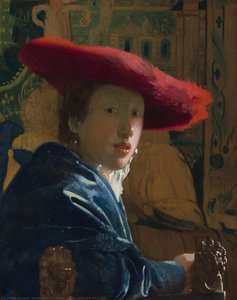 Girl with the Red Hat - Johannes Vermeer
What story does the quiet, shadowy background of this intimate portrait tell? In Vermeer’s 1669 masterpiece, the darkness serves as a stage, pushing the subject forward and allowing her luminous presence to command the room. As one of the most captivating pieces in the National Gallery of Art, Washington, this work exemplifies the Dutch Golden Age through its profound mastery of light and the subtle, reflective mood that defines Vermeer’s genius. The girl’s gaze is direct and soulful, her crimson hat providing a striking pop of color against the muted, espresso-toned shadows.
For the modern collector, this painting offers more than just a glimpse into 17th-century Delft; it provides a sense of calm and historical depth that makes it a perfect centerpiece for a living room. Whether you are drawn to its soft, hazy textures or its emotional resonance, this portrait remains a cornerstone of the museum's collection, inviting viewers to find a moment of serene escape within its beautifully composed, timeless frame.
St. George and the Dragon - Raphael
 St. George and the Dragon - Raphael
Acquiring a piece inspired by Raphael’s St. George and the Dragon is more than a design choice; it is an investment in a legacy of unparalleled taste for the discerning collector. As one of the crown jewels among the top 25 artworks in the National Gallery of Art, Washington, this High Renaissance masterpiece captures the very essence of the museum's prestigious collection. Raphael’s genius is on full display in this dramatic scene, where the knight’s valiant struggle against the dragon unfolds amidst a lush, forest landscape. The composition is a masterclass in emotional resonance, utilizing a powerful, espresso-toned palette that anchors the divine drama in earthly reality.
The painting’s presence in the National Gallery of Art signifies its status as a cornerstone of Western art history, bridging the gap between classical myth and human emotion. For those looking to bring this same aesthetic authority into their own space, a high-quality handmade reproduction offers a way to infuse a modern luxury interior with the timeless status and sophisticated vibe of the Renaissance. It is a piece that doesn't just decorate a room—it commands it.
Saltimbanques (The Family of Saltimbanques) - Pablo Picasso
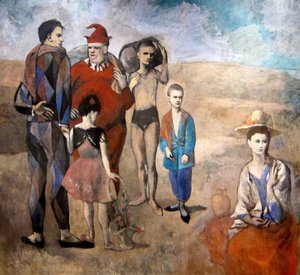 Saltimbanques (The Family of Saltimbanques) - Pablo Picasso
Stepping into the presence of Pablo Picasso’s Saltimbanques (The Family of Saltimbanques) is to witness a profound emotional metamorphosis. As a cornerstone of the National Gallery of Art, Washington, this 1905 masterpiece marks the breathtaking transition from Picasso’s melancholic Blue Period into the warmth of his Rose Period. The composition is a masterclass in structural harmony; Picasso utilizes a sophisticated interplay of fragmented, geometric planes and soft, organic curves to anchor a group of circus performers within a vast, desolate landscape.
There is a rhythmic, almost musical balance to the way the figures cluster in the foreground, creating a sense of intimacy amidst the emptiness. This delicate equilibrium between tension and repose mirrors the principles of modern minimalist design, making it a timeless inspiration for contemporary interiors seeking a grounded, soulful aesthetic. Through a palette of soft pinks, ochres, and muted reds, Picasso captures a sense of theatrical drama and quiet isolation. It is not merely a painting, but a window into the human condition, standing as one of the most evocative treasures in the National Gallery’s collection.
Laocoön - El Greco
 Laocoön - El Greco
Close your eyes. Can you feel the light in El Greco’s Laocoön? It is not just illumination; it is a language. The artist did not merely paint light—he composed it, like a musician crafting a haunting sonata. This 1610 masterpiece is a cornerstone of the National Gallery of Art, Washington, representing the pinnacle of Mannerist drama and spiritual intensity.
In this visceral scene of mythological turmoil, El Greco captures the agonizing struggle between human figures and serpentine creatures. Through his signature elongated forms and expressive, twisting lines, he transforms a moment of chaos into a profound meditation on mortality and temptation. The palette is a somber dance of earthy browns, muted greys, and pale ochres, all punctuated by a dramatic chiaroscuro that makes the musculature of the figures leap from the canvas. The thick, tactile impasto adds a physical weight to the suffering, turning the canvas into a window of raw emotion. This is why it remains one of the top 25 artworks in the collection: it doesn't just reflect light; it invents it, inviting you to experience the sublime tension of the human spirit.
Two Women at a Window - Bartolomé Esteban Murillo
 Two Women at a Window - Bartolomé Esteban Murillo
In the quiet corridors of the National Gallery of Art, Washington, few works capture a sense of intimate mystery quite like Bartolomé Esteban Murillo’s 1660 masterpiece, Two Women at a Window. This Spanish Baroque gem is a masterclass in structural harmony; the vertical composition creates a graceful geometry that guides your eye from the soft, luminous faces of the women down to the subtle textures of their attire. There is a profound balance here—a rhythmic interplay between the dark, atmospheric background and the gentle light spilling through the window—that creates a feeling of timeless perfection.
Interestingly, this 17th-century scene feels surprisingly modern. The way Murillo uses light to define form and space mirrors the principles of contemporary minimalist design, where negative space and focused illumination create a grounded, calming aesthetic. Whether you are drawn to its nostalgic, romantic mood or its exquisite rendering of light, this painting stands as a cornerstone of the National Gallery’s collection, inviting you to pause and find beauty in a fleeting, private moment of grace.
Portrait of Bindo Altoviti - Raphael
 Portrait of Bindo Altoviti - Raphael
In the quiet, neoclassical halls of the National Gallery of Art, Washington, few works command the room with such dignified elegance as Raphael’s 1515 masterpiece, Portrait of Bindo Altoviti. This isn't merely a painting; it is a dance of light and shadow frozen in time. Raphael, the Italian High Renaissance master, moves beyond simple likeness to capture the very soul of the Florentine banker through a sophisticated choreography of lines and gaze.
The subject emerges from a deep, phthalo green background, his features sculpted by a dramatic chiaroscuro that feels almost tactile. There is a rhythmic grace in the way the light catches the rich textures of his attire and the soft contours of his face, evoking a sense of profound contemplation. It is this ability to transform a single moment of reflection into a timeless study of humanism that makes it a cornerstone of the museum's collection. For those looking to bring a sense of balanced, soulful harmony into their own homes, this portrait serves as the ultimate inspiration for meaningful, curated living.
Little Girl in a Blue Armchair - Mary Cassatt
 Little Girl in a Blue Armchair - Mary Cassatt
At Mus3ums.com, we believe that the profound beauty of a museum masterpiece should be accessible to everyone, not just those who can visit Washington, D.C. This philosophy is why Mary Cassatt’s 1878 masterpiece, Little Girl in a Blue Armchair, holds a prestigious place among the top 25 artworks in the National Gallery of Art, Washington. This painting is a quintessential example of the museum's collection, capturing the quiet, reflective essence of 19th-century Impressionism through a lens of domestic intimacy.
The scene is a masterclass in atmosphere; a young girl reclines in a plush armchair, accompanied by a sleeping dog, all enveloped in a soothing palette of deep blues and soft, natural light. Cassatt’s loose, expressive brushwork creates a sense of fleeting, nostalgic movement, turning a simple moment of childhood leisure into a timeless study of comfort and innocence. It is this ability to evoke deep emotion through color and light that makes it a cornerstone of the National Gallery’s treasures. Today, you can bring this transformative presence into your own living room or personal gallery through our high-fidelity, hand-painted oil reproductions, allowing this piece of history to live within your home.
The Road Bridge at Argenteuil - Claude Monet
 The Road Bridge at Argenteuil - Claude Monet
In Claude Monet's 1874 masterpiece, The Road Bridge at Argenteuil, we witness the very heartbeat of Impressionism. This painting is a cornerstone of the National Gallery of Art, Washington, representing a pivotal moment when art shifted from rigid realism to the celebration of fleeting, sensory experiences. Through shimmering steel blues and sun-drenched strokes, Monet captures the essence of a leisurely afternoon on the Seine, where light dances upon the water and the world feels momentarily suspended in tranquility.
Its inclusion in the top 25 artworks at the National Gallery of Art is no accident; it is a masterclass in en plein air technique, using broken brushstrokes to evoke movement and atmosphere rather than mere detail. For the modern collector, this piece offers more than just a beautiful landscape; it provides a window into a serene way of life. Whether reimagined as a custom oil reproduction or a vibrant canvas print, its ability to bring the luminous, tranquil spirit of the French countryside into a contemporary living room makes it a timeless conversation piece for any curated home.
Girl with a Hoop - Pierre-Auguste Renoir
 Girl with a Hoop - Pierre-Auguste Renoir
In Pierre-Auguste Renoir’s 1885 masterpiece, Girl with a Hoop, we encounter a sublime study in structural harmony. The composition is anchored by the soft, rounded contours of the young girl, Marie Goujon, whose figure is beautifully balanced against the organic, flowing lines of a lush garden. A subtle diagonal is created by the wooden hoop and stick, a geometric whisper that guides the eye through the scene and imbues the moment with a sense of poised, rhythmic energy. This internal balance—the marriage of delicate shapes and soft, diffused light—creates a timeless perfection that makes it a cornerstone of the National Gallery of Art, Washington collection.
The painting’s ability to capture a fleeting, nostalgic moment of childhood leisure through Impressionistic, broken brushstrokes offers a surprising connection to modern aesthetics. Much like the principles of minimalist design, Renoir’s focus on essential form and a harmonious color palette allows the subject to breathe, making it an ideal inspiration for contemporary living spaces. It is this ability to ground a clean, modern aesthetic in pure, emotive joy that secures its place among the top 25 artworks in the National Gallery.
Farmhouse in Provence - Vincent van Gogh
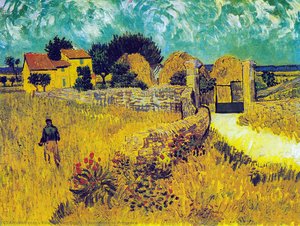 Farmhouse in Provence - Vincent van Gogh
A sun-drenched whisper of the French countryside, where the golden warmth of Arles meets the restless energy of a shifting sky. Farmhouse in Provence (1888) stands as a cornerstone of the National Gallery of Art, Washington, representing the profound emotional depth of the Post-Impressionist movement. Van Gogh’s mastery is felt through his signature impasto technique, where thick, swirling brushstrokes create a tactile landscape of wheat fields and red-roofed cottages. This isn't just a depiction of rural life; it is a rhythmic dance of color, where vibrant yellows and deep blues collide to evoke a sense of both abundance and a gentle, nostalgic melancholy.
As one of the top 25 artworks in the National Gallery of Art, Washington, this masterpiece transcends the canvas, offering a timeless aesthetic that continues to inspire modern living rooms. Its ability to infuse a space with warmth and movement makes it a favorite for those seeking to bring a touch of soulful, storied beauty into their own homes. Whether through its dramatic skies or its earthy, organic textures, Van Gogh’s vision remains an essential chapter in the history of visual culture.
Street in Venice - John Singer Sargent
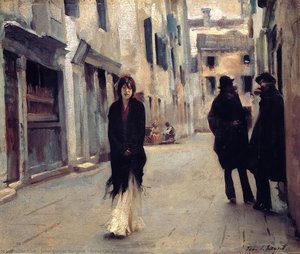 Street in Venice - John Singer Sargent
Stepping into the presence of Street in Venice is like catching a fleeting, whispered secret in a quiet Venetian alleyway. Painted in 1882, John Singer Sargent’s Impressionist masterpiece is a cornerstone of the National Gallery of Art, Washington, capturing the very essence of urban life through a lens of nostalgic elegance. The composition draws you in with an asymmetrical grace, centering on a solitary woman in a dark cloak who moves through the hazy, diffused light of an overcast afternoon.
Sargent, the celebrated portraitist of the Gilded Age, trades his usual focus on high-society elegance for a more reflective, atmospheric study of the everyday. His brushwork is a marvel of texture; loose, broken strokes of rosy brown and muted greys build a sense of depth and movement that feels almost tactile. This isn't merely a depiction of a street; it is a study of quietude and the timeless pulse of a city. For those looking to transform a living space into a gallery of the soul, this work offers a window into a world of contemplative beauty and masterful light.
A Friendly Call - William Merritt Chase
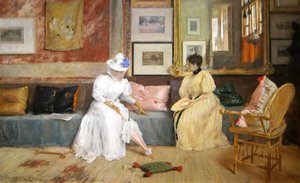 A Friendly Call - William Merritt Chase
Step into a moment of pure Gilded Age elegance with William Merritt Chase’s A Friendly Call (1895). This captivating oil-on-canvas is a cornerstone of the National Gallery of Art, Washington, offering a nostalgic glimpse into the refined social graces of the late 19th century. Chase, a true leader of American Impressionism, masterfully captures a quiet afternoon of conversation between two elegantly dressed women within the serene sanctuary of his summer studio.
The painting is a masterclass in texture and light; notice how the soft, visible brushstrokes dance across the plush blue upholstery and the intricate patterns of the cushions, creating a tactile richness that feels almost within reach. Its warm palette of driftwood tones, deep reds, and golden hues creates an atmosphere of domestic tranquility that remains incredibly relevant for modern interior design. For those looking to bring a sense of sophisticated ambiance into a living room, this work exemplifies the timeless ability of art to transform a space into a sanctuary of reflection and grace.
The human condition - René Magritte
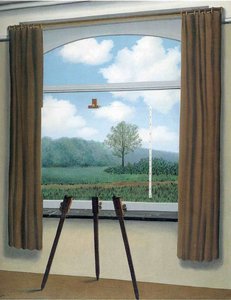 The human condition - René Magritte
What story does the boundary between a view and a vision tell in René Magritte’s 1933 masterpiece, The Human Condition? This enigmatic work stands as a cornerstone of the top 25 artworks in the National Gallery of Art, Washington, perfectly embodying the museum's mission to bridge the gap between classical tradition and the profound shifts of modernism. Magritte, a master of Belgian Surrealism, invites us into a quiet, white-walled room where a large arched window acts as a portal. Yet, the landscape seen through the glass is not merely a view; it is a painting within a painting, creating a mesmerizing loop of perception and reality.
The composition, featuring two silent easels and a serene, rolling landscape, evokes a mystical and reflective mood. For the modern decorator, this piece offers a sophisticated way to invite a sense of intellectual escape into a living room, turning a wall into a window of contemplation. It is this ability to challenge our senses while maintaining a calm, aesthetic grace that makes it an essential highlight of the National Gallery of Art, Washington collection.
River Landscape - Annibale Carracci
 River Landscape - Annibale Carracci
There is a profound, quiet magic in the way a landscape can hold a moment of peace forever. In Annibale Carracci’s River Landscape, we find more than just a view of winding waters and lush greenery; we encounter a masterclass in serenity. This 1589 masterpiece captures the delicate transition from the Renaissance to the Baroque, blending Florentine precision with a soft, Venetian sense of atmosphere. The way the light filters through the foliage, casting dappled shadows across the riverbank, creates a sense of depth that pulls you into its tranquil embrace.
As one of the essential treasures within the National Gallery of Art, Washington, this work exemplifies the museum's commitment to showcasing the evolution of Western art. It stands among the top 25 artworks in the collection because it speaks to the universal human desire for harmony with nature. At Mus3ums.com, we believe this kind of restorative beauty shouldn't be confined to museum walls. Through our hand-painted oil reproductions, you can bring the textured brushstrokes and calming earthy tones of Carracci’s vision into your own living room, turning a quiet corner of your home into a sanctuary of timeless elegance.
Conclusion
As the light fades over the neoclassical marble of Washington, D.C., we are reminded that the masterpieces within the National Gallery of Art are far more than silent relics of a bygone era. They are living, breathing windows into the human soul—from the divine stillness of a Van Eyck to the sweeping emotional landscapes that define our shared history. These works do not merely hang on walls; they hold space, inviting us to pause, to breathe, and to find a moment of profound connection in an increasingly hurried world. They remind us that beauty, when captured with intention, possesses a timelessness that transcends the centuries.
At Mus3ums.com, we believe that this sense of wonder should not be confined to museum halls. We invite you to bring that same spirit of discovery into your own sanctuary. Whether you are a homeowner seeking to add soul to a first apartment or a professional designer curating the atmosphere of a luxury hotel or a refined villa, we serve as your creative partner in making art an integral part of your lifestyle. Through our bespoke services—from professional digital mockups that help you visualize a piece in your specific space to our exquisite, hand-painted oil reproductions that capture the tactile depth of every brushstroke—we help you transform a room into a curated experience.
Let these icons of art history inspire your next chapter. Whether you are drawn to the soft light of an Impressionist morning or the dramatic shadows of a Renaissance portrait, we are here to help you find the piece that speaks to your unique story. Discover the full collection and let us help you turn your vision into an artistic statement that lasts for generations.


