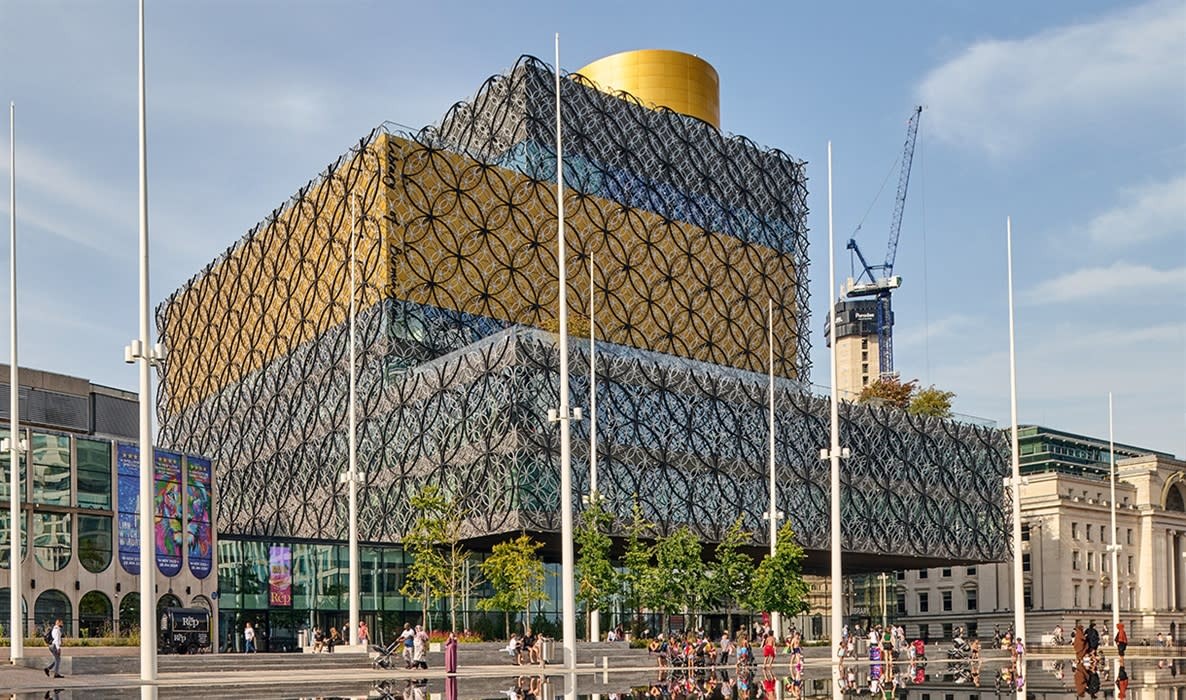


A Brutalist Icon: The Legacy of Birmingham Central Library
To contemplate the Birmingham Central Library is to engage with a profound chapter of architectural history, a structure that once stood as a monumental testament to the Brutalist spirit. Designed by the architect John Madin , this imposing edifice was far more than a mere repository for knowledge; it was a bold statement of civic ambition and a cornerstone of Birmingham's urban identity. For decades, its heavy, sculptural presence defined the city's skyline, embodying an era where concrete and raw form were used to express strength, permanence, and the democratic promise of shared intellectual resources. Though the building has since been demolished as part of the wider redevelopment of Paradise Circus, its memory remains etched in the cultural consciousness of the United Kingdom.
The library's architectural narrative was one of complex layers and shifting urban tides. It emerged in 1974, replacing even older institutions that had served the city since the nineteenth century. As a centerpiece of an ambitious development project, it was intended to anchor a new civic center, yet its history was also marked by the economic realities of its time, which saw certain elements of the original master plan scaled back. For lovers of Brutalist architecture , the library represented a significant moment in the evolution of the style, offering a rugged, textured aesthetic that contrasted sharply with the more delicate, ornate structures of Birmingham's past.
A Repository of History and Industrial Soul
Beyond its striking physical form, the essence of the Birmingham Central Library lay in its role as a guardian of the city's intellectual and industrial heritage. It served as a vital bridge between the grit of the Industrial Revolution and the modern cultural dynamism of the twentieth century. Within its walls, the archives provided a window into the metamorphosis of Birmingham, documenting the very innovations that transformed the region into a global manufacturing powerhouse.
The library's significance was deeply rooted in its ability to preserve the following:
- Rare Books and Special Collections: A treasure trove for historians and aesthetes alike, housing manuscripts that whispered of medieval devotion and early printed editions that signaled the dawn of a new typographic era.
- Industrial Archives: Meticulously preserved records that captured the glory and the toil of Birmingham's manufacturing prowess, offering an intimate connection to the city's economic evolution.
- Cultural Records: Documentation of the vibrant performing arts scene that flourished alongside the city's industrial growth.
While the physical structure has been replaced by the contemporary Library of Birmingham , the legacy of the Central Library persists as a symbol of a time when architecture sought to match the scale of human progress. For the historian and the art lover, it remains a poignant subject of study—a vanished monument that once stood at the intersection of heavy industry and the light of human inquiry.