


The History of the Library of Congress
Founded in 1800, the Library of Congress is the oldest federal cultural institution in the United States. Its early existence was marked by significant loss when the original collection was destroyed during the burning of Washington by British forces in 1814. This destruction necessitated a rebuilding of the institution's intellectual foundations. In January 1815, Congress appropriated $23,950 for the purchase of books from Thomas Jefferson, a collection that helped restore the library's capacity to preserve human thought.
The institution's growth continued through the nineteenth century, evolving from a small collection into a massive repository. A significant shift occurred in 1870, when the library gained the right to receive two copies of every copyrightable work. This mandate ensured a continuous influx of new materials, allowing the collection to expand across languages and subjects. The library has transitioned from its early beginnings in the Capitol to its current presence across multiple buildings on Capitol Hill.
The Architecture of the Thomas Jefferson Building
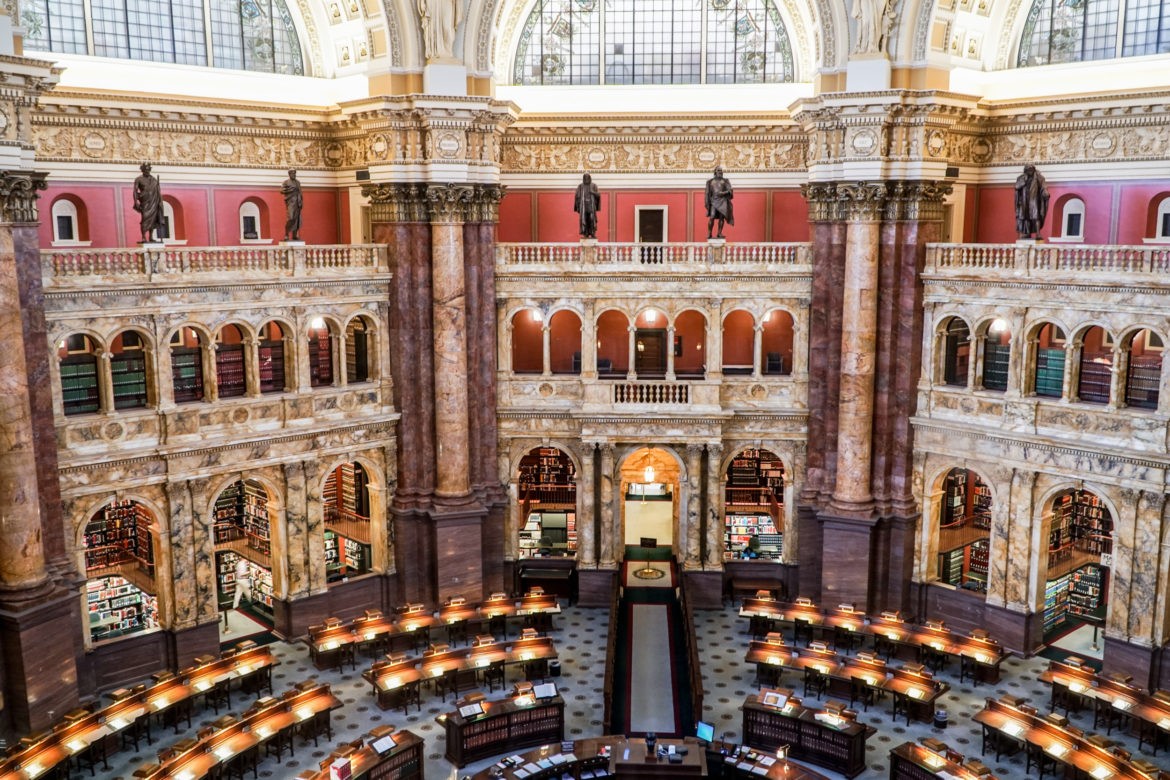
The Thomas Jefferson Building, constructed between 1890 and 1897, represents a significant expression of Beaux-Arts architecture. Henry Bacon designed this structure to embody the aspirations of a growing nation through symmetrical form and opulent ornamentation. The exterior is defined by four colossal columns, each representing a core virtue: Virtue, Justice, Strength, and Wisdom. These figures are not merely decorative; they are embodied in the sculptures that adorn the façade, offering a silent presence to those who pass by.
Inside, the Great Hall provides a sense of immense scale. The interior reaches 75 feet high, where light filters through stained glass windows depicting scenes from American history and mythology. Painted ceilings and intricate mosaics decorate the surfaces, drawing the eye upward toward the dome. The atmosphere within this space is one of quiet reverence, designed to foster contemplation through its deliberate use of light and symbolic detail.
A Vast and Universal Collection
The scale of the holdings is immense, encompassing approximately 173 million items. This collection spans more than 470 languages, gathering research materials from every corner of the globe. Within these walls, the Gutenberg Bible remains a significant presence, a tangible link to the dawn of the printing age. It is a place where the breadth of human thought is preserved through physical form.
The archives contain rare maps that chart the history of exploration and discovery. Alongside these, musical scores from every corner of the world offer a record of global melody and composition. The collection reaches across eras, holding fragile manuscripts from ancient civilizations such as Sumeria and the Mayan empire. It is a repository that documents the past while safeguarding the cultural landscape of the present.
- Untitled (AQTGFC), 2010 - Carol M Highsmith
- History of San Francisco mural Beating the Chinese, 2012 - Anton Refregier
- Market Scene, 1899 - Maurice Brazil Prendergast
Exhibitions and Research Services
The institution functions as the research arm of Congress, providing objective, non-partisan information through the Congressional Research Service. This intellectual labor supports the legislative process with specialized expertise. Beyond these administrative functions, the Library administers copyright law through the United States Copyright Office. Such responsibilities ensure the legal framework for creative works remains intact while the institution continues its work as a repository of human thought.
Curated displays bring specific movements and eras into focus. An exhibition titled “American Art Deco” recently explored the geometric forms and ornamentation of the 1920s and ’30s. Other displays present original manuscripts by authors, allowing for a direct encounter with the physical traces of literary creation. These exhibitions transform the halls into spaces where history is examined through the lens of specific artistic and cultural developments.


