

The History and Origins of Museum Ostwall
Museum Ostwall serves as a museum of modern and contemporary art in Dortmund, Germany. The institution was founded in the late 1940s, emerging during a period of significant reconstruction. Its first exhibition, held in 1949 under the name Museum am Ostwall, established it as one of Germany's first post-war museums dedicated to 20th-century art.
The foundations of the collection are rooted in a complex history. The initial assembly of works included pieces that had been classified by the Nazis as "degenerate art." This early acquisition process helped shape the institution's focus on modernism. The museum has continued to expand its holdings through various acquisitions, including the Gröppel Collection acquired in 1957.
For much of its existence, the museum operated from a building on the Ostwall, a road following the old city walls of Dortmund. This original location included a small sculpture garden. Following the closure of the original building in June 2009, the museum relocated to the Dortmunder U. It reopened in the U-Tower in October 2010, continuing its mission within this seven-storey former brewery and warehouse.
The Architecture of the Dortmunder U
Since 2010, the museum has been housed within the Dortmunder U, a seven-storey structure in Dortmund, Germany. This building functioned as a Dortmund Union brewery and warehouse before its conversion. It now operates as part of the Dortmunder U creative complex, providing a vertical space for modern and contemporary art. The museum occupies the upper floors of this tower.
The current location represents a significant shift from the institution's previous site. The original museum was situated in a building on the Ostwall, which included a small sculpture garden. This former location served the collection until the museum began its relocation into the U-Tower. The transition moved the collection from the street-level Ostwall into the industrial architecture of the brewery tower.
Major Collections and Artistic Movements
The collection spans from Expressionism through classic modern art to the present day. It contains paintings, sculptures, objects, and photographs from the 20th century, alongside a significant holdings of over 2,500 graphics. These works reflect the evolution of modernism, with a particular emphasis on the development of German Expressionism. This includes significant representations of the Die Brücke movement and the Blaue Reiter group, the latter of which features works by Wassily Kandinsky and Franz Marc.
The museum also holds works associated with the Fluxus movement. This part of the collection includes pieces by Joseph Beuys and Nam June Paik. The breadth of the holdings allows for a study of various 20th-century genres, including art informel, Op art, and Concrete art. The selection of works continues through to contemporary art, maintaining a focus on the shifts in visual language throughout the last century.
Masterpieces and Notable Artworks
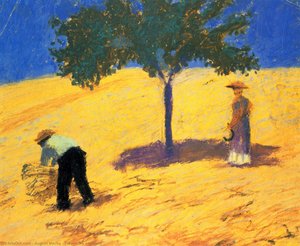
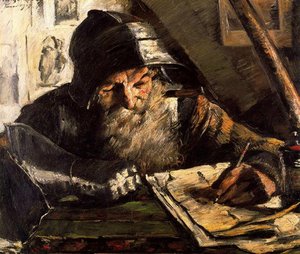
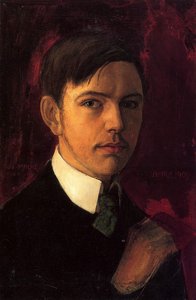
The collection includes significant works by August Macke, Otto Mueller, Emil Nolde, and Karl Schmidt-Rottluff. These pieces represent central figures within the development of modern art. The museum also holds 26 graphics by Pablo Picasso produced during the 1940s and 1950s. These works are part of a broader assembly that features artists such as Joan Miró, Marc Chagall, Salvador Dalí, and Otto Dix. Other notable holdings include works by Lyonel Feininger, Alberto Giacometti, Paul Klee, Oskar Kokoschka, Oskar Schlemmer, and Christian Rohlfs.
A primary component of the institution is the Jawlensky collection. It is the second-largest collection of its kind in Germany, surpassed only by the Museum Wiesbaden. This assembly provides a substantial record of the artist's output. The museum's holdings also encompass a variety of 20th-century genres, ranging from Expressionism to art informel, fluxus, op art, and concrete art.