The Enigmatic Master of the Burg Weiler Altar: A Glimpse into 15th-Century Swabian Devotion
In the rich tapestry of fifteenth-century German art, certain figures remain shrouded in mystery, their identities lost to time yet their artistic contributions enduring. Among these elusive masters is the painter known as the Master of the Burg Weiler Altar, a name derived from his most celebrated work—a magnificent triptych that once graced the castle chapel of Burg Weiler near Heilbronn. Active around 1470 in the region of Swabia, bordering Franconia, this artist offers a compelling window into the religious sensibilities and artistic practices of the Middle Rhineland.
Little is definitively known about the Master’s life beyond his geographical association and approximate period of activity. Scholars believe he likely operated within a workshop setting, possibly based in Heilbronn itself, producing altarpieces for local churches and noble patrons. The lack of documented biographical details only adds to the allure surrounding this artist, prompting speculation and inviting deeper examination of his stylistic choices as clues to his origins and training.
A Masterpiece of Middle Rhenish Style: The Burg Weiler Triptych
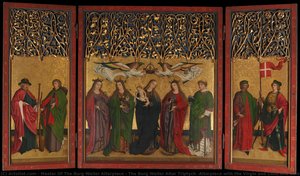
The Burg Weiler Altar Triptych, now residing in the Cloisters collection of the Metropolitan Museum of Art, stands as the cornerstone of the Master’s attributed oeuvre. This oil-on-wood altarpiece exemplifies the characteristics of Middle Rhenish painting—a style that blended elements of Gothic tradition with emerging Renaissance influences. The triptych's imposing scale and meticulous detail immediately command attention. The central panel depicts the Virgin Mary enthroned as Queen of Heaven, cradling the Christ Child, while a radiant host of saints surrounds her in symmetrical arrangement.
The artist’s skill is evident in the delicate modeling of faces, the rich jewel tones of the drapery, and the intricate patterns adorning the background. The use of gold leaf creates an ethereal glow, enhancing the devotional atmosphere. When closed, the outer panels reveal additional scenes of saints, offering a narrative expansion for private contemplation. The figures are not merely representations but embodiments of spiritual grace, their expressions conveying serenity and piety.
Artistic Characteristics and Influences
The Master’s work is distinguished by several key characteristics. A profound sense of serenity permeates his compositions, reflecting a deep devotion to religious subject matter. This tranquility isn't achieved through stark simplicity but rather through a harmonious balance of color, form, and narrative detail. His mastery of composition is equally noteworthy; the figures are arranged with precision, creating a visually unified and aesthetically pleasing whole.
Identifying specific artistic influences proves challenging given the limited scope of his known work. However, scholars suggest connections to artists active in the broader Rhineland region, as well as potential exposure to Flemish painting—particularly the works of Jan van Eyck. The meticulous realism and attention to detail evident in the Burg Weiler Triptych echo certain aspects of Northern Renaissance style, though filtered through a distinctly German sensibility. The artist’s contemporaries, like Bartolomeo Montagna, also show similar characteristics.
Legacy and Historical Significance
Despite the anonymity surrounding his identity, the Master of the Burg Weiler Altar left an indelible mark on the artistic landscape of 15th-century Germany. His work provides valuable insight into the religious beliefs and aesthetic preferences of the period. While direct evidence of widespread influence remains elusive, his style can be observed in various regional paintings from the Middle Rhenish area.
The Burg Weiler Triptych continues to captivate viewers with its beauty and spiritual depth. It serves as a testament to the skill and artistry of an unknown master—a painter who, though lost to history, continues to inspire awe and reverence through his enduring creation. Exploring his work offers not only an appreciation for medieval art but also a poignant reminder of the countless anonymous artists whose contributions shaped the cultural heritage of Europe.