when did david hockney start art
 David Hockney
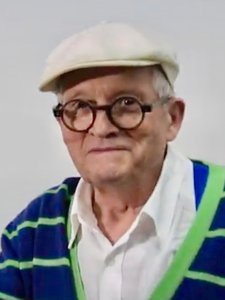
David Hockney, born July 9, 1937, in Bradford, England, is more than just a painter; he’s a visual polymath whose career has spanned painting, drawing, printmaking, stage design, and photography.
David Hockney began his formal artistic training in the early 1950s in England. After attending Wellington Primary School and Bradford Grammar School, he entered the Bradford College of Art from 1953 to 1957. He later moved to London to study at the Royal College of Art between 1959 and 1962.
His academic journey in the United Kingdom provided the technical foundation for a career that would span decades and multiple mediums. During his time at the Royal College of Art, his talent was recognized through significant honors, including winning a gold medal and receiving a diploma in 1962.
The timeline of his early development includes:
- 1953–1957: Studies at Bradford College of Art
- 1959–1962: Studies at the Royal College of Art, London
- 1962: Awarded the gold medal and diploma at the Royal College of Art
what were his earliest art subjects
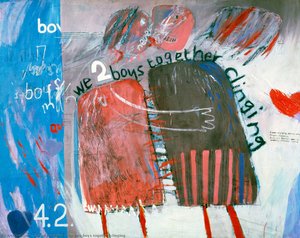 We two boys together clinging
We two boys together clinging, David Hockney
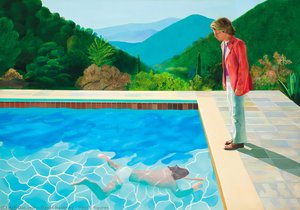
Hockney’s early subjects focused on intimate human connections and the exploration of personal identity. In the early 1960s, he used his work to confront societal norms by depicting gay love and vulnerability, notably through his expressive and emotionally resonant double portraits and figurative studies.
His work from this period demonstrates a shift from traditional representation toward an exploration of how we perceive reality. Notable early works include:
- We Two Boys Together Clinging (1961): An exploration of gay love and vulnerability.
- American Collectors (Fred and Marcia Weisman): A portrait capturing the essence of personality and relationship.
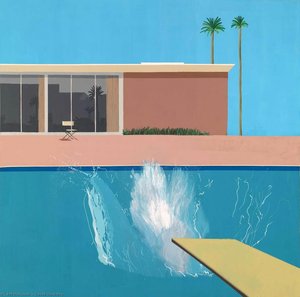
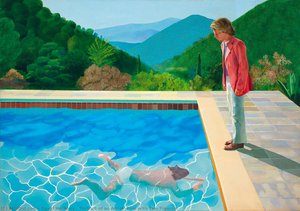
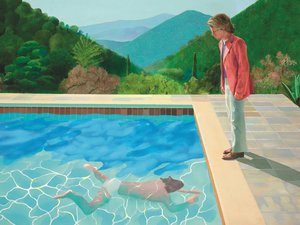
As he moved toward the mid-1960s, his focus expanded to include the vibrant light and leisure of California, famously captured in his 1966 masterpiece, A Bigger Splash. This piece uses a swimming pool to meditate on artifice and the act of seeing.
which art movement was he part of
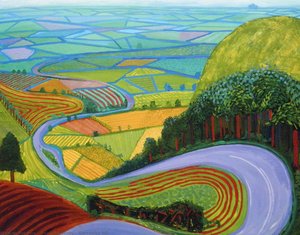
David Hockney was a pivotal figure in the Pop Art movement of the 1960s. While many of his contemporaries focused on American commercial culture, Hockney contributed a uniquely British sensibility to the genre, characterized by vibrant colors, bold lines, and a keen observational eye.
His contribution to Pop Art was marked by a blend of pop sensibilities and a distinct perspective on everyday life. Rather than strictly imitating mass media, he used the movement's aesthetic to explore:
- Vibrant, saturated color palettes
- Bold, graphic lines
- The intersection of familiar scenes and subtle subversion
This approach helped redefine British art in the 20th century. His ability to capture the essence of modern life—from the leisure of a swimming pool to the complexities of human relationships—ensured his place as one of the most influential artists of the era.
Frequently asked questions
When was he born?
He was born on July 9, 1937, in Bradford, West Yorkshire.
Where did he study?
He studied at the Royal College of Art from 1959 to 1962.
What award did he win at the Royal College of Art?
He won a gold medal at the Royal College of Art.
What was his role in the 1960s art scene?
He was a key figure in the 1960s Pop Art movement.
Learn more
- 1937 –David Hockney Artist ProfileDiscover his journey from the industrial heartland of Yorkshire to becoming a global icon.
- 1937 –David Hockney Timeline of WorksFollow his artistic evolution through a year-by-year timeline of his iconic works.
- 1937 –David Hockney Life ChronicleRead a detailed chronicle of his life and major artistic milestones.