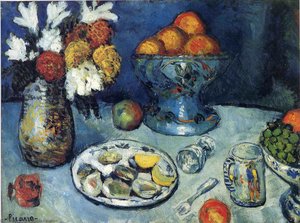


When did Picasso start painting?
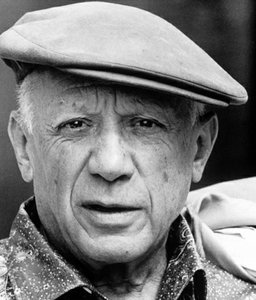
Pablo Picasso began his artistic journey in Málaga, Spain, as a young child. By the age of seven, he was already producing competent drawings and receiving formal training in figure drawing and oil painting from his father, José Ruiz y Blasco, a professional painter and art instructor.
His early education was marked by a rapid, disciplined progression. After learning the fundamentals under his father, he moved through A Coruña and Barcelona. His talent was evident when he completed entrance exams for advanced classes in Barcelona in a single week, a task that typically took other students a month.
His academic path included several prestigious institutions:
- The School of Fine Arts (La Llotja) in Barcelona, where he entered formal education around age 13 or 14.
- The Royal Academy of Fine Arts San Fernando in Madrid.
This rigorous foundation in classical technique allowed him to master the traditional methods of the masters before he eventually moved to Paris, where he would spend much of his adult life.
What were the first subjects Picasso painted?
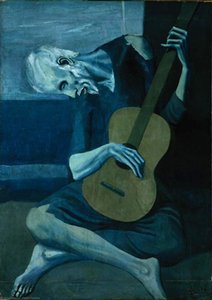
 The Old Guitarist
The Old Guitarist, Pablo Picasso
Picasso’s earliest subjects were rooted in the academic traditions taught by his father, focusing on figure drawing, plaster casts, and naturalistic depictions. As he matured, his subjects shifted toward social realism, capturing the melancholy of poverty and the quiet dignity of everyday life in Spain and France.
During his formative years, his work reflected the environments he inhabited. In Barcelona, his paintings often carried a sense of nostalgia or sadness. This emotional weight became more pronounced during his Blue Period (1901–1904), where he focused on marginalized figures, such as beggars, the blind, and the lonely.
Key early works and themes include:
- The Old Guitarist (1903–1904): A poignant example of his early focus on solitary, emaciated figures.
- La Vie (1903): A work reflecting the somber, symbolic themes of his early years.
- Social Realism: Early sketches and cartoons that often sympathized with the poor.
These early subjects provided the emotional vocabulary he would later use to deconstruct reality through more radical movements.
How did his style evolve during his first years?
Picasso’s stylistic progression was a continuous metamorphosis of color and form, driven by a restless need to redefine how we perceive reality. Rather than remaining anchored to the academic realism of his youth, he used each new phase as a laboratory to experiment with the emotional and intellectual limits of the canvas. This journey was not merely a change in subject matter, but a fundamental dismantling of the traditional boundaries of perspective that had dominated Western art for centuries.
His evolution can be understood as a series of rapid, intentional shifts in visual language:
- The Shift Toward Abstraction: Moving beyond the literal representation of his early training, he began to prioritize the conceptual essence of an object over its mere visual appearance.
- The Influence of Primitivism: Between 1907 and 1909, his work underwent a profound transformation as he integrated the aesthetics of African masks and Iberian sculpture, a phase that served as the essential bridge to his later breakthroughs.
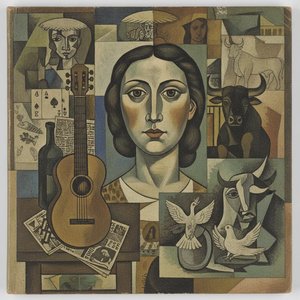
- The Cubist Revolution: This culminated in the development of Analytic Cubism, where he and Georges Braque fragmented objects into muted, geometric pieces, and later Synthetic Cubism, which introduced texture through collage elements like newspaper and fabric.
For those looking to bring a piece of this history into a home, our museum-quality oil reproductions allow you to experience these transformative textures and colors. Each piece is hand-painted by skilled artists to capture the specific movement and energy of the era. Whether you are drawn to the quiet intensity of a portrait or the bold, fractured geometry of a modern masterpiece, we help you find the perfect piece to reflect your own evolving style.
Frequently asked questions
When was Picasso born?
Picasso was born in Málaga, Spain, on October 25, 1881.
When was Picasso's Blue Period?
The Blue Period lasted from 1901 to 1904.
When was Picasso's Rose Period?
The Rose Period occurred between 1904 and 1906.
How big is Guernica?
Guernica is a massive painting measuring 3.49 meters tall and 7.76 meters wide.
Learn more
- 1881 – 1973Pablo Picasso Artist ProfileDiscover how his childhood in Málaga and his father's guidance shaped his incredible early talent.
- All Picasso ArtworksBrowse our full collection of Picasso reproductions, from his early realism to his modern masterpieces.