The Sculptor of Neoclassical Grandeur
Ivan Petrovich Martos stands as a monumental figure in the history of sculpture, a master whose hands breathed life into marble and bronze to awaken a profound interest in Neoclassicism within the Russian Empire. Born in the region between Chernigov and Poltava, specifically in the city of Ichnya, Martos possessed an innate talent that led him to the Imperial Academy of Arts. His journey was one of rigorous classical training, moving from the foundational lessons in St. Petersburg to the sun-drenched studios of Rome. It was in Italy, under the tutelage of masters such as Pompeo Batoni and Anton Raphael Mengs, that his artistic soul was truly forged. This period of intense study allowed him to absorb the elegance of antiquity, a grace that he would later transplant into the heart of Russian art.
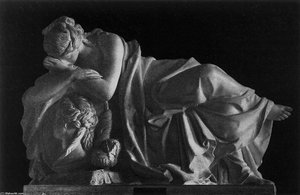
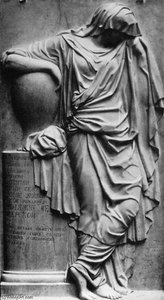
Upon his return to Russia in 1779, Martos became more than just an artist; he became a propagator of a new aesthetic era. His work was characterized by a seamless blend of classical restraint and dramatic emotional depth. He achieved unparalleled success in the creation of marble tombs, works that are frequently celebrated as some of the finest examples of their kind in the history of Russian art. These funerary monuments, such as the Tomb of S. S. Volkonskaya, demonstrate his ability to use stone to embody the heavy weight of grief and the enduring nature of remembrance through masterful detail and atmospheric composition.
Legacy and Monumental Achievements
The career of Martos was marked by significant institutional influence and public recognition. As a professor and eventually the dean of the Imperial Academy of Arts, he shaped the minds of future generations of sculptors. While his later outdoor works—including monuments to figures like the Duke de Richelieu in Odessa and Prince Potemkin in Kherson—are sometimes viewed through a more critical lens by modern historians, they remain indelible symbols of the cities they inhabit. However, it is his earlier, more intimate marble carvings that continue to resonate with their pure Neoclassical spirit.
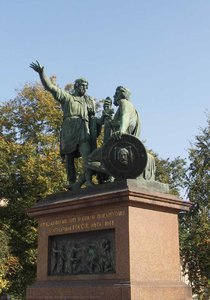
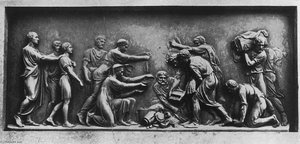
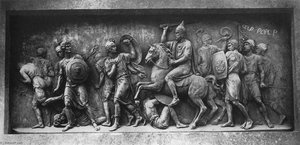
Perhaps his most enduring contribution to the urban landscape is the Monument of Minin and Pozharsky on Red Square. Though conceived in 1804 and not inaugurated until 1818, this relief sculpture remains a pinnacle of his ability to weave historical narrative into classical form. His life’s work, though subject to the turbulent shifts of history—including the destruction of his bronze statue of Catherine II during the Soviet era—remains a testament to a period of immense cultural flowering. Through his dedication to the principles of Neoclassicism, Ivan Petrovich Martos ensured that the language of classical beauty would leave an everlasting mark on the artistic identity of his homeland.
Q&A
Ivan Petrovich Martosは、どの時代に活動していましたか?
Ivan Petrovich MartosはEarly Modernに活動していました。この時代背景は、その画家の活動を歴史の中に位置づけるものです。
Ivan Petrovich Martosには、他にどのような別名や通称がありますか?
Ivan Petrovich Martosは、Иван Петрович Мартосという名でも知られています。
Ivan Petrovich Martosの出生地(都市および国)はどこですか?
Ivan Petrovich Martosは、UkraineのPoltavaで生まれました。