

The Palazzo dei Consoli
The Pinacoteca comunale is housed within the Palazzo dei Consoli in Deruta, Italy. This structure dates back to the fourteenth century and maintains its medieval character through a series of porticos and ogival bifore. The building has undergone various transformations, including a restoration in 1760 and modifications to its upper section by Pietro Carattoli. Historically, the space served multiple civic functions, acting as the seat for the local judge, the municipal archive, and the prison. It also once held the anteposti of Deruta.
The architecture retains traces of its original purpose through specific structural elements. In the atrium, one finds a fourteenth-century bifora and a fragmentary stele bearing a dedicatory inscription to Emperor Hadrian. Other artifacts present in the entrance include a Roman terracotta amphora, a column with a capital, and a headless statue of God Tiberinus. An early medieval slab featuring animal and vegetable motifs is also preserved here.
The Collections
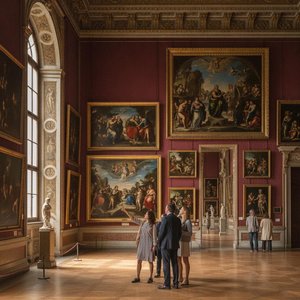
The museum holds several distinct groups of works that reflect different eras of collecting and production. On the upper floor, the Lione Pascoli collection is displayed. This assembly consists of approximately 40 paintings acquired through donation in 1931. These works represent early eighteenth-century Roman collecting styles, focusing on specific genres such as:
- Bambocciate
- Still lifes
- Landscapes
- Battles
- Minor genres
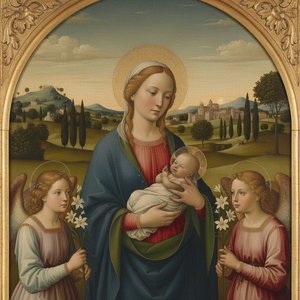
The permanent collection includes significant paintings from the Umbrian tradition. Notable works held in the institution include:
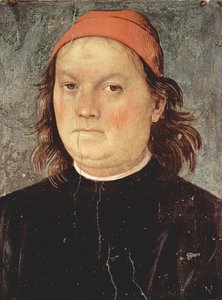
- God the Father with Two Saints, 1477 - Pietro Perugino
- Madonna with child, 1457 - Niccolò di Liberatore
- Saint Anthony, 1457 - Niccolò di Liberatore
Artistic Presence
The walls of the Palazzo dei Consoli bear the influence of significant painters through existing frescoes. These works include a view of Deruta attributed to Perugino and another by Bartolomeo Caporali. The collection also features portraits in the Hall of Portraits, such as San Pietro by Marco Benefial and Sant'Andrea by Sebastiano Conca. The presence of these artists links the building to the broader artistic history of the region.