


Introduction
In everyday conversation, the terms "modern art" and "contemporary art" are often used as synonyms to describe anything new or difficult to understand. However, in art history, these terms refer to two distinct periods with different purposes. Modern art covers the century from the 1860s to the 1960s, beginning when painters like the Impressionists broke away from academic traditions. Contemporary art refers to the art of our own time, generally dated from the 1970s to the present day.
The confusion between these two eras often arises because they are linked by a shared history of experimentation. While modern art was characterized by a belief in progress and the development of specific avant-garde movements, contemporary art often questions those very ideas of progress and single historical narratives. This article will help you distinguish between the two by examining their unique characteristics:
- The era of Modern Art and its succession of movements, such as Cubism and Fauvism.
- The diverse landscape of Contemporary Art, which prioritizes ideas and new media over a single dominant style.
- Practical methods for identifying these periods when viewing works in a museum setting.
| Modern Art | Contemporary Art | |
|---|---|---|
| Dates | c. 1860s-1960s | c. 1970s-today |
| Where | Paris and New York | Global |
| Key painters | Picasso, Matisse, Kandinsky | Ai Weiwei, Yayoi Kusama, Damien Hirst |
| Palette and light | Monochrome or bold color | Not specified |
| Typical subjects | Avant-garde movements and progress | Installation, video, performance, and ideas |
| Technique | Painting and sculpture | Digital media and participatory projects |
| One key work | Guernica (1937) by Pablo Picasso | Sunflower Seeds (2010) by Ai Weiwei |
The Era of Modern Art and Avant-Garde Movements
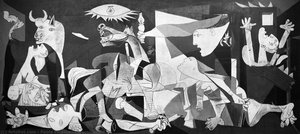 Guernica - Pablo Picasso
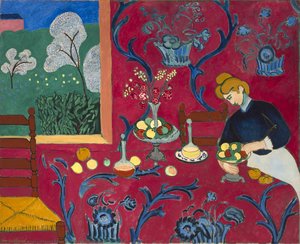 Harmony in Red - Henri Matisse
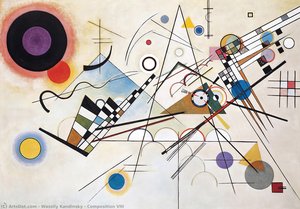 Composition VIII - Wassily Kandinsky
Modern art refers to a period of art history that spans roughly the century from the 1860s to the 1960s. This era began when painters started to break away from established academic traditions. This shift was led by figures such as Édouard Manet and the Impressionists, who moved away from the strict rules of the academies. As the era progressed, a rapid succession of avant-garde movements emerged, including Post-Impressionism, Fauvism, Cubism, Futurism, Expressionism, Dada, Surrealism, Constructivism, Abstract Expressionism, and eventually Pop Art and Minimalism.
During this time, artists often sought the essential qualities of their medium, such as the flatness of a painting. Many movements were introduced through manifestos and shared a belief in progress and originality. Key developments include:
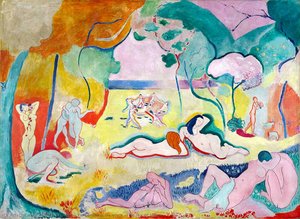
- Fauvism: Henri Matisse's The Joy of Life (1905-06) demonstrated how color could be freed from its traditional descriptive role.
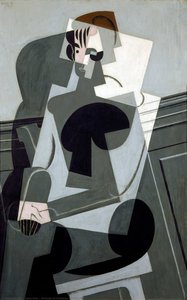
- Cubism: Pablo Picasso's Les Demoiselles d'Avignon (1907) shattered traditional perspective and the concept of the ideal nude, paving the way for Cubist techniques.
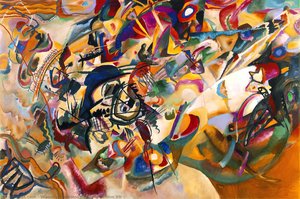
- Abstract Art: Wassily Kandinsky's Composition VII (1913) showed that a painting could be constructed using only color and line, without representing physical objects.
While Paris was the primary center for these movements until the Second World War, the focus eventually shifted to New York. The establishment of the Museum of Modern Art in New York in 1929 helped to solidify this period into a formal canon of art history.
The Diverse World of Contemporary Art
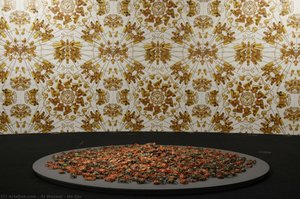 He Xie - Ai Weiwei
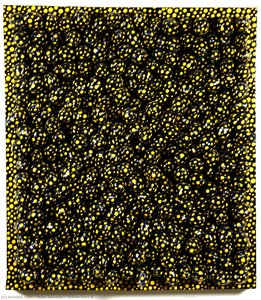 Yellow Dots B - Yayoi Kusama
 Beautiful Portrait, The Queen - Damien Hirst
Contemporary art refers to the art of our own time, generally dated from the 1970s to the present day. Unlike previous eras, it does not follow one single dominant style or a central geographic location. Instead, artists utilize a wide range of media, including installation, video, performance, photography, and digital media. In many contemporary works, the idea or concept behind the piece is considered more important than the physical form of the object itself.
This period is characterized by its global nature, with significant contributions from artists in Asia, Africa, Latin America, and the Middle East. The following examples illustrate the diversity of media and themes found in contemporary practice:
- Ai Weiwei: In his 2011 work He Xie, located at the Oscar Niemeyer Museum, the artist used one thousand individual crabs hand-crafted from porcelain. This choice of material connects the fragile nature of porcelain to political themes.
- Yayoi Kusama: Known for her immersive installations, Kusama uses motifs like the polka dot to create pulsating fields of vision. An example is Yellow Dots B (undated), housed in the MAXXI National Museum of XXI Century Arts, which features luminous yellow dots against a black ground.
- Damien Hirst: His work often provokes debate regarding the art market and death. A notable example is For the Love of God (2007), which is a platinum cast of a human skull set with diamonds.
While contemporary art inherits the experimental freedom of the modern era, it often moves away from the modern faith in a single, linear history of stylistic progress.
Distinguishing the Two Periods
While modern art and contemporary art are often used interchangeably in casual conversation, they represent two distinct historical periods. The transition between them is not defined by a single, fixed date, but is generally placed between the late 1960s and the 1970s. These two eras are linked rather than opposed; contemporary art inherits the freedom to experiment that was established by the modernists.
In a museum setting, a useful rule of thumb can help distinguish the two. A painting or sculpture created before approximately 1970 that belongs to a recognized avant-garde movement is classified as modern art. In contrast, a work from recent decades—especially those involving installation, video, performance, or idea-driven objects addressing identity, politics, or technology—is considered contemporary art.
The fundamental difference often lies in their core philosophies:
- Modern Art: This period was characterized by a belief in progress, originality, and the search for the essential qualities of a medium. It often followed a succession of movements, such as Cubism or Surrealism, and was frequently centered in Paris before shifting to New York after the Second World War.
- Contemporary Art: This era has no single dominant style or central location. It is a global phenomenon that often questions the modern faith in a single history of styles or a linear sense of progress.
Artists like Yayoi Kusama demonstrate how these periods can overlap, as her career began in the 1950s but she has become a global contemporary phenomenon through immersive installations. While modern art sought to define the new, contemporary art often seeks to question what art can be.
Conclusion
To distinguish these two eras in a museum, a visitor can look to the medium and the intent of the work. Modern Art (1860s–1960s) often focuses on the essential qualities of the medium, such as the flatness of a canvas or the purity of form in a sculpture. It is frequently defined by recognized avant-garde movements like Cubism or Fauvism. In contrast, Contemporary Art (1970s–present) often prioritizes the idea behind the work over its physical form. This era utilizes diverse media, including video, installation, and digital media, to address themes like globalization or identity.
Despite these differences, the two periods are linked. Contemporary art inherits the freedom to experiment that was established by the modernists. While modern art often followed a belief in progress and a single history of styles, contemporary art expands this by questioning those very ideas. Ultimately, both eras represent a departure from traditional academic standards.
We invite you to explore these historical styles on our website.
Frequently asked questions
How to tell modern art from contemporary art
A useful rule of thumb is that a painting or sculpture made before about 1970 that belongs to a recognized avant-garde movement is modern art. A work from recent decades, especially an installation, video, performance, or idea-driven object addressing identity, politics, technology, or globalization, is contemporary art.
What are the dates for modern and contemporary art
Modern art covers roughly the century from the 1860s to the 1960s. Contemporary art is the art of our own time, usually dated from the 1970s to today.
Who are famous modern artists
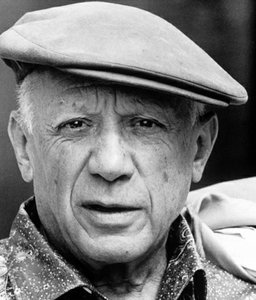
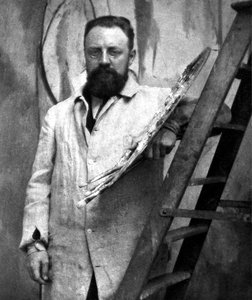
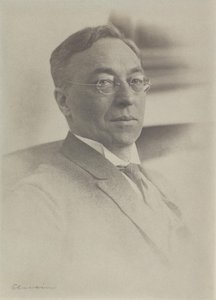
Famous painters of the modern art period include Pablo Ruiz Picasso, Henri Émile Benoît Matisse, and Wassily Wassilyevich Kandinsky.
What are famous contemporary art works
Notable contemporary works include Ai Weiwei's Sunflower Seeds (2010), Yayoi Kusama's Infinity Mirrored Room - The Souls of Millions of Light Years Away (2013), and Damien Hirst's For the Love of God (2007).
Famous painters of Modern Art
- 1881 – 1973Pablo Picasso
- 1869 – 1954Henri Matisse
- 1866 – 1944Wassily Kandinsky
Famous artworks of Modern Art
- Pablo Picasso · 1937Guernica
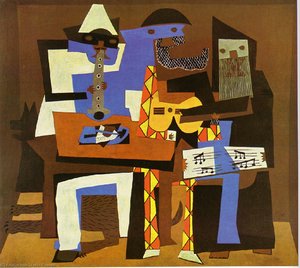
- Pablo Picasso · 1921Three Musicians
- Henri Matisse · 1908Harmony in Red
- Henri Matisse · 1906Le bonheur de vivre (The Joy of Life) -
- Wassily Kandinsky · 1923Composition VIII
- Wassily Kandinsky · 1913Composition VII
Famous painters of Contemporary Art
- 1957 –Ai Weiwei
- 1929 –Yayoi Kusama
- 1965 –Damien Hirst



Famous artworks of Contemporary Art
- Ai Weiwei · 2011He Xie
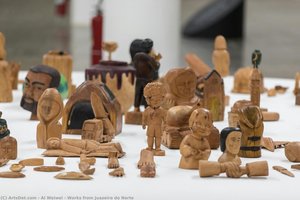
- Ai Weiwei · 2018Works from Juazeiro do Norte
- Yayoi KusamaYellow Dots B
- Yayoi KusamaNo. Green. No. I
- Damien Hirst · 2014Beautiful Portrait, The Queen
- Damien Hirst · 2006Collective exhibition Intouchable (L