
Introduction
The 16th century in Spain marked a profound era of artistic transformation, where the rigid traditions of the late Gothic period began to dissolve into the dramatic intensity of the Renaissance and the spiritual fervor of the Counter-Reformation. This period was defined by a unique cultural synthesis, as the Iberian Peninsula became a crossroads for Italianate influences and a distinct, deeply emotive local sensibility. Artists of this era moved away from mere symbolism, embracing a new mastery of human anatomy, light, and shadow that sought to bridge the gap between the earthly and the divine.
As the Spanish Golden Age began to take shape, painters became the visual architects of a nation's soul, capturing both the austere piety of religious devotion and the sophisticated elegance of the royal courts. Their work reflects a time of immense global expansion and intense religious scrutiny, resulting in a style that is often characterized by its profound psychological depth and a palpable sense of presence. These masters did not merely paint figures; they sculpted light and emotion on canvas, creating a visual language that remains a cornerstone of Western art history.
Today, the legacy of these masters continues to resonate through their ability to convey the complexities of the human condition. Their influence can be felt in the way we perceive light, the dramatic tension of composition, and the enduring power of portraiture. By examining the lives and techniques of these significant figures, we gain a deeper understanding of the roots of Spanish visual identity. The following selection highlights ten essential painters who defined this transformative century, each contributing a unique voice to the rich tapestry of 16th-century Spanish art.
Francisco de Zurbarán
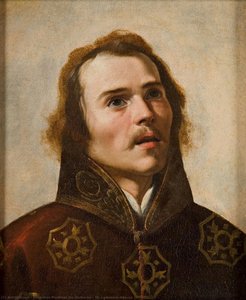 St. Lawrence deacon - Francisco de Zurbarán
Born in 1598 in the Extremadura region, Francisco de Zurbarán represents the transition of Spanish artistic mastery from the late Renaissance into the profound depths of the Baroque. His inclusion in the lineage of 16th century Spanish painters is rooted in his formative years and the traditional training he received in Seville, where he studied under Pedro Díaz de Villanueva. This rigorous foundation allowed him to evolve from a student of local craft into a master of tenebrism, a style that defines the spiritual intensity of the Spanish Golden Age.
His representative work, St. Lawrence Deacon, serves as a profound example of his ability to capture monastic piety through dramatic chiaroscuro. In this piece, Zurbarán employs a masterful manipulation of light and shadow to create sculptural, three-dimensional figures that seem to emerge from a dark, infinite void. By utilizing meticulous layering and subtle tonal gradations, he achieves a sense of stillness and solemn dignity. The painting transcends mere portraiture, inviting a meditative contemplation of faith through its intense, almost palpable presence and the saint's serene, unwavering gaze.
Luis de Morales
 The Crucifixion - Luis de Morales
Known affectionately as "El Divino," Luis de Morales stands as a cornerstone of the 16th century Spanish painters, a period where religious fervor met the refined sensibilities of the Renaissance. Born in Badajoz around 1509, his work represents a profound intersection of Flemish precision and the atmospheric grace of the Lombard school. A visitor can immediately recognize a Morales through his extraordinary anatomical precision and a distinctive, somber palette that emphasizes spiritual intensity. His brushwork often employs a subtle sfumato, creating a sense of divine light that emerges from deep, dramatic shadows.
His mastery is perhaps most poignantly captured in The Crucifixion (1566). In this work, Morales utilizes a symmetrical, triangular composition to anchor the viewer's gaze upon the central sacrifice of Christ. The figures of the Virgin Mary and Saint John are rendered with a heavy, emotional stillness, their forms defined by a masterful understanding of human gesture and anatomy. By blending the monumental influence of Michelangelo with a deeply personal, devotional realism, Morales transformed the sacred narratives of the 16th century into visceral, transcendent experiences for the faithful.
Alonso Sánchez Coello
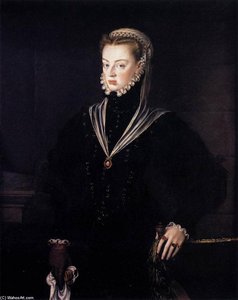 Doña Juana, Princess of Portugal - Alonso Sánchez Coello
A central figure among 16th century Spanish painters, Alonso Sánchez Coello (1531–1588) defined the visual identity of the Habsburg court. His career was shaped by a sophisticated synthesis of European traditions; after spending his youth in Portugal, he traveled to Flanders to study under Anthonis Mor. This training allowed him to master a Flemish objectivity that he seamlessly blended with the Venetian sensuality and warm, golden tones characteristic of Titian. This unique stylistic fusion became his hallmark as he rose to become a prominent Court Painter to Philip II.
Coello’s mastery of the portrait is exemplified in his work Doña Juana, Princess of Portugal. In this piece, he captures the sitter with a profound sense of aristocratic poise and solemn stillness. The composition utilizes a stark contrast between the luminous white of a crisp ruff and the deep, light-absorbing textures of black velvet, creating a dramatic presence that anchors the subject within the frame. His ability to render intricate details—from the delicate lace to the organic form of a loyal mastiff—solidified his reputation as a premier portraitist of the Spanish Renaissance, leaving a legacy of dignity and sobriety that influenced the direction of Spanish courtly art.
Juan de Juanes
 The Last Supper - Juan de Juanes
A central figure of the Valencian Renaissance, Juan de Juanes (1510–1579) represents the sophisticated evolution of Spanish art during the 16th century. Born in La Font de la Figuera, he was the son of the painter Vicente Masip, from whom he received his foundational training. His style emerged as a masterful synthesis of diverse European influences, blending the idealized grandeur of the Italian High Renaissance—reminiscent of Raphael—with the meticulous, descriptive detail characteristic of Flemish traditions. This unique aesthetic allowed him to become a leading voice among 16th century Spanish painters, bridging the gap between Northern European intimacy and Mediterranean classicism.
His oeuvre is defined by a profound sense of dignity and a devotion to religious iconography. In his celebrated work, The Last Supper (1560), Juanes demonstrates an exceptional command of perspective and composition, transforming a sacred narrative into a deeply human drama. Through his ability to balance graceful realism with vibrant color palettes, he elevated the devotional art of his era. His legacy is further cemented by significant commissions such as the Saint Steven Retable, which showcases the technical precision and spiritual elegance that defined his illustrious career.
Juan Pantoja de la Cruz
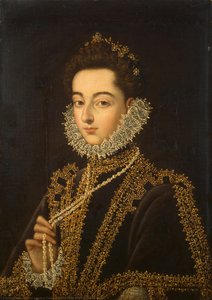
 The Infanta Catalina Micaela - Juan Pantoja de la Cruz
A central figure in the evolution of Spanish portraiture, Juan Pantoja de la Cruz (1553–1608) defined the visual language of the Spanish Golden Age. As a leading Mannerist court painter, he served both Philip II and Philip III, bridging the transition into the height of the 16th century's artistic legacy. His style was deeply rooted in the traditions of his predecessor and teacher, Alonso Sánchez Coello, from whom he inherited a meticulous approach to detail and a profound sense of dignified composure. Upon Coello's death, Pantoja de la Cruz assumed the mantle of the royal workshop, becoming the primary architect of the monarchy's formal image.
His work is characterized by a somber, regal formality that prioritized status and divine right over intimate psychological depth. In his representative masterpiece, The Infanta Catalina Micaela (1585), we see this mastery on full display. The portrait of the daughter of Philip II utilizes a rigid, three-quarter length composition to emphasize her high-ranking noble status. Through the precise application of oil on canvas, he captures the intricate textures of lace ruffs and heavy, dark garments, using directional lighting to create a striking contrast between pale skin and the deep, luxurious tones of the courtly attire.
Pedro Machuca
 Descent from the Cross (with original frame) - Pedro Machuca
A true visionary of the Spanish Renaissance, Pedro Machuca represents the sophisticated bridge between the classical ideals of his native Toledo and the revolutionary Mannerism of Italy. His presence in the 16th century Spanish landscape is defined by a unique ability to synthesize the elegance of the Raphael workshop with a distinctly Spanish emotive power. Having traveled extensively in Italy, Machuca absorbed the complex compositions and dramatic lighting that would later characterize his most profound works.
His mastery is perhaps most evident in his 1547 masterpiece, Descent from the Cross. This monumental oil painting serves as a visceral embodiment of grief, utilizing dramatic chiaroscuro to cast deep shadows that amplify a somber, melancholic mood. At a glance, a viewer recognizes Machuca’s hand through his ability to capture the agonizing weight of human sorrow, rendered with a sophisticated international flair that transcends simple religious iconography. Whether through his monumental architectural contributions, such as the Palace of Charles V in Granada, or his emotive canvases, Machuca’s legacy remains etched in the very transition from Renaissance harmony to the burgeoning drama of the early Baroque.
Fernando Yáñez De La Almedina
 Saint Francis of Assisi - Fernando Yáñez De La Almedina
A cornerstone of the 16th century Spanish painters, Fernando Yáñez de la Almedina represents the profound intersection of Iberian tradition and the Italian Renaissance. Born in Almedina, his Morisco heritage provided a unique cultural lens through which he interpreted the burgeoning humanist ideals of the era. His style is defined by a masterful command of sfumato, a technique characterized by the subtle, smoky blending of tones that creates an ethereal luminosity and a sense of atmospheric depth.
In his representative work, Saint Francis of Assisi, this technical brilliance is on full display. The saint emerges from a soft, directional light that models the weathered textures of his face and the heavy, sculptural folds of his habit. The composition utilizes a vertical arrangement, anchoring the figure against a structured architectural backdrop that opens into a hazy, distant landscape. This interplay of light and shadow creates a profound sense of three-dimensional presence and spiritual stillness. Through his ability to marry the soft light of the Florentine tradition with Spanish religious solemnity, Yáñez de la Almedina remains a pivotal figure in the evolution of Renaissance art in Spain.
Juan Correa De Vivar
 The Prophet Isaíah - Juan Correa De Vivar
Juan Correa de Vivar stands as a pivotal figure in the evolution of 16th century Spanish painters, embodying the stylistic transition from the harmonious High Renaissance to the expressive tension of Mannerism. Born around 1510 in Castile, his artistic identity was forged in the prestigious workshop of Juan de Borgoña in Toledo. This formative period allowed him to synthesize the graceful, balanced ideals of Raphael with a burgeoning, restless energy that would define the later part of the century.
His mastery of composition and emotional depth is vividly captured in his 1533 work, The Prophet Isaíah. In this piece, Correa de Vivar demonstrates a sophisticated command of light and color, utilizing a palette of sun-drenched ochre and deep teal to create a sense of spiritual gravity. The figure is positioned within a shallow, sculptural niche, a technique that provides three-dimensional depth while maintaining a focused, dramatic intensity. Through the rhythmic winding of a white scroll and the heavy, textured drapery, the painting illustrates the shift toward the elongated, dynamic forms characteristic of the Mannerist movement, securing his legacy as a master of the Spanish Renaissance.
Vicente Masip
 The Martyrdom of Saint Agnes - Vicente Masip
A central figure of the Valencian School, Vicente Masip represents the transition of Spanish art into the heights of the Renaissance. His work, spanning the early to mid-16th century, bridges the gap between the meticulous Quattrocento traditions and the evolving complexities of the Renaissance. Influenced by masters like Paolo de San Leocadio, Masip brought a refined draftsmanship and a sophisticated use of atmospheric perspective to the Iberian Peninsula, establishing a profound artistic lineage that would influence his descendants for generations.
His mastery of composition and religious narrative is vividly captured in The Martyrdom of Saint Agnes. In this dramatic tondo, Masip orchestrates a crowded theater of emotion, where the earthly violence of a pyre meets the celestial serenity of descending angels. The painting is a testament to his ability to blend anatomical precision with a luminous, layered glazing technique. Through the use of directional lighting and deep, saturated hues, he creates a sense of tangible reality, making the textures of fabric and the soft fur of a lamb feel almost palpable. This interplay of divine light and human suffering exemplifies the dramatic intensity that defines his contribution to 16th century Spanish painting.
Jerónimo Cosida
 Noli Me Tangere - Jerónimo Cosida
A true polymath of the Spanish Renaissance, Jerónimo Cosida (1510–1592) stands as a cornerstone of the 16th century Spanish painters due to his profound influence on the Aragonese school. Though he never traveled to Italy, he achieved a sophisticated mastery of European currents, translating the divine grace of Raphael and the atmospheric shadows of Leonardo da Vinci into a uniquely Spanish vernacular. His artistic evolution moved from the meticulous precision of his early training under Vicente Masip in Valencia toward the sweeping, emotive grandeur of Mannerism.
In his representative work, Noli Me Tangere (c. 1570), one observes the dramatic tension that defines his mature style. The composition utilizes a theatrical arrangement of light and shadow to capture the spiritual gravity of the encounter between Jesus and Mary Magdalene. A viewer can recognize Cosida’s hand through his command of color—specifically the striking interplay of vivid reds and blues—and his ability to freeze a moment of profound recognition. His brushwork navigates the boundary between the physical and the supernatural, using decisive gestures and deep shadows to elevate a sacred narrative into a powerful, emotive experience.
Conclusion
The masters of this era defined a visual language of profound spiritual intensity and technical precision, bridging the gap between the late Gothic traditions and the burgeoning grandeur of the Baroque. From the delicate, emotive portraiture of Alonso Sánchez Coello to the dramatic, light-infused compositions that would later define the Spanish Golden Age, these artists collectively shaped a national aesthetic characterized by deep devotion and a masterful command of color. Whether through the serene grace of a Renaissance landscape or the stark, ascetic realism of a religious icon, the 16th century in Spain remains a period of unparalleled artistic evolution.
At Mus3ums.com, we invite you to bring this historical legacy into your own space. Our artisans specialize in creating museum-quality, hand-painted oil reproductions that capture the authentic texture and soul of these masterpieces. You can explore our full collection to find the perfect piece and experience the timeless beauty of Spanish art through our meticulous, traditional craftsmanship.


