


Origins and History of the Museum
The foundations of Musée Massey lie in the personal vision of Placide Massey (1777-1853). A man of botanical expertise, he previously served as the Director of the Versailles Orangerie and parks. In 1825, he began acquiring land in Tarbes to establish a private residence. Between 1829 and 1852, his acquisitions expanded to include 11 hectares of land, which he intended to transform into an arboretum filled with rare species.
The transition from a private estate to a public institution began following the death of its founder in 1853. Upon his passing, Placide Massey bequeathed all his properties to the City of Tarbes. This legacy allowed the site to evolve from a secluded villa into the cultural space that exists today. The museum was eventually established at the end of the nineteenth century, following the initial residential development.
The Building and its Architecture
Situated within a magnificent garden, the museum occupies an elegant structure defined by its Hispano-Moorish style. The architectural evolution of the site began with a first construction phase characterized by a neoclassical Italianizing style. This initial vision included a high tower designed specifically to observe the Pyrenees. The tower itself drew inspiration from the communal towers found in Tuscany and Umbria.
As construction progressed, the aesthetic of the tower underwent a significant modification. It transitioned toward an Orientalist or Moorish style, a change reflected in the detailed brickwork. This specific ornamentation may have been inspired by the minaret of the Mosque of El Caouly in Cairo. The resulting silhouette provides a distinct presence within the landscape of the gardens.
The International Museum of Hussars
The museum holds the distinction of being the first in the world to present a collection dedicated to the history of the Hussars. This specialized assembly began in 1955 under the direction of Marcel Boulin. The exhibition follows a chronological path, tracing the presence of these light cavalry regiments from 1545 to 1945. It is a collection that connects the history of the regiments based in Tarbes to the breeding of the Anglo-Arab horse.
The assembly contains over 17,000 pieces. These objects offer a tangible connection to the military life of the era. One finds specific items such as dolmans with braid and buttons, pelisses, and shakos. These pieces exist as physical remnants of a specific military tradition. The sheer volume of the collection allows for a detailed study of the evolution of cavalry equipment and attire.
- Hussard fumant la pipe, 1910 - Édouard Detaille
- Charge de hussards du 1e Empire, 1891 - Édouard Detaille
- Hussard désarçonné, 1900 - Victor Adam
- Convoi harcelé par des hussards, 1800 - Francesco Giuseppe Casanova
The Fine Arts Collection
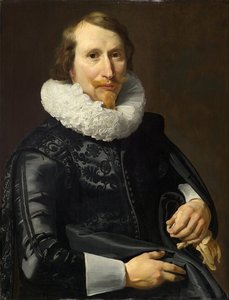
The Fine Arts collection at Musée Massey began through the initiatives of Achille Jubinal. This assembly of works provides a quiet counterpoint to the military history found elsewhere in the building. As a designated Musée de France, the institution preserves these pieces within a setting that emphasizes their historical presence. The selection includes various paintings and portraits that reflect the aesthetic interests of previous eras.
Among the holdings are several notable portraits and religious works. These pieces invite a closer examination of technique and composition from different centuries. The collection includes:
- Portrait of a Woman, about 1650 - Thomas de Keyser
- Sainte Marguerite, 1700 - Matteo Rosselli
- The Virgin, the Child and the Saints, 1600 - Girolamo Del Pacchia
- Portrait of Philip IV, 1613 - Bartolomé González Y Serrano
- Madonna and Child, 1510 - Benvenuto Tisi
Beyond the painted works, the museum houses a collection of Romanesque and Gothic capitals. These stone carvings originated from various departmental churches and offer a direct connection to the architectural history of the region. They remain as physical remnants of the religious structures that once defined the local landscape.
Recent Projects and Renovations
The museum underwent a significant period of transformation following its closure between 1997 and 2012. This interval allowed for a comprehensive renovation program that spanned from 2006 to 2012. The initiative sought to modernize the facilities and ensure the preservation of the collections within a contemporary framework.
The scale of this undertaking involved a total budget of approximately 10 million euros. Financial support for the project was provided through several channels, including 6M € from the City of Tarbes and 2M € from the State. These resources facilitated the necessary structural and conservation improvements required to reopen the doors to the public.
Visiting Information and Access
The museum is situated within the Jardin Massey, located in Tarbes, France, 65 000. It remains open to the public daily, with the exception of Mondays. For those seeking to experience the collections, an annual pass is available for €10. Access is free for individuals under 18, students, and job seekers. Certain conditions also allow for free entry for an adult accompanied by at least one child on Wednesdays, or on the first Sunday of each month.
The site is accessible via the Tarbes station, which is located nearby. For those with specific requirements, a wheelchair and a push chair are available at the reception desk. The museum is a Musée de France and is located in the heart of the Jardin Massey, a space classified as a Remarkable City Centre Garden. The building itself, with its Moorish-style tower, overlooks the Pyrenees and provides a quiet setting for the study of the Hussar and Fine Arts collections.
