


Introduction
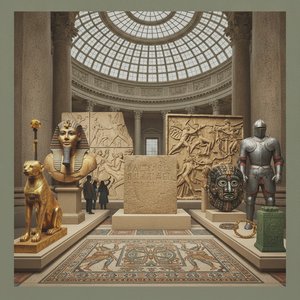
Imagine stepping into a space where time itself seems to pause, where the whispers of ancient civilizations echo through grand, light-drenched halls. To walk through the British Museum is to embark on a journey across millennia, a voyage that spans from the dawn of human creativity to the sophisticated artistry of the classical world. Established in 1753 as the world's first public national museum, this institution has evolved from a private collection of curiosities into a vast, breathtaking repository of the human story, housing eight million treasures that connect us all.
As you move from the neoclassical elegance of its historic wings into the soaring, modern brilliance of the Great Court, you aren't just looking at objects; you are witnessing the milestones of our shared heritage. From the enigmatic symbols of the Rosetta Stone that unlocked the secrets of lost languages, to the delicate, haunting beauty of ancient ceramics and the monumental strength of Greek sculptures, every piece tells a story of triumph, faith, and the eternal human desire to create something lasting.
These masterpieces remain deeply meaningful today because they serve as our collective memory. They remind us of the hands that carved, the minds that dreamed, and the cultures that shaped the world we inhabit. They are the visual poetry of our ancestors, preserved in stone, clay, and pigment, waiting to spark a sense of wonder in anyone who pauses to look closely.
To help you navigate this immense sea of history, we have curated a selection of the most profound highlights. We invite you to wander with us through our list of the top 25 artworks that define the British Museum—a collection designed to inspire your imagination and deepen your connection to the timeless beauty of human history.
The Ancient of Days - William Blake
 The Ancient of Days - William Blake
Look closer. The lines in The Ancient of Days by William Blake aren't merely drawn; they are choreographed. This is not a simple composition; it is a dance frozen in time, a visionary masterpiece that captures the very essence of Romanticism. As one of the most profound treasures within the British Museum, London, this work exemplifies the museum's role as a guardian of human imagination and mythic history.
A muscular, divine figure emerges from a celestial golden orb, his flowing white hair and beard catching a dramatic, ethereal light. He grips a pair of heavy compasses, anchoring the swirling, dreamlike clouds of muted reds and purples to a sense of cosmic order. Through the delicate alchemy of relief etching and watercolor, Blake creates a high-contrast chiaroscuro effect that feels both etched and infinite. It is a work of intense symbolic weight, turning chaos into a breathtaking harmony. Imagine your own space holding that same rhythmic balance—a piece that doesn't just decorate a wall, but allows it to breathe rhythm.
The Men's Bath - Albrecht Dürer
 The Men's Bath - Albrecht Dürer
At Mus3ums.com, we believe that the profound beauty of history should be accessible to everyone, turning a grand museum visit into a lasting part of your daily life. Among the treasures of the British Museum, London, Albrecht Dürer’s 1497 masterpiece, The Men's Bath, stands as a breathtaking testament to the Northern Renaissance. This intricate engraving captures a lively, communal ritual, where a crowd of figures gathers in a bathhouse, their bodies intertwined in a rhythmic dance of social connection. Through masterful cross-hatching and precise linework, Dürer transforms monochromatic shades into a rich tapestry of texture and human anatomy, evoking a sense of quiet, shared leisure.
The work’s inclusion in this collection highlights its incredible influence on the evolution of printmaking and its ability to find elegance in the raw, human form. It is a piece that invites reflection on the timeless nature of companionship. Today, you can bring this transformative presence into your own home or office through our high-fidelity art reproductions, allowing Dürer’s exquisite detail to become a centerpiece in your personal gallery.
Head of a Satyr - Michelangelo
 Head of a Satyr - Michelangelo
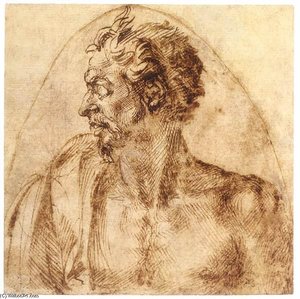
To stand before Michelangelo’s Head of a Satyr is to witness the raw, unvarnished soul of the Renaissance. This isn't merely a sketch; it is a profound psychological encounter captured in delicate graphite. Created in 1501, this masterpiece transcends the playful myths of woodland spirits, presenting instead a bearded figure consumed by an intense, almost melancholic, inward turmoil. Through masterful hatching and cross-hatching, Michelangelo breathes life into the paper, using light and shadow to sculpt the very texture of aging skin and muscular tension.
As one of the most significant treasures within the British Museum, London, this work exemplifies the museum's role as a guardian of human history and artistic evolution. Its dramatic, moody aesthetic—rendered in soft putty tones—offers a timeless elegance that resonates deeply with modern, refined interiors. For the collector seeking more than just decor, this study in emotion serves as a testament to the enduring power of the human form, making it a cornerstone of the museum's legendary collection of Renaissance wonders.
Small Passion: 2. Expulsion from the Paradise - Albrecht Dürer
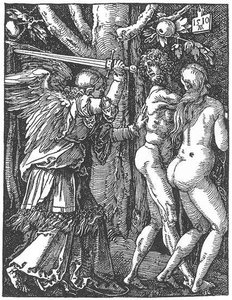 Small Passion: 2. Expulsion from the Paradise - Albrecht Dürer
Stepping into the presence of Albrecht Dürer’s 1510 woodcut, Small Passion: 2. Expulsion from the Paradise, is to witness the very heartbeat of the Northern Renaissance. This isn't merely a print; it is a profound visual narrative of human fallibility and divine consequence. As one of the crown jewels within the British Museum, London, this masterpiece exemplifies the institution's dedication to preserving the pivotal moments of human history and spiritual evolution.
The composition is a masterclass in tension. Through a sophisticated use of diagonal lines, Dürer captures the dramatic movement of Adam and Eve being cast from Eden. The monochromatic depth, achieved through incredibly fine, rhythmic linework, creates a haunting interplay of light and shadow that evokes a sense of melancholy and impending loss. Every etched line tells a story—from the shame etched into the human form to the symbolic weight of the serpent and the apple. To own a piece of this legacy is to invite a lineage of taste into your own home, transforming a simple wall into a space of deep, historical reflection.
Mosaic of a Double-headed Serpent - Aztec Empire
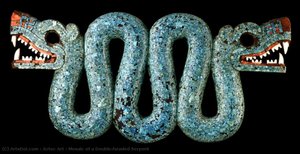 Mosaic of a Double-headed Serpent - Aztec Empire
To gaze upon this mosaic of a double-headed serpent is to step directly into the vibrant, myth-laden heart of the Aztec Empire, where divinity and artistry are inextricably woven together. As one of the most captivating pieces among the top 25 artworks in the British Museum, London, this masterpiece serves as a profound window into Mesoamerican cosmology. The sinuous, serpentine form is rendered in a mesmerizing palette of deep turquoises and blues, punctuated by fiery flashes of red and orange that seem to pulse with ancient life.
The technical brilliance of the tesserae creates a tactile, rhythmic texture that mimics the overlapping scales of a deity, embodying the powerful concept of duality—the balance between life and death, order and chaos. This sense of mystical energy makes it a standout treasure within the museum's vast collection. For the modern decorator, the piece offers a sophisticated way to introduce a sense of mystical power and deep, soulful color into a curated space, bridging the gap between ancient ritual and contemporary elegance.
The Plum-Pudding in Danger - James Gillray
 The Plum-Pudding in Danger - James Gillray
Steeped in deep, espresso tones and rich shadows, James Gillray’s 1805 masterpiece, The Plum-Pudding in Danger, captures a moment of profound historical tension masked by domesticity. This iconic etching is a cornerstone of the British Museum, London collection, serving as a biting piece of political satire from the Napoleonic Wars. Rather than mere culinary delight, the pudding represents the British Empire being carved up by global powers, making it a vital piece of the museum's narrative on diplomacy and empire.
The sophisticated, dark palette creates a nostalgic and slightly melancholic atmosphere, perfect for adding a sense of storied depth to a modern dining room or study. By incorporating pieces with this moody, dramatic lighting, you can curate a space that feels both intellectual and cozy. As one of the top 25 artworks in the British Museum, Gillray’s work invites you to look beyond the surface of the scene and discover the sharp, witty layers of Regency-era social commentary hidden within its masterful composition.
Profile of a warrior in helmet - Leonardo da Vinci
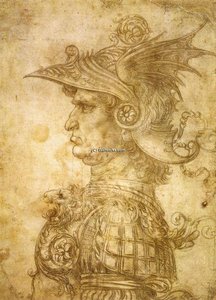 Profile of a warrior in helmet - Leonardo da Vinci
Step into the quiet, reflective atmosphere of the Renaissance with Leonardo da Vinci’s Profile of a Warrior in Helmet. This exquisite silverpoint drawing is a true jewel of the British Museum, London, offering a rare, intimate glimpse into the mind of a master before he became the legend who painted the Mona Lisa. Completed around 1472, the work captures a sense of quiet dignity and mystery, as the warrior’s face is partially veiled by his intricate armor.
What makes this piece a standout among the top 25 artworks in the British Museum is the way Da Vinci composes light and shadow to explore both human anatomy and military engineering. The delicate, rosy-brown tones and the precision of the silverpoint technique create an elegant, almost ethereal vibe that feels both powerful and contemplative. It is more than a study of protection; it is a meditation on the human spirit. For those looking to bring a touch of historical soul into a living room, this piece serves as a beautiful portal to an era of profound discovery and artistic grace.
Rome: The Colosseum - J. M. W. Turner
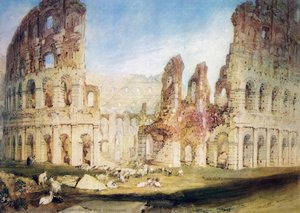 Rome: The Colosseum - J. M. W. Turner
In this breathtaking watercolor from 1820, J.M.W. Turner invites us to experience the Colosseum not as a static ruin, but as a living, breathing monument to time. As one of the most evocative pieces in the British Museum, London collection, this work exemplifies the height of British Romanticism. Turner moves beyond mere topographical sketching to compose a visceral language of light and atmosphere. The Colosseum emerges as a hazy, majestic silhouette against a turbulent sky, where swirling clouds and golden shafts of light dance across the ancient arches.
The scene is remarkably serene; scattered sheep graze peacefully in the foreground, their presence grounding the monumental scale of the Roman architecture in a moment of quietude. Through a palette of putty, ochre, and luminous blues, Turner captures the very essence of the sublime. It is this ability to invent light rather than simply reflect it that makes this masterpiece a cornerstone of the museum's treasures. It is a visual sonata of shadow and radiance, waiting to transform your living space into a portal of historical inspiration.
Antique Warrior - Leonardo da Vinci
 Antique Warrior - Leonardo da Vinci
Imagine standing in the quiet, hallowed halls of the British Museum, where the weight of centuries meets the spark of human genius. Amidst the vast treasures of London, one figure commands your attention with a silent, brooding intensity: Antique Warrior by Leonardo da Vinci. Painted in 1472, this early masterpiece captures the Renaissance spirit at its most potent, serving as a vital link to the nascent brilliance of a man who would eventually redefine art history.
The portrait is a study in dramatic tension and mystery. Clad in an imposing, horned helmet that evokes the grandeur of Roman emperors, the warrior stands in a state of controlled readiness. Through masterful use of light and shadow, da Vinci explores the subtle textures of metal and skin, using a palette of deep, driftwood tones to create a sense of timelessness. This work is a cornerstone of the museum's collection, offering a rare, intimate glimpse into the psychological depth and anatomical precision that would later define the High Renaissance. Even today, such a powerful presence reminds us how a single, soulful gaze can transform a room and stir the human spirit.
Landscape with a Goatherd - Claude Lorrain
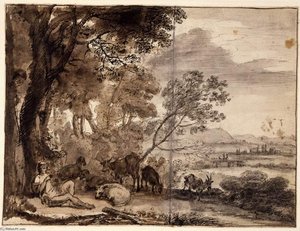 Landscape with a Goatherd - Claude Lorrain
To step before Landscape with a Goatherd is to encounter a masterclass in atmospheric storytelling, a piece that holds a prestigious place among the top 25 artworks in the British Museum, London. Created in 1637, this Baroque jewel by Claude Lorrain is far more than a mere depiction of rural life; it is a luminous orchestration of light and tranquility. Lorrain, the legendary architect of sunlight, uses a delicate interplay of shadow and glow to transform a simple pastoral scene into a transcendent vision of the Arcadian ideal.
As you gaze upon the soft textures of grazing sheep and the quiet presence of a sentinel horse, you feel the profound stillness of a world untouched by time. The composition, characterized by its soothing rosy-brown tones and verdant depths, offers a sense of calm that resonates deeply with the modern soul. For the discerning collector, this masterpiece exemplifies the timeless beauty found within the British Museum, London, serving as a window into a classical era of elegance. It is a work of quiet prestige, perfect for bringing a sense of historical legacy and serene, refined aesthetics into a sophisticated living space.
Sitting Male Nude (recto) - Michelangelo
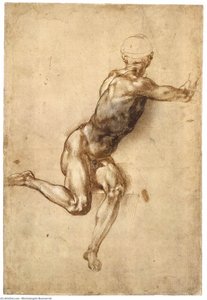 Sitting Male Nude (recto) - Michelangelo
To stand before Michelangelo’s Sitting Male Nude (recto) is to witness the raw, pulsing energy of the High Renaissance. Created in 1504, this masterful study was born from the artist's intense preparation for the monumental Battle of Cascina. It is not merely a sketch; it is a profound exploration of human vitality and the divine architecture of the body. Through a sophisticated interplay of delicate hatching and bold, decisive lines, Michelangelo captures the tension of muscle and the grace of movement, turning a simple anatomical study into a profound meditation on strength.
As one of the most significant treasures within the British Museum, London, this work exemplifies why the institution is a global sanctuary for human history. It offers a rare, intimate glimpse into the creative soul of a titan, allowing us to see the world through the eyes of a genius. For those who seek to transform their own surroundings into a gallery of the soul, this piece serves as a timeless reminder that art is not just decoration—it is the very essence of human expression and enduring beauty.
Portrait of Constantijn Huygens - Paulus Pontius
 Portrait of Constantijn Huygens - Paulus Pontius
At Mus3ums.com, we believe in democratizing beauty, ensuring that the profound weight of history is never out of reach. This philosophy is perfectly embodied in Paulus Pontius’s 1630 Portrait of Constantijn Huygens, a cornerstone of the British Museum’s collection. This exquisite engraving captures the very essence of the Dutch Golden Age, offering a window into the mind of a scholar deeply immersed in poetry and science. Through masterful etching and delicate cross-hatching, Pontius transforms a monochromatic scene into a study of texture and intellect.
Huygens’s steady, contemplative gaze and the symbolic book resting in his lap invite a moment of quiet reflection, while the dramatic, cloudy sky behind him adds a layer of atmospheric mystery. It is this rare combination of technical precision and emotional depth that secures its place among the top 25 artworks in the British Museum. For the modern collector, this masterpiece is more than a relic; it is an invitation to bring a transformative, scholarly presence into your own home or office through our high-fidelity, hand-painted reproductions.
The Entombment - Hieronymus Bosch
 The Entombment - Hieronymus Bosch
What if I told you that The Entombment by Hieronymus Bosch was born from a moment of profound spiritual rebellion—a stroke of defiance against the ordinary? This 1507 masterpiece is not merely art; it is a manifesto of the human soul. As one of the most striking treasures within the British Museum, London, its presence is demanded by history, offering a window into the complex anxieties of the Northern Renaissance.
The work presents a dramatic, melancholic descent into sorrow. Through a delicate dance of light and shadow, Bosch captures the solemnity of Christ’s burial, where the crown of thorns serves as a haunting symbol of sacrifice. The composition is intimate yet unsettling, pulling you into a world of deep psychological depth and religious intensity. Its monochromatic, graphic quality evokes a sense of timelessness, making it a quintessential example of the museum's collection of global masterpieces. Imagine this evocative piece in your own home; it is more than decor—it is a statement of profound, historical elegance that turns any room into a space for contemplation.
The Judgment of Paris - Claude Lorrain
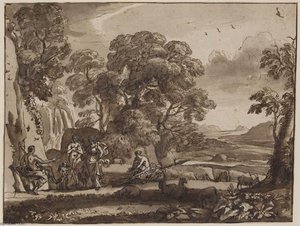 The Judgment of Paris - Claude Lorrain
What story does the sun-drenched, rocky hillside tell in Claude Lorrain's The Judgment of Paris? It is a narrative of divine tension and mythic grace, where the lush greenery and distant, hazy vistas serve as a stage for one of Greek mythology's most pivotal moments. Emerging from the Baroque era, Lorrain’s masterpiece redefined landscape painting by treating light as a tangible, emotional force rather than mere illumination. This ability to capture an idealized, luminous atmosphere is why this work stands as a crown jewel among the top 25 artworks in the British Museum, London.
The painting offers a sophisticated sense of "escape" for the modern collector; its soft grays and romantic, Roman countryside vibes bring a tranquil, historical depth to a living room setting. By blending classical subject matter with breathtaking spatial harmony, Lorrain creates a window into a timeless world. For those seeking to bring a piece of this elegant, mythic history into their own home, this work exemplifies the very essence of the British Museum, London collection—a bridge between the ancient world and the sublime beauty of the Early Modern period.
Drowning of the Pharaoh's Host in the Red Sea - Titian
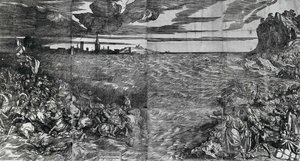 Drowning of the Pharaoh's Host in the Red Sea - Titian
Stepping before Titian’s 1515 masterpiece, Drowning of the Pharaoh's Host in the Red Sea, one is immediately swept into a swirling vortex of divine retribution and human chaos. This monumental work is a cornerstone of the top 25 artworks in the British Museum, London, capturing a moment where the boundary between the earthly and the divine dissolves into turbulent, crashing waves. Titian, the Venetian master of light and color, uses a dramatic, almost cinematic composition to pull the viewer into the heart of the storm, where the frantic struggle of soldiers meets the overwhelming power of nature.
The painting’s raw emotionality—a blend of panic and awe—resonates deeply with modern sensibilities that crave art with profound narrative weight. Its dynamic movement and rich, layered textures make it a captivating focal point for any curated space, offering a sense of high-drama prestige. As a vital piece of the museum's collection, it exemplifies the institution's mission to preserve the most visceral stories of human history and faith, standing as a breathtaking testament to the High Renaissance's ability to turn a biblical epic into a timeless, sensory experience.
A Turkish Woman - Gentile Bellini
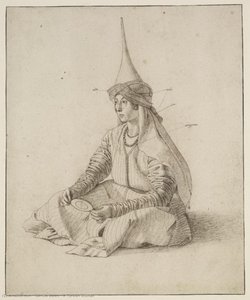 A Turkish Woman - Gentile Bellini
There is a gaze in A Turkish Woman by Gentile Bellini that follows you—not with judgment, but with understanding. This isn't merely a portrait; it is a mirror of a bygone era. Created around 1480, this exquisite work captures a moment of profound diplomatic and cultural intersection between Venice and the Ottoman Empire, making it a cornerstone of the British Museum's collection of global history.
The subject sits with a serene, reflective dignity, her steady eyes inviting you into her world. Through masterful use of graphite, Bellini achieves a breathtaking range of textures—from the soft, luminous skin of her face to the heavy, intricate folds of her elaborate headdress. The monochromatic palette of putty and gray tones creates a quiet, soulful atmosphere that feels incredibly modern in its simplicity. As you stand before it, you aren't just observing a piece of Renaissance art; you are witnessing the delicate intersection of East and West. It is a masterpiece of observation that reminds us how art can make the invisible threads of history visible.
Photograph of Chichén Itzá taken by A.P. Maudslay - Alfred Percival Maudslay
 Photograph of Chichén Itzá taken by A.P. Maudslay - Alfred Percival Maudslay
To gaze upon Alfred Percival Maudslay’s 1894 photograph of the Chichén Itzá pyramid is to experience a profound, melancholic meditation on the passage of time. This striking monochrome capture, a cornerstone of the top 25 artworks in the British Museum, London, strips away the distractions of color to reveal the raw, tactile soul of Mayan architecture. Through a masterful use of light and shadow, Maudslay emphasizes the weathered textures of the stone, inviting a sense of serene mystery that transcends the decades. It is this ability to freeze a moment of ancient grandeur within a silver gelatin print that makes it a universal mirror of human history and spiritual aspiration.
As a quintessential piece of the museum's global narrative, this work exemplifies the British Museum's mission to document the vast tapestry of human culture. Bringing the quiet, contemplative energy of this archaeological marvel into your own home can transform a personal sanctuary into a space for deep reflection and calm, offering a window into a world of enduring legacy and quiet majesty.
Philibert of Savoy - Conrad Meit
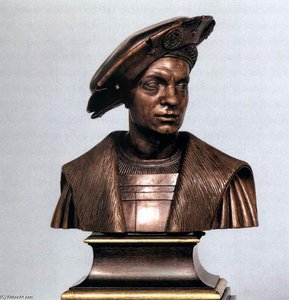 Philibert of Savoy - Conrad Meit
In the quiet, reflective halls of the British Museum, London, few pieces command the room with such silent majesty as Conrad Meit’s 1515 bronze bust of Philibert of Savoy. This is not merely a portrait; it is a dance of shadow and light frozen in metal. Meit, a master who bridged the delicate grace of the late Gothic with the anatomical realism of the Renaissance, has choreographed every line of the Duke’s visage to convey a profound sense of authority and calm.
As you stand before it, the dark, rich patina of the bronze seems to breathe, catching the light to reveal the intricate textures of lace and the soft plume of a regal hat. The furrowed brow and piercing gaze offer a window into a world of high-stakes diplomacy and dynastic ambition. It is a masterpiece of restrained dignity, embodying the very essence of the museum's collection: a tangible connection to the soul of human history. Much like a perfectly curated living room, this sculpture brings a sense of rhythmic, historical balance to any space it inhabits.
Cope pin (front and back) - Benvenuto Cellini
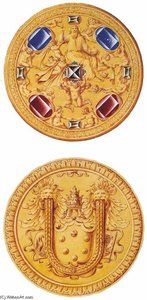 Cope pin (front and back) - Benvenuto Cellini
Imagine a piece of jewelry so profound it feels less like an accessory and more like a portal to the Renaissance. Crafted in 1520 by the legendary Mannerist goldsmith Benvenuto Cellini for Pope Clement VII, this Cope Pin is a breathtaking testament to the opulence of 16th-century Rome. As one of the most exquisite treasures within the British Museum, London, it captures the very essence of courtly elegance and divine authority.
The pin is a masterclass in detail: the front reveals a radiant, winged figure draped in gold, framed by deep, celestial blue gemstones that seem to hold the light of the heavens. Flip it over, and you encounter a dramatic heraldic shield flanked by fierce, watchful lion heads. Through the meticulous technique of repoussé, Cellini transformed precious metal into a living tapestry of texture and shadow. It is more than an artifact; it is a shimmering reminder of human virtuosity, inviting you to bring a touch of that timeless, golden grandeur into your own storied collection.
A Declaration - Lawrence Alma-Tadema
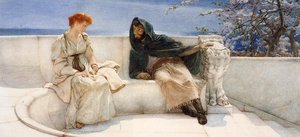 A Declaration - Lawrence Alma-Tadema
There is a profound, quiet magic in the way a single moment can be frozen in time. In Lawrence Alma-Tadema’s 1883 masterpiece, A Declaration, we are invited into a sanctuary of Victorian leisure. As you stand before this work in the British Museum, London, you aren't just looking at a painting; you are feeling the warmth of a Mediterranean afternoon. The scene captures a universal yearning for stillness—a couple, a loyal dog, and the gentle rhythm of the ocean waves, all bathed in a luminous, rosy-brown glow that feels like a nostalgic dream.
This piece earns its place among the top 25 artworks in the British Museum through Alma-Tadema’s unparalleled ability to render texture. His mastery of light on marble and fabric creates a sensory experience that transcends the canvas. At Mus3ums.com, we believe such beauty should be lived with, not just observed behind glass. Our hand-painted oil reproductions are meticulously crafted to capture these very nuances—the visible brushstrokes, the depth of color, and that unmistakable sense of tranquility—allowing you to bring a piece of this timeless elegance into your own living space.
The Zenith of French Glory - James Gillray
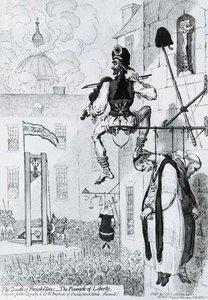 The Zenith of French Glory - James Gillray
In the dramatic atmosphere of James Gillray’s 1793 etching, The Zenith of French Glory, the interplay of light and shadow does more than just define form; it tells a story of profound upheaval. The composition utilizes a stark, almost theatrical chiaroscuro, where light descends from above to illuminate a skeletal soldier perched atop a gallows. This piercing illumination casts deep, heavy shadows across the scene, emphasizing the grim reality of the French Revolution and the hollow promise of its 'liberty.' It is this masterful command of tonal contrast that secured its place among the top 25 artworks in the British Museum, London, capturing the very soul of Regency-era political satire.
As a centerpiece of the museum's collection, this work exemplifies the historical weight of the institution, documenting the turbulent shifts of human culture through biting, visual storytelling. For the modern collector, a high-quality reproduction of this piece—with its intricate hatching and dramatic linework—offers a sophisticated way to introduce a sense of historical depth and intellectual intrigue to a contemporary living room or study. It is art that doesn't just decorate a wall; it commands the room.
View of Delft from the North - Jan van Goyen
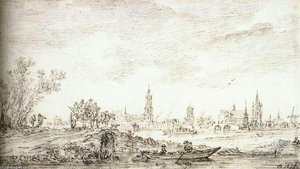 View of Delft from the North - Jan van Goyen
In the quiet, atmospheric realm of Jan van Goyen’s "View of Delft from the North," we are invited to step back into the Dutch Golden Age. This exquisite work, a cornerstone of the British Museum’s collection, serves as more than just a topographical record; it is a poetic meditation on the relationship between man and nature. The composition unfolds with a serene grace, leading the eye across a tranquil body of water that acts as a mirror to the sky. On one side, the lush foliage provides a soft, organic boundary, while the horizon is anchored by the architectural majesty of Delft, its church spire rising like a silent sentinel over the peaceful landscape.
Van Goyen was a pioneer of the tonal landscape movement, mastering a sophisticated spectrum of muted grays and greens that capture the very essence of light and shadow. This piece evokes a profound sense of stillness—a breath held in time. For those looking to transform a living room or study into a gallery of the soul, this masterpiece offers a sense of historical depth and contemplative calm, bringing the timeless beauty of the Netherlands into your modern sanctuary.
Apollo on the Parnassus - Marcantonio Raimondi
 Apollo on the Parnassus - Marcantonio Raimondi
Imagine stepping into a realm where the divine meets the human in a silent, eternal symphony. In this exquisite 1515 engraving, Marcantonio Raimondi captures a celestial gathering that feels as fresh today as it did during the height of the Renaissance. A masterful visual echo of Raphael’s genius, Apollo on the Parnassus is a cornerstone of the British Museum’s collection, representing the very pinnacle of classical engraving and humanist ideals.
The scene unfolds on the sacred slopes of Mount Parnassus, where Apollo sits enthroned amidst a constellation of Muses and legendary poets. Through delicate, precise lines, Raimondi creates a sense of profound harmony and order, using light and shadow to breathe life into flowing drapery and ancient scrolls. For the modern collector, this piece offers more than just history; it provides an aura of elegance and intellectual depth. Its calm, sophisticated composition makes it a timeless inspiration for refined interiors, serving as a window into a world of grace, melody, and enduring beauty.
Project of the Place de France in Paris - Claude Chastillon
 Project of the Place de France in Paris - Claude Chastillon
Step into the early modern era with Claude Chastillon’s 1609 engraving, a breathtaking vision of urban ambition. This piece, a standout among the top 25 artworks in the British Museum, London, captures the Project of the Place de France in Paris—a grand town-planning dream commissioned by Henry IV. Rather than a mere map, this is a window into a lost architectural soul, showcasing a meticulously detailed semicircular space designed to harmonize civic life with the city's defensive fortifications.
The composition is a masterclass in Baroque order, utilizing sharp, etched lines and radial geometry to guide the eye toward the central Porte de France. You can almost feel the structured rhythm of the seven market buildings and the sweeping roads named after the provinces of France. Rendered in a nostalgic, putty-toned palette, this engraving evokes a reflective mood, perfect for a sophisticated office or a study. It is more than a historical document; it is a testament to the power of design, inviting you to transform your own space into a gallery of human history and architectural genius.
St George and the Youth of Mytilene - Orthodox Icons
 St George and the Youth of Mytilene - Orthodox Icons
Stepping into the presence of St George and the Youth of Mytilene is like encountering a quiet, mystical light from the thirteenth century. The piece is anchored by a profound, soulful blue—the hue of St George’s robe—which sets a mood of calm, spiritual authority amidst the drama of the scene. This mastery of color, achieved through traditional egg tempera on a luminous gessoed pine panel, is precisely why this icon is celebrated among the top 25 artworks in the British Museum, London. It captures a sense of divine movement, where stylized figures and fluttering birds create a rhythmic, sacred atmosphere.
For those looking to curate a meaningful home, this artwork offers a unique way to introduce a sense of history and quiet prestige. The driftwood tones and deep blues can serve as a sophisticated anchor in a living room, providing a focal point that invites contemplation rather than mere decoration. As a standout piece of the British Museum, London collection, it exemplifies the intersection of human history and artistic devotion, offering a timeless aesthetic for the modern collector.
Conclusion
As the sun sets over the Great Court and the shadows lengthen across the museum's storied halls, we are reminded that these masterpieces are far more than silent relics of a distant past. They are living pulses of human emotion, captured in stone, pigment, and light, waiting to speak to anyone willing to listen. To stand before these treasures is to touch the very essence of our shared history—a connection that transcends centuries and brings the whispers of ancient civilizations directly into our modern lives.
At Mus3ums.com, we believe that art should not be confined to the quiet, hallowed corridors of a gallery. It belongs in the places where life actually happens—in the warmth of your living room, the quiet focus of your study, or the joyful energy of a first home. Whether it is the profound weight of a classical sculpture or the delicate grace of an ancient vase, these works possess a unique ability to transform a room from a mere space into a sanctuary of inspiration and meaning.
We invite you to move beyond mere admiration and begin your own journey of discovery. Let these timeless icons become part of your daily rhythm, serving as gentle reminders of the creativity and resilience that define the human spirit. Explore our full collection and find the piece that speaks to your soul, and bring a touch of the world's enduring beauty into your own home.